
The European projects contributed substantially to the modernization of the Romanian cities, and some working localities that seemed to be convicted in decline in the 1990s changed their appearance. The images compared to their changes arouse astonishment on social networks.
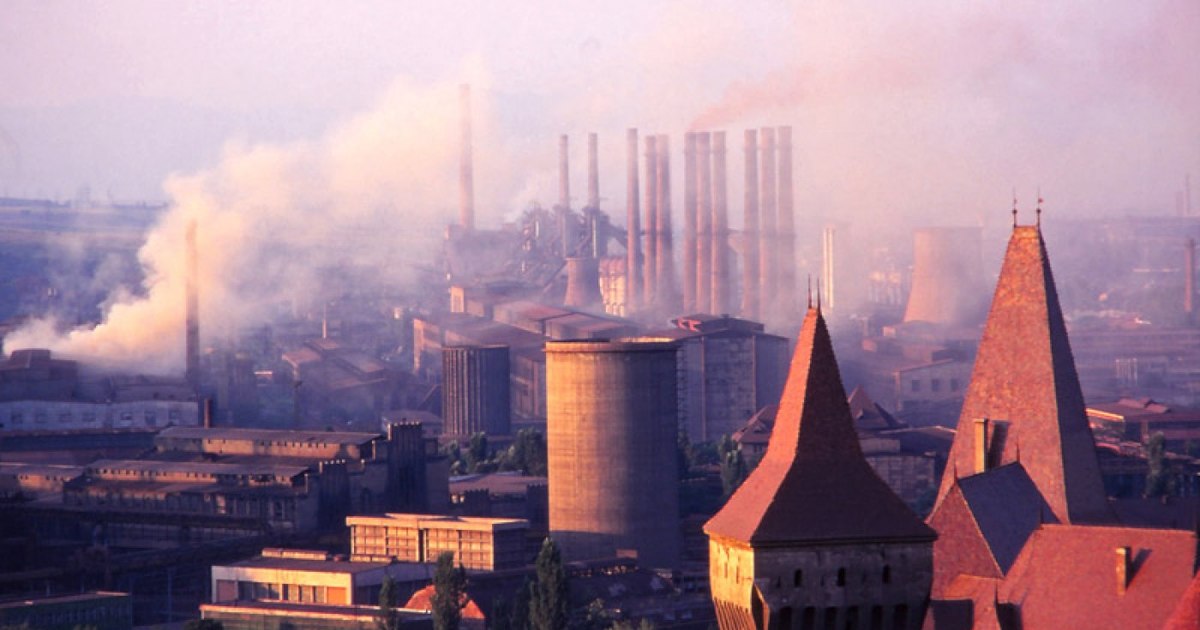
The city of Hunedoara in the 1990s seemed suffocated. Photo: Peter de Graaf. Rambling.Nz
The public investments financed from European funds have brought important transformations in the way in the way in which the former working cities in Romania are presented.
In Hunedoara, one of the most representative cities for metallurgy in Romania, the closing of most sections of the steel combined meant in the 1990s and 2000s the loss of almost 20,000 jobs in the industry and an accentuated economic decline.
Hunedoara among cities that took advantage of EU funds
The local administration and the Romanian state could not allocate sufficient funds to revitalize the city in western Romania, but in the last decade, this has been possible with the help of European funds.
The most visible changes made through the investments financed with European funds followed the rehabilitation of Corvin Castle (video), of the historical center of the municipality, the banks of the Cerna river and of some representative buildings for the history of the municipality.
In the 1990s, the city and castle appealed to the travelers in a decor pressed by the dust and smoke spread by the combination, remembered the New Zealand photographer Peter de Graaf, who had visited them.
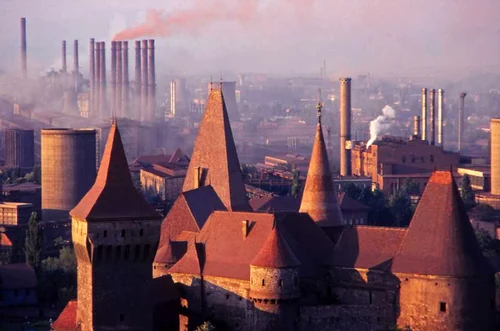
Image 1/9:
Castle Corvinilor Photo Peeter de Graaf
“In the early 1990s, the steel was already in decline – its outdated technology was proven not to fit a market economy – but it was still huge, polluting and, in a terrible, amazing way. The castle was surrounded on three sides by the grace of the combined, of cooling concrete towers, ovens and rows of bumps of smoke that threw a stinging, brownish-red smoke. The color was given by nitrogen dioxide, a toxic gas that forms nitric acid in contact with rain. As the smoke was spreading, the sky became pink as if it were always sunset. Throughout the fourth side of the castle, a noisy funicular transports huge baskets of iron ore in ovens, from a distant mine. It was as if we were falling in a kind of dystopian industrial nightmare or in the decoration of a post-apocalyptic film”, Wrote Peter de Graaf, on his blog, Ramblings.Nz.
He remembered that a steel plant had already stopped when he returned to Hunedoara in 1997, another was closed in 1999, according to the news at that time, along with the cast iron furnaces. Further stops followed in 2003 and what remained in the steel factories was privatized in 2004, the workforce decreased from 20,000 in 1993 to 800 in 2011.
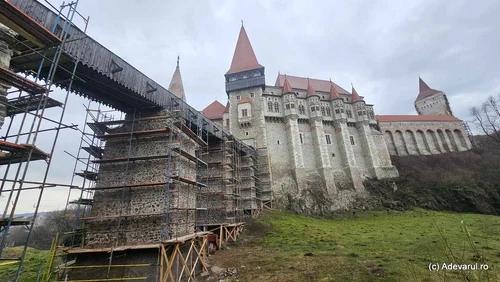
Image 1/14:
Corvin Castle of Hunedoara Photo Daniel Guță Adevărul (1) JPG
“In the same year, the string of 90-meter high chimneys that I saw throwing toxic smoke was demolished. The production of the latest steel plant was suspended in 2019, and most of the handset was demolished. I did not return to Hunedoara in the 1990s, but I returned to other parts of Romania and I was amazed by the transformation of the country. The cities that once seemed to me sad and peas are now colorful, clean and lively. I suppose if I return to Hunedoara in a few decades, I will find a frame worthy of one of the great medieval castles of Europe. But I will also be grateful that I saw the Corvin Castle when he was surrounded by a huge steel factory, which throws smoke ”, he reports.
Like Hunedoara, other former working cities have changed their appearance, with the help of European funds.
How to see Europeans the changes of some cities in Romania
A series of images that show the transformations of some cities in Romania, with the help of European funds, published on the Reddit platform, have humbooed some of the Europeans who saw them.
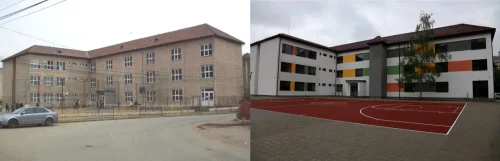
Image 1/5:
Cities transformed with EU funds Reddit source (5) Webp
“I really like to see these glows lately. Creating a habitable city should be much higher on the priority scale of governments. As a German, I must say that we could need this here. I hope more money is allocated to develop habitable cities. Good job, Romania ”writes a German.
“Damn, boys, did you use the infrastructure funds instead of putting them in your pockets?”, Jokes an internet.
“Now try to put Romania in a scenario where they would not have joined the EU.”writes someone else.
“I am very jealous and happy for Romania”, Is the opinion of another European.
“That’s how it is done. As a Hungarian these photos seem utopian to me ”, He writes another Internet.
Some foreigners have told the experiences of their cities after accessing European funds.
“I was amazed why I saw in Poland after ten years. Poland is a great example of well -spent European funds and a nation that works hard to improve ”, Write one of them.
“I feel that in Latvia there can be whole cities, only because of EU funds, they are literally wherever you look. I hope the investments will bear fruit and attract young people, ”writes a Latvian.
“As with Poland, I was very impressed by the infrastructure and the renovated public buildings. It looks the same or better than in Austria ”, He supports an Austrian, on Reddit.
“The Bulgarian version is: the funds went, given the locality looks the same as before”, jokes a resident of Bulgaria.
