
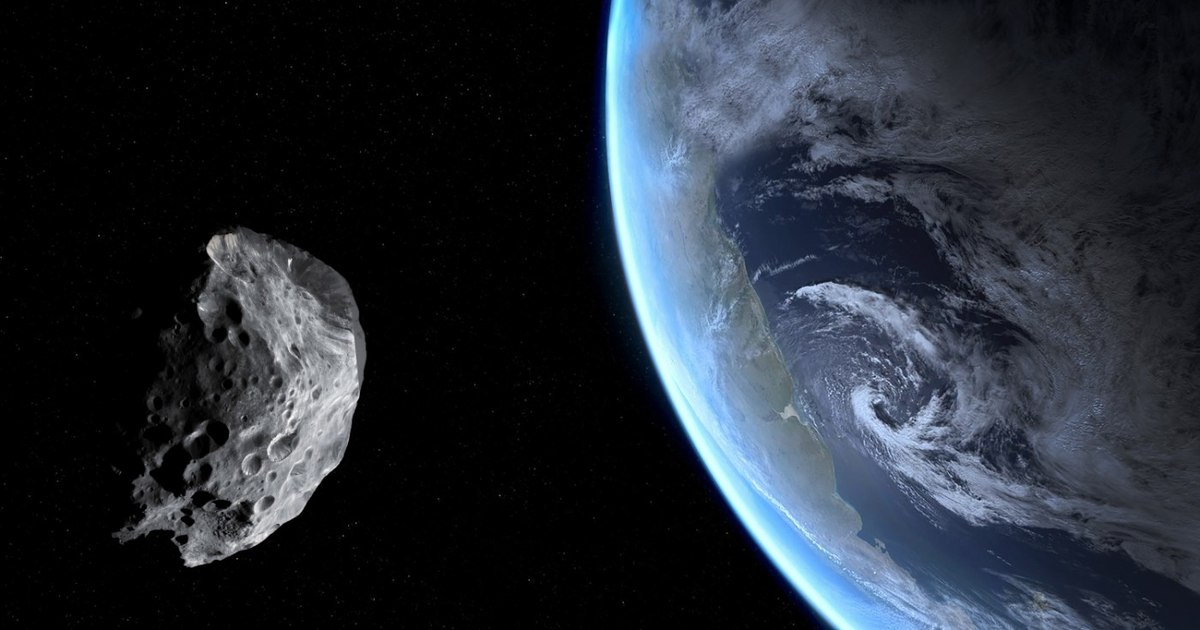
A team of researchers has issued a new warning about the 2024 YR4 asteroid, which will pass extremely close to Earth and month in 2032.
Asteroid 2024 YR4 was initially considered a serious danger. Photo: Shutterstock
Using the James Webb (JWST) space telescope, astronomers found that this asteroid is much larger than it was initially estimated.
Previous observations based on terrestrial telescopes indicated that 2024 YR4 had a diameter of about 40 meters. But the new measurements made with JWST show that the space rock has, in fact, a diameter of 60 meters – the equivalent of a 15 -storey block, informs the Daily Mail.
If an asteroid of this dimension would hit the ground, the resulting explosion would be 500 times stronger than the atomic bomb launched on Hiroshima.
Discovered in December last year, 2024 YR4 was initially considered a serious danger, with a probability of an alarming impact of 3.1% – the highest value ever registered for a large asteroid.
In the meantime, NASA has excluded the possibility of this asteroid hit the ground. However, the latest observations show that there is still a 2% risk for 2024 YR4 to collapse on the Moon.
Observations for the future of planetary safety
Telescopes on Earth have provided only approximate estroid size, based on the light reflected by its surface. To get more accurate measurements, JWST has used a specialized tool in detection of asteroid infrared radiation.
Thus, on March 26, 2025, the telescope watched 2024 YR4 for five hours, causing it to rotate every 20 minutes and that its surface is probably composed of medium -sized rocks, instead of fine dust, as it meets on larger asteroids.
The impact with the moon, opportunity for science
Although the probability that 2024 YR4 will hit the Moon remains low, such an event would provide a unique opportunity for the scientific community.
If the asteroid had collapsed on the Moon, it would be for the first time that scientists could observe the formation of a monthly crater. These data could provide valuable information about the structure of the monthly surface and how the craters have formed throughout history.
Scientists use terms like “The destroyer of cities” to describe those asteroids that would cause major damage if they hit the earth.
