
In the full Easter holiday, if you were among those who shopped, you probably have already felt the impact of increasing chocolate prices. The price of the Easter chocolate has reached the highest values in the last 20 years. The phenomenon called “Chocflation” has led to significant price increases, and many of the products that were accessible now are much more expensive or have a low weight. In addition, the trend does not seem to stop too soon, and this change has brought with it more accessible, but different from what we were used to.
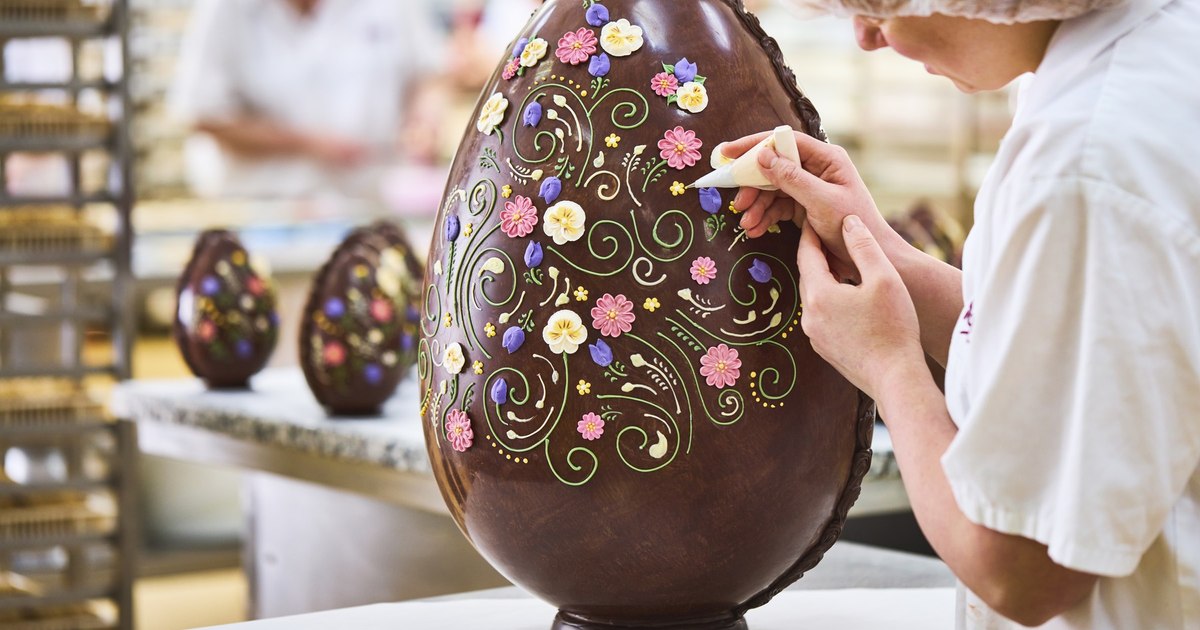
Chocolate egg. Source: Profimedia
From the UK and Germany, to Romania, Easter sweets have become much more expensive.
Chocflation: Increasing chocolate prices
Behind the prices of chocolate that grow vertiginously there is a combination of economic and ecological factors. The climatic changes in the cocoa -producing regions of Western Africa had a devastating impact on the 2024 harvest. In the ivory and Ghana coast, the largest cocoa manufacturers in the world, extreme weather, drought and heavy rains have affected harvests, and the price of cocoa beans reached historical levels.
Thus, cocoa prices increased by up to 73% in 2024 compared to the previous year, and in 2025 the price of a ton of cocoa reached $ 12,227, a record level. This is directly reflected in the prices of Easter products in stores, which makes the chocolate price, this year, significantly higher. From Easter eggs, to chocolate rabbits, all cocoa products have cost much more than in previous years.
What happens in Romania: how “sweet” is chocolate for consumers?
In Romania, we are not exempt from the effects of this global phenomenon. If you bought chocolate eggs or rabbits, you’ve probably already felt this growth. The prices are much higher, and some consumers have also observed the weight of the products, which makes the impact even more visible on the shelf.
Many of us noticed that the same products that were considered accessible a few years ago have become much more expensive. This phenomenon caused many Romanians to wonder if they will somehow have to give up Easter traditions and look for cheaper alternatives.
Cocoa -free alternatives: a sustainable and more accessible solution?
In the face of these price increases, many consumers choose alternatives without cocoa, which are gaining more and more land on the market. These products are made of peanuts, almonds or even cocoa shells and are much more accessible than classic chocolate. Although it does not offer the same fine texture or intense taste of traditional chocolate, they are a cheaper and more sustainable option.
In France, alternatives without cocoa have begun to become popular, and in Romania, more and more local producers are oriented towards vegan chocolate or other products that are both accessible and environmentally friendly. These alternatives not only help reduce costs, but also support local industries and sustainability.
A remarkable example is Chocolateria Abtey in Alsacia, which has developed “Choviva”-an alternative to chocolate without cocoa, made of sunflower seeds and fermented and fried grape seeds, offering a taste and texture similar to those of traditional chocolate.
This initiative was determined by the difficulties encountered in the cocoa supply and the desire to maintain the quality of the products without compromising traditional recipes. “Choviva” has been adapted to be used in various forms, including Easter eggs and rabbits, now representing 25% of the company’s seasonal production, writes BFMTV.
The future of chocolate: good taste, bitter price ”
The chocolate, that delight we all adore, now goes through a real crisis-economic and ecological! The increasing prices and climatic changes are fully hit by the industry, and the sweet Easter traditions have not been, this year, as accessible as before. So, as we pamper ourselves with rabbits and chocolate eggs, we will have to think better about what we put in shopping cart – because, in the future, chocolate could become a rarity, not just a daily pleasure.
Philippe Pascoet, a Swiss Chocolatier, stresses that although buyers still want to pamper themselves, sales have decreased. In Germany, chocolate manufacturers made this year, Easter, fewer Easter rabbits due to higher costs.
Experts predict a continuation of inflation in the chocolate market and the current crisis is not just about capricious weather in Western Africa or about “Chocflation” that empties our wallets during the holidays. They point out that, in order to avoid other such crises in the future, a long -term plan is needed. Digitalization and modernization of the processes behind the industry – from cocoa plantations to store shelves – could be the key. With more resistant and efficient supply chains, consumers could be better protected from sudden price increases, and small producers could receive a more correct treatment.
Therefore, the taste of the chocolate of tomorrow may not be influenced by the recipe … but also how “intelligent” is the global network that brings it to us.
