

Some countries impose unusual rules at the entrance, from compulsory Covid test and ecological commitments to daily $ 100 fees or prohibitions such as chewing gum and Christmas fireworks.
Many countries impose truly strange entry conditions to foreign pixabay photo tourists
When it comes to entry conditions to a foreign country, there are numerous bizarre or extreme examples in the world. The Telegraph has made a list of some of the most bizarre.
Mandatory Covid test: Turkmenistan
The passionate travelers will join, remembering the times when a trip abroad involved Covid tests and vaccination passports, but Turkmenistan still asks visitors to do such a test.
Probably Turkmenistan is not the only country that has remained with PCR mountains unused after pandemic, notes The Telegraph.
Climatic commitment: Palau
For obvious reasons, small island nations tend to take sustainability seriously. But in 2017, Palau, a country in Micronia with a population of 18,000 inhabitants, went on, asking all international visitors to sign an ecological commitment through which they are committed to have a minimum impact on the environment during their stay.
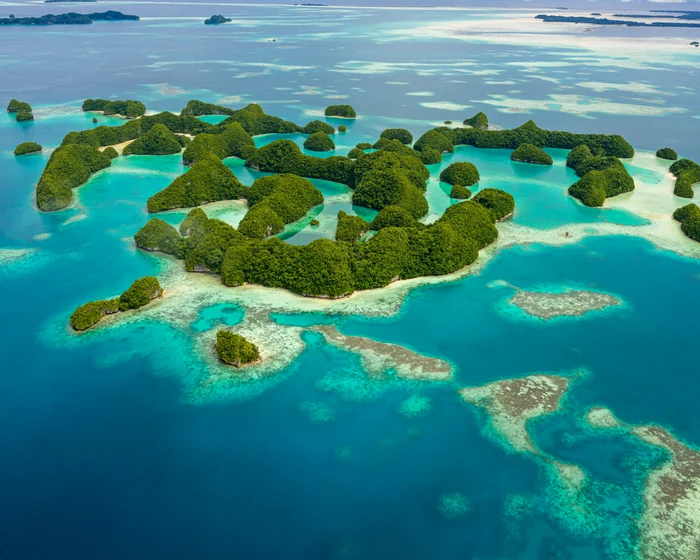
The seventy islands of Rock Islands, Palau Photo Shutterstock
Tourist fee of $ 100: Bhutan
Tourist taxes are fashionable in Europe nowadays. But the amounts perceived in cities such as Venice or Amsterdam seem insignificant compared to Bhutan, which requires a fee of $ 100 per day for international tourists (except for the neighboring India), payable upon arrival.
No surprise, Bhutan’s tax for “Sustainable development” (its official name) is the largest tourism fee in the world. However, the country’s prime minister, Tshering Tobgay, claims that the amount is well received by adventurous tourists, who came to admire the amazing landscapes of the kingdom.
“Most tourists are pleased that they can play a role – even small, but significant – in the sustainable development of Bhutan”he told an American television this spring.
Father’s agreement: Canada
In the era of frequent international travel, children’s kidnappings have become a serious problem, and many countries collaborate to prevent such attempts to remove the children from the influence of the former partner.
However, few countries are as proactive as Canada, who recommend that any parent traveling alone with the child (or children) have a consent letter from the other parent.
In theory, it is an ingenious measure to prevent parental kidnappings. In practice, it can become an unexpected requirement that will confuse tourists with completely innocent intentions.
Forbidden with chewing gum and handcuffs: Singapore
Zero tolerance approach to Singapore chewing gum is already a legend among travelers. Less known are the similar prohibitions for Christmas and handcuffs – objects taken as seriously.
One benefit of the strictness in Singapore is that it probably causes tourists to check their luggage-and the rules-before leaving. Given the very hard drug legislation, including some drugs released on a prescription, this can only be a good thing.
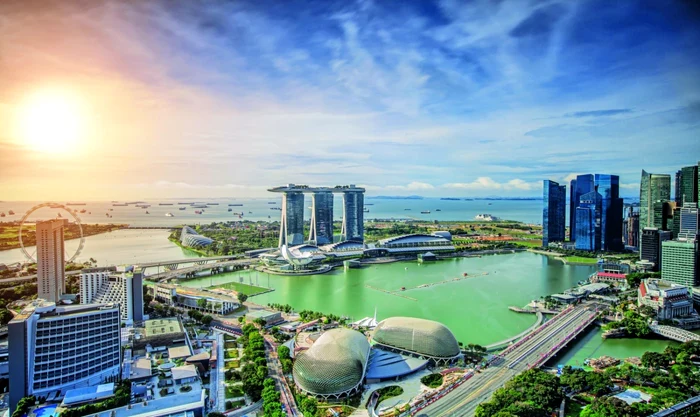
Photo shutterstock
Hires a tour guide (with an exception): North Korea
Most people know that the only way to enter North Korea is to register in one of the strictly controlled propaganda tours, which have become an attraction for a certain type of adventurous tourists. But did you know there was an exception?
Despite the authoritarian socialism promoted by the regime, North Korea has a “Special economic area” Semi-capitalist, where foreign investments are welcome, and the conditions of entry for foreign citizens are considerably more relaxed.
Access to Reson is not easy – a Chinese and travel visa is needed to the border with North Korea. But when it comes to unusual entry requirements, this exception is probably one of the most counterintuitive on the planet.
