
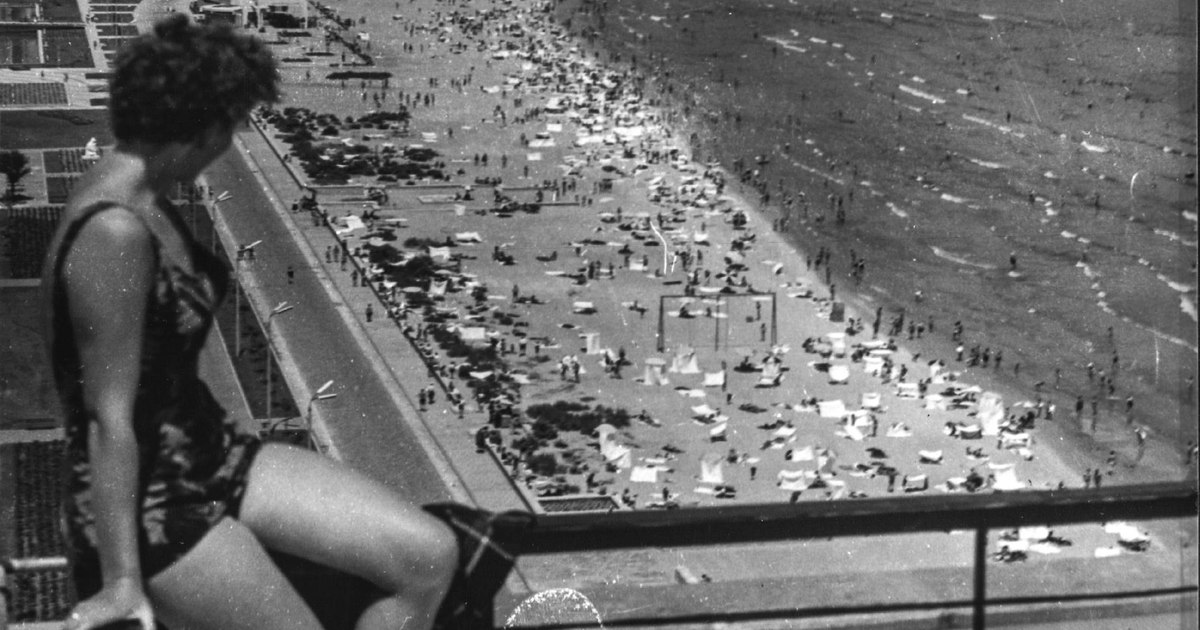
In the Gheorghiu-Dej era, the holidays of the nomenclatures meant privileges and discretion: exclusive villas and resorts, compared to ordinary people, who spent their leave working at home or in modest union camps. Rest reflects the differences of status.
Holiday in Eforie Nord, 1954. Photo: The online phototeca of Romanian communism
In the 1950s, the holiday term almost did not exist in the vocabulary of the employees. “The notion of vacation was only used with inter-trimstrial, respectively inter-semester, pause in the formal education of preschoolers, students and students. For employees was used notion of leave“, Explains Lavinia Betea. The leave was considered a right, but also a proof of the generosity of the regime:”A benefit, it was said, due to the communist regime that guarantees as a right of work paid leave“.
Its duration was limited, the shortest leave being 12 working days per year. The beginners were received. Those who accumulated ancient times could reach a maximum of one month, while only the teachers were part of two months. It was a clear differentiation between the working categories in terms of leisure time. For many of the employees, the leave meant the return to their native places. “Urbanized and distant uprootes returned to parents and relatives to present their future wives or future spouses, to make weddings, to baptize their children … and not least to help their parents in rural work“
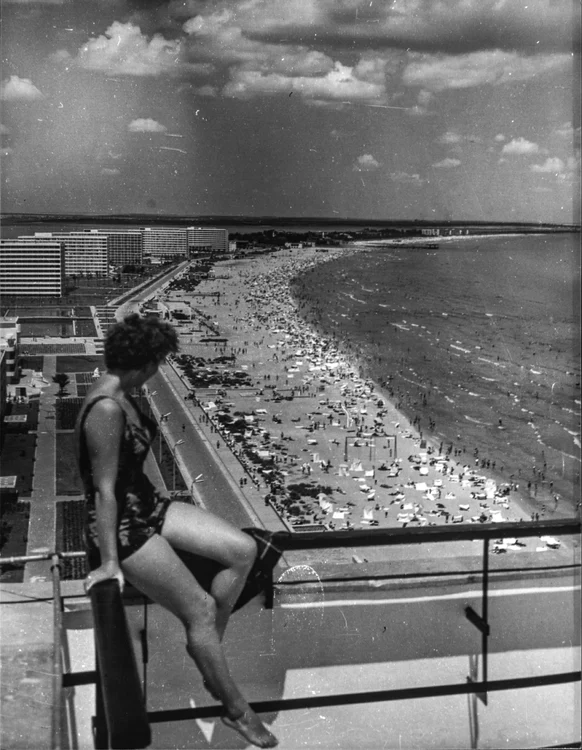
Mamaia of the 1960s, after the development of the first modernist ensemble. Photo: Fortepan
For the lucky ones, the union provided rest and treatment tickets. “Such a ticket, lasting 12 days, did not exceed the value of a salary. It was a rule. It is understood that the conditions were modest too“. There were accommodations in nationalized villas, former bourgeois properties, transformed into resting houses, treatment bases or canteen-restaurant. But even under modest conditions, the individual impact said:”Most, however, were the first generation of their families who went to resorts. When they came to the native village, they praised their leave in the resort as a successful life“.
Over time, the regime has invested in the modernization of the tourist infrastructure. “Then, through the ’60s-’70s hotels were built, the tourist capacity of the coast has been increased and modernized“From confiscated and refurbished villas to go to hotel units for the working class and party activists.
Leader holiday
The supreme leader, Gheorghe Gheorghiu-Dej, went to Eforie Nord or Timișul de Jos, but not alone or without guard. “He was going, but not on vacation, but, according to the doctors’ recommendation, “to restore” … they were the companions from the security and protection service“. He was often accompanied by former prison comrades, but also by family:”According to the testimony of one of his granddaughters, Mrs. Gheorghiu, took with him on these holidays his three grandchildren, the children of his daughter, Lica“.
The holidays of the leaders were not ruptures from the political activity. “The leader’s function presents, like any other position or situation, advantages and disadvantages. A great disadvantage was that they could not disconnect from the country’s “head” duties“. The responsibility was permanent, the decision had to be taken from the peak, according to the so-called principle of democratic centralism. The model was clear: Stalin. The Soviet leader went on holidays in the Caucas, the original homeland.”In the morning the courier came to him with the important documents, sent by plane, regarding the internal and external decisions. Stalin was reading, making decisions, making annotations“But Gheorghiu-Dej was less attracted to reading.”Dej and his people less or not at all with the “service materials”. They were exhibited in public places only on the occasion of events or manifestsI “.
On the keyhole to “the rot West“
In contrast, the families of the nomenclatures were part of a more permissive and sometimes westernized regime. “They went abroad, on leave at Karlovy-Vary (no-spa resort in today’s Czech Republic) Predilect. And often resorted to the stratagem of the medical sending to a specialist abroad for consultation. They were staying at the embassies of Romania in Geneva, Vienna, Paris … and they were shopping, walks“. They had access to a normally reserved experience”bourgeoisie“, In an inaccessible world.
In fact, Gheorghiu-Dej was the one who opened, for a short time, the gates of the West for his colleagues in the political office. “He considered that it was good for members of the Political Bureau to see the “West rot” as it was called Western Europe in propagandistic writings“. The visits were made discreetly, with securityists next to it.”They embarked each with the family and at least a security guard in a railway wagon, attached, by convention, international trains. According to the predetermined itinerary, they visited one city or another, like today’s tourists in a circuit. Not a group circuit but family, private“.
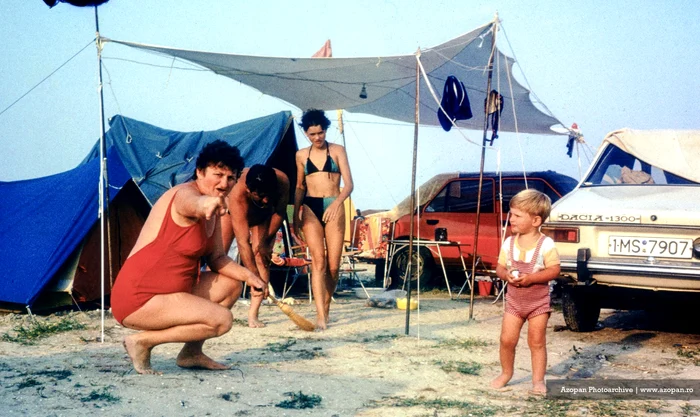
Rest leave of a family in Eforie, 1984. Photo: Azopan
Beyond these trips abroad, which distinguishes the holidays during the Gheorghiu-Dej period is the paradoxical relationship with the private space. Even when he was withdrawn in a villa on the coast, the leader did not completely escape the public eye: “He was making a beach in the yard and the passers -by was looking at him through the fence as at the zoo“This image says a lot about the way the authority was perceived, but also about how little a leader could be detached. Another notable, but revealing aspect, is about the composition of the group around the leader during the periods of”RESTORATION“It wasn’t very convenient for any of the parts“Thus, the human configuration of the holiday was regulated not only by the personal needs of the leader, but also by political and social conveniences.
Where for ordinary people leave became an effort to return to the rural sphere, sometimes even agricultural work, for communist leaders, summer experience was one of maintaining control. At the same time, however, the regime strengthens its image by limited but visible access, offered to population segments at the spaces “nationalized” – The villas and resorts confiscated to the former elites becoming symbolic of the people. By this reconfiguration of leisure time, the Dej regime produced a form of silent mobilization: the time destined to rest be either proof of discipline and ideological affiliation, either confirmation of the status. Near, there were two faces of the same currency – rest in communism as a control and hierarchy tool.
