
A new artificial intelligence program could radically change how researchers decipher and interpret Roman inscriptions. Called “Aeneas”, this tool promises to provide additions to damaged ancient texts.
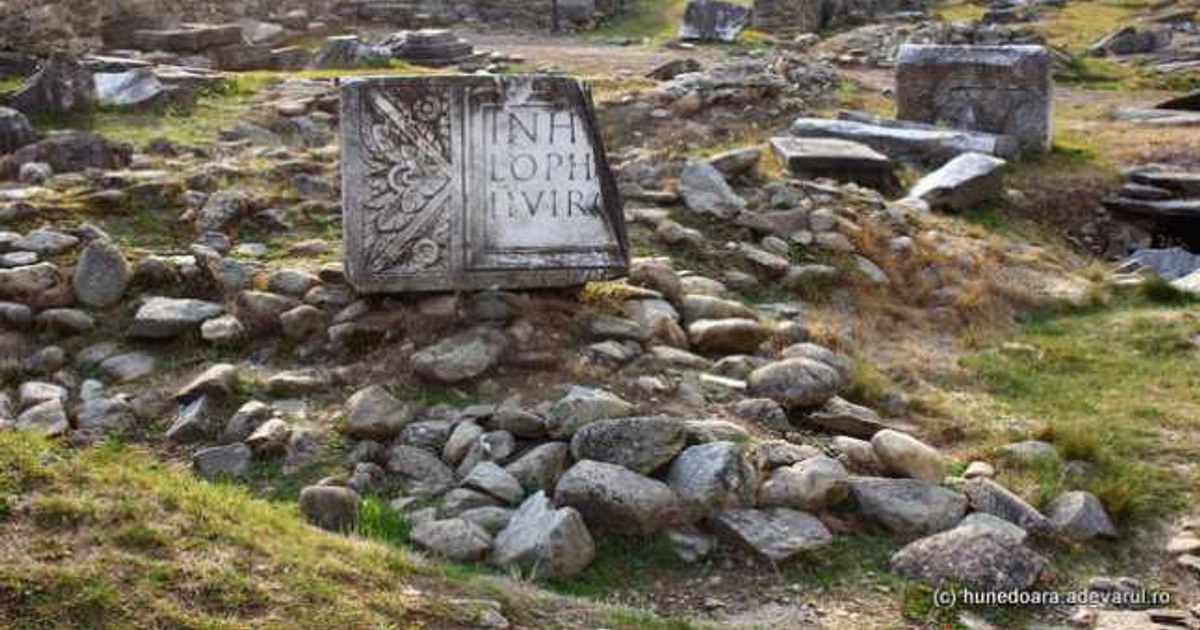
Image from Ulpia Traiana Sarmizegetusa. Photo: Adevărul archive
Google Deepmind, in collaboration with researchers specialized in epigraphy, has developed an artificial intelligence tool called Aeneas, meant to help historians in analyzing and completing ancient Latin inscriptions. Named after the mythological hero, the program can determine with a reduced margin of error the place and the period in which a text was created and can suggest completions for missing passages.
From imperial decrees, to political texts, poetry or commercial notes, the Romanian inscriptions offer a broad perspective on daily life in antiquity, especially in the context in which every year around 1,500 new inscriptions are discovered. Often, however, they are incomplete and thus difficult to interpret or dare. And here comes the new tool, created especially to support historians, notes The Guardian.
The specialists who tested the program stated that he transformed their work, helping them to identify inscriptions similar to those they studied, an essential step for putting texts in context, and proposing words to fill the inevitable gaps from waste and damaged artifacts.
“Aeneas helps historians to interpret, attribute and restore fragmented Latin texts”, said Dr. Thea Sommerschield, a historian at the University of Nottingham who developed Aeneas with the technology company. “This is the great challenge that we set out to approach.”
How Aeneas works
Aeneas was trained on a huge database, consisting of about 200,000 Latin inscriptions, totaling 16 million characters. The AI analyzes both the text and, in some cases, the associated images, and offers connections between similar inscriptions during the 7 BC. – 8 AD. Unlike simple textual searches, Aeneas is looking for complex linguistic and historical correlations.
Thus, based on its training, Aeneas can assign an inscription to a Roman province of the 62 existing, it can estimate the date on which the inscription with a margin of about 13 years was made and, very important, can suggest completions for missing passages.
The first tests are encouraging
In a test, the program analyzed the famous Text Res Gestae Augusti, a monumental inscription detailing the achievements of Emperor Augustus, and Aeneas suggested two writing periods, both corresponding to those debated by historians.
In another test, Aeneas analyzed the inscriptions on a votive altar in Mogontiacum, currently Mainz, Germany, and revealed, through subtle linguistic similarities, the way it had been influenced by an older votive altar in the region.
The details related to the first tests were published in Nature, and the Aeneas program is available online for researchers.
In this context, 23 historians used Aeneas to analyze Latin inscriptions and said that the result offered by the tool was useful in 90% of cases. Jonathan Prag, co -author and professor of ancient history at the University of Oxford, said that Aeneas could be rolled on the existing corpus to see if the interpretations can be improved.
“The only way you can do this without such an instrument is by accumulating enormous personal knowledge or having access to a huge library”, he said.
