
Candida Auris, recently detected at Floreasca Hospital in the Capital, is a multi -resistant fungus that can cause severe infections, especially in medical assistance units.
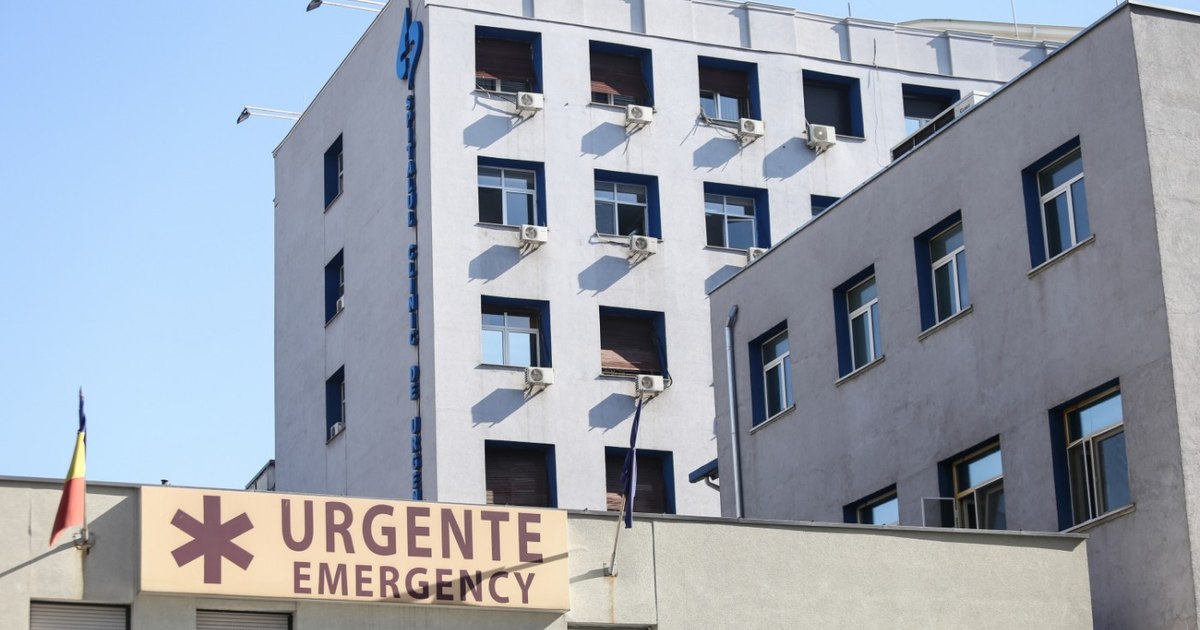
Candida Auris was recently detected at Floreasca Hospital in the Capital. Photo shutterstock
The World Health Organization has published the list of fungi with major impact in public health. This includes 19 pathogenic fungi, divided into three priority categories: critical, high and medium, depending on certain criteria (rarity of such infections, antifungal resistance, existence of specific treatment, deaths, access to diagnosis, annual incidence, complications and sequelae, research and development needs, because of the lack of treatment, the lack of treatment,
In the mentioned list, Candida Auris is classified in the maximum priority group (critical fungi).
The mortality rate, extremely high
According to WHO, Candida Auris is a species of fungi recently described (the first description in 2009), which causes global concern because the evolution of invasive infections with Candida Auris is severe (mortality of 30-70% even in patients treated with antifungals).
The causes of this evolution are:
– resistance to antifungals (most commonly in fluconazole, sometimes B amphotericin and, rarely, equinocandins);
– the pathogenic capacity of the species;
– The predilection of patients with severe immunodepression, admitted to intensive care, most often colonized simultaneously and with enterobacteri or acinetobacter baumanians resistant to carbapenems, which can generate life -threatening infections.
4 hours, enough to colonize another patient
Contagiosity is high, which causes a rapid extension of the number of colonized/infected patients (epidemic outbreaks) and affected hospitals/regions:
– it can quickly colonize another patient in the salon (a situation finds even after only four hours);
– Italy reported an IAAM outbreak with Candida Auris in the spoon region, with at least 277 cases, in eight hospitals, between November 2020 – November 2021. According to WHO, most cases (n = 210) were detected in a hospital and were spread to other hospitals by transferring patients.
Another extremely important aspect is given by the duration of the colosse, which can persist up to two years.
Another big problem is given by the difficulties of identifying in the laboratories that do not have the necessary and updated software, generating underdiagnosis with the undervaluation of the Candida Auris circulation.
What measures can be taken
Measures necessary to be applied under the conditions in which a patient with Candida Auris is confirmed, as happened at Floreasca Hospital, are the following:
– isolation in a single-bed reserve or the grouping of patients in this sieve and visible marking of the necessary type of precautions (almost constantly colonized with CPE);
– the most rigorous compliance of the measures regarding the hygiene of the hands (medical personnel, visitors, patients), of the universal precautions, the contacts and/or those regarding the aerogenic isolation in which they are indicated;
– the designation of dedicated medical-sanitary personnel;
– tegumentary screening performed to close contacts (axilla and inguinal region); Other sampling sites, if they are clinically relevant, can be plague, the insertion place of the catheter, neck, urinary, nasal, etc.
– periodic cleanliness and disinfection of surfaces and equipment (including after the exaggeration of the colonized/infected patient with Candida Auris), terminal cleanliness and disinfection of chlorine disinfectant salons (at a concentration of at least 1000 ppm), hydrogen peroxide, peracetic acid or other disinfectants; If they are not available, it is recommended to use those disinfectants who have spoocidal action, at the same concentrations and exposure duration. The use of quaternary ammonium salts should be avoided.
– the use, preferably, of the instrument and disposable devices;
– disinfection and/or sterilization of the reusable instrument, according to the manufacturer’s instructions;
– consultation with the infectious disease doctor designated according to the order of MS 1101/2016, regarding the judicious use of antibiotics and antifungals;
– training of medical-sanitary personnel regarding Candida Auris;
– reporting, as quickly as possible, the case to DSP;
– Informing the patient, his family or medical unit where he transferred on the status of carrier/infected with Candida Auris and the necessary measures.
The scandal at the Floreasca Hospital Center
We recall that the Floreasca Emergency Clinical Hospital in Bucharest is facing a outbreak of Candida Auris, a dangerous fungal infection and resistant to the usual treatments.
The case of Lavinia, the recently transferred patient to Belgium with burns on 70% of the body surface, brought to the attention of the dangerous fungus. Belgian doctors have confirmed that Lavinia, transferred to a Charleroi hospital after 53 days of hospitalization in the Big Big Center of the “Floreasca” Hospital, is infected with Candida Auris, an extremely resistant and potentially deadly fungus.
In addition to this case, three other persons admitted to Floreasca have been positively tested, and two of them are currently in the Great Arși Center, which has already been placed in quarantine. The hospitalizations in the section were suspended. Currently, there are ten patients.
The Minister of Health calls for the immediate resignation of the head of the Center of Arms Seriously at Floreasca Hospital. “My patience has reached the limit”
