
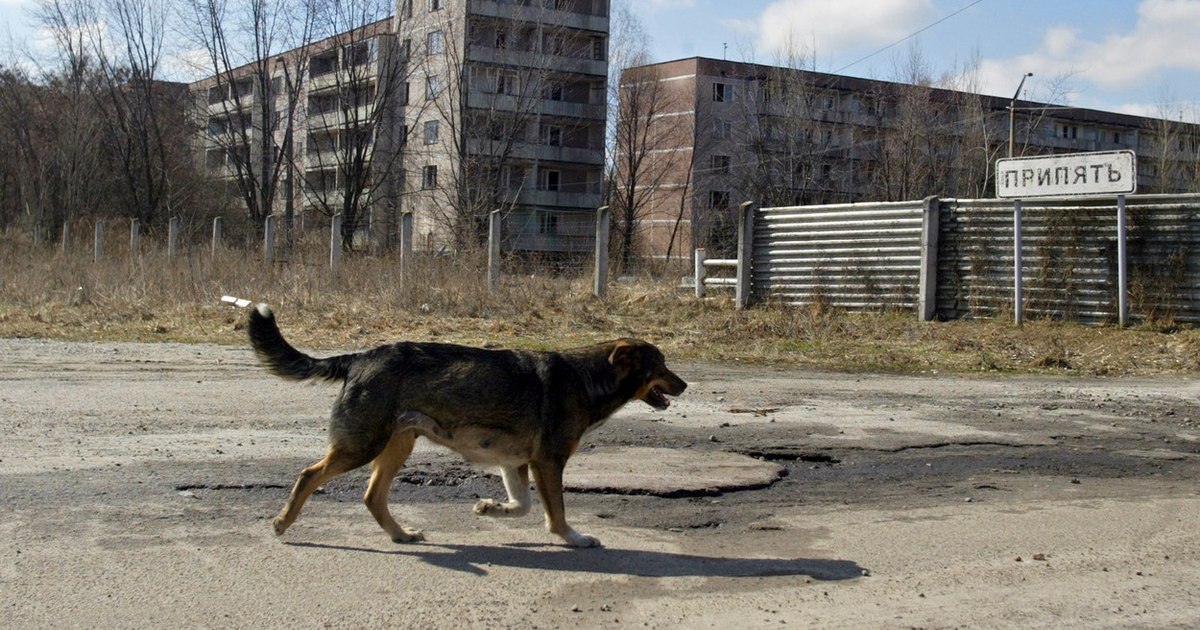
Scientists have discovered amazing genetic changes among dogs living in the exclusion area of Chernobyl. After decades of radiation exposure, the DNA of these animals seems to change at an unprecedented rate.
Dog DNA is affected by radiation from Chernobyl Profimedia photo
A genetic study conducted by the University of South Carolina and the National Institute for Human Genome Research, published in Science Advances magazine, shows that animals living in the exclusion area of Chernobyl (CEZ) have distinct genetic changes associated with long -term radiation exposure.
The researchers analyzed the DNA of 302 wild dogs in CEZ and compared it to that of dog populations outside the contaminated area, discovering a significant genetic divergence, which could influence the ability to survive and reproduction, writes The Daily Galaxy.
Life under radiation changed their DNA
The study identified genomic regions associated with radiation response, including loci related to DNA repair, immune function and metabolism regulation.
Genetic variants of genes such as ATM, TP53 and XRCC4, essential in the process of repairing DNA double breaks, were found at different frequencies among CEZ dogs, compared to those outside the area.
These differences suggest a selective pressure that favors alleles that could increase the chances of survival in an environment with chronic radiation, in small doses.
Reduced genetic diversity
The analysis also showed a lower level of heterozygosity in dogs that live closest to the nuclear power plant, in accordance with the existence of small initial populations and with limited opportunities for mating.
The diagram of analysis of the main components (PCA) in the study highlights a clear separation between CEZ dogs and those in the city of Chernobyl or from the surrounding villages.
This genetic isolation could contribute to fixing the features associated with radiation tolerance. However, researchers point out that consanguinization could reduce resistance to diseases and other stress factors.
Evidence of a rapid evolution
Beyond the genes involved in DNA repair, the researchers also observed variants associated with melanin production-such as changes in the MC1R gene-which were more common in CEZ dogs.
This could explain why some animals have a darker pigmentation of the fur, a phenomenon similar to that observed in local frogs, where increased melanin could reduce radiation oxidative damage.
The study also identified positive selection signals involved in regulating immunity (TLR4) and in response to oxidative stress (SOD2). These ways are essential to deal with aggression in the environment, suggesting that the dog’s immune system adapts to the constant presence of radiation and contamination.
A lesson about adaptation
Making these genetic differences helps researchers better understand how life adapts under extreme conditions.
Dr. Elaine Ostrander stressed that the Chernobyl exclusion area offers “A rare opportunity to observe evolutionary processes in real time.”
The knowledge obtained from this study could also have applications in human health: the same genetic pathways involved in dog adaptation are related to cancer susceptibility and resistance to radiation therapies.
Future research will include higher samples, analyzed over a longer period, to determine if these genetic changes eventually lead to visible differences in survival and reproduction.
