
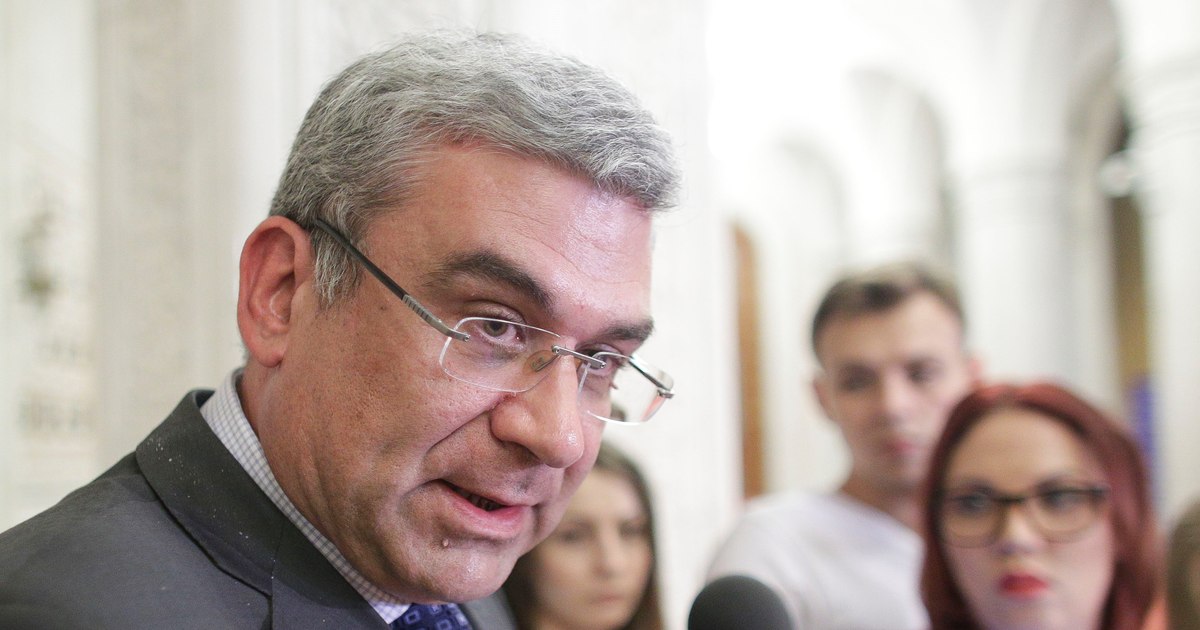
Teodor Baconschi, diplomat, writer and former foreign minister, analyzes Ion Iliescu’s historical role. In an interview for “Weekend Adevărul”, he speaks of “communism with human face”, the pact with the nomenclature and the moral fault behind the slow and painful transition. Baconschi points out that collective memory risks being poisoned if we do not put the truth in textbooks.
Diplomat Tudor Baconschi Archive Adevărul
“Weekend Adevărul”: How do you place the figure of Ion Iliescu in the chronology of the recent history of Romania? Is it rather a link between the communist and the democratic regime, or an obstacle to an authentic transition?
Teodor Baconschi: He was undoubtedly the savior of the communist system. He used the collapse of the Berlin wall and the wind “perestroiki” to Gorbachev to liquidate his political rival. He formally condemned those in the circle of the Ceausescu dictatorial couple, but he succeeded-with a wide popular support and a huge manipulation-to maximize the transition to democracy and capitalism, which happened much faster in all other ex-communist states in Central and Eastern Europe. Even the Government Petre Roman escaped, also with the “help” of the miners, so that we would not detach ourselves “too quickly”.
How do you think Ion Iliescu will be detained in the collective memory of the Romanians? Given the conditions in which it is most often talked about in an ironic or comical note (part of the pop culture of Romania), and only on the occasion of commemorating the events of 1989 or of the miners, with anger.
For two decades, Iliescu has been silent, probably disappointed by the PSD. The fact that it was returning to public attention only on the occasions mentioned by you shows us the dominant features of its posterity, as the society retained. The collective memory registered these traumas, especially since, in 35 years, the Romanian justice managed to collect the (crushing) evidence and formulate the accusations (so serious that the ECHR also said that they are targeting imprescribable crimes), but failed to do justice through a final sentence. The frustration generated by this major failure of justice in our country is one of the causes of moral confusion in which we bathe.
How much was his training in Soviet ideology and the proximity to the PCR core in modeling his decisions after December 1989? What took over from the old system and what has effectively changed?
Iliescu had a communist father from “illegality”. Was indoctrinated from adolescence. He studied five years in Moscow, in the triumphal years of post-war Stalinism, in which all the Bolshevik crimes-from the 1917-1923 Civil War to the Great Terror of 1937-1938-were masked by the USSR victory over Nazi Germany. In the 1950s Moscow, no “scholar” from the “brotherly countries” was returning home without being recruited by KGB. All were used as tools in the Cold War against Western democracies. It is clear that Iliescu was one of the Romanian communists actually fanatical, because he embraced Marxism-Leninism as a personal religion. Ceausescu was removed for two reasons: he was afraid he could take his place. And wanted to remove from the order the pro-moscovita group from PCR and Security. He was probably convinced that his predecessor, the dictator Gh. Gheorghiu-Dej, was liquidated at the command of the Kremlin. Ironically, he did not escape exactly why he was afraid …
Democracy “on the Soviet Calapod”
How do you evaluate, in historical terms, the responsibility of Iliescu both regarding the events after December 22, 1989 and in the mining?
The “escaped” samples over time from the always “resumed” files of the Revolution and Mining show us very clearly that Iliescu was the moral and material author, but also the main beneficiary of the extra -igal violence that installed it. It is just as clear that the Security and the Army (90s) were completely faithful to the Romanian people. It is not surprised that he put Virgil Măgureanu, a security officer, as the first SRI chief, and General Mihai Caraman-decorated by KGB for his achievements as an anti-nato spy-at the SIE chief. Or Sergiu Celac – Ceausescu’s marginalized translator – at the MAE leadership. When you see the team with which the so-called “transition to democracy” started, you can no longer marvel at the “means” to which it resorted.
Why do you think that in the case of the Revolution, more precisely of the data after December 22, but also in the mining, has not been tried? Do you think the posthumous will make it right?
Iliescu could not “” be convicted, because he sponsored the perpetuation of the nomenclature and exempted it from any settlement of the dictatorial past. It was clear to the old people left in the system that a possible condemnation of Iliescu threw the basis of the “original democracy”, tailored to the post-Soviet calapod. A posthumous conviction is unlikely. We will remain with the formula (in a tragic background) launched by Ana Blandiana and who became a motto of the memorial of the victims of communism, from Sighet: “When justice fails to be a form of memory, the memory can be a form of justice.” At least from now on-when we are already infected by the little age of the “Georgescu phenomenon” and when the surveys show that Russia’s hybrid war against Romania has already produced nostalgic masses of the Ceausist dictatorship-we should introduce in the national education of truthful and explicit on the crimes of the Marxist-Leninist regime. If it’s not too late …
“A Patent Soft Figure”
How do you explain the huge popularity he enjoys in the 1990s, despite his communist past? What did his categorical victory mean to the first presidential elections of 1990?
FSN held the monopoly of public information in 1990. Until the May 1990 elections, the democratic opposition was systematically blocked, demonized, attacked with huge lies. On the other hand, Ceausescu’s dictatorship left us a society, poor, frightened, easy to manipulate and actually indoctrinated by the continuous aggression of the official propaganda (the cult of personality, omnipresent, but also the ideological machinery behind the Festival Sing Romania, Daciada, Daciada and the other socialist, Iliescu took advantage of this context skillfully, showing the voters (who did not understand anything from the functioning of an authentic democracy) under the mask of an anti-Ceausescu with a human face, widely smiling, a paternal soft figure, which ensures the peace (and the first basic products, reappeared “miraculously” on the shelves). It perfectly succeeded the “transition” from the summary execution of a dictator detested to his plebiscite as “enlightened despot”, adopted by the popular masses.
How much do you think the actions matter, but also its inactions (regarding the history of communism) in the recent poll that emphasizes the nostalgia of Romanians to the Ceausist regime?
Given the specific degree of repression of terminal Ceausism – with all its deprivations imposed on the population -, the newer nostalgia compared to that political regime seems absurd and it is. But we can explain it both by the idealization of the past (when the subjects of nostalgia were at least young), as well as by the very fact that we have an unequal, cleptocratic democracy, a justice with double standards (which protects the great corruption) and a diaspora as half of Romania, composed of people who feel that the country was “forbidden”. To these categories of victims (real or self-perceived as such) of the Romanian post-communism are added many disoriented young people, with poor education, who feel they have no future and seek culprits to download their personal frustrations. You do not need a lot of counterfective fantasy to understand that if Ion Rațiu, he would have become the first president of post-communist Romania, all these distortions in the collective memory would not have been produced.
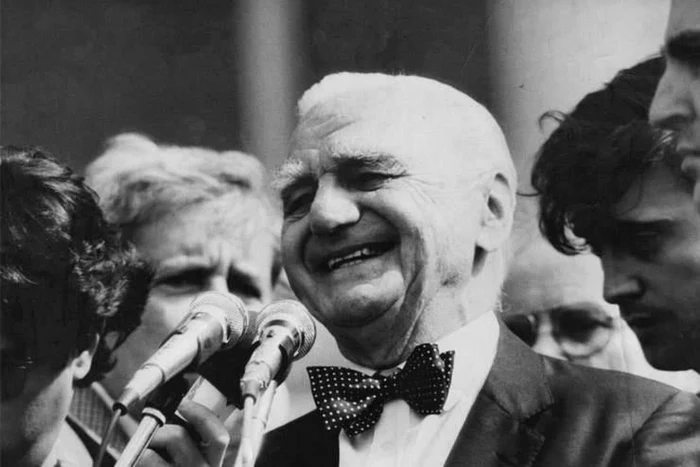
Ion Rațiu
Our “luck” is that, under the pressure of the historical objective of integration into NATO and the EU, we did not choose with Iliescu as a life president … We must also admit that “the second Iliescu”, after the CDR’s governance (who paid the pots broken by the first Iliescu and put the country in the West Directorate), had no more to the new direction). The Stalinist Patriarch of Anti-Ceausism had finally become a “global leader”, satisfied, like Ceausescu in the 1970s, that he was received at the table of Western leaders.
How to valueWe are freedom
What were the main achievements and mistakes of Ion Iliescu as president of Romania, both internally (economic, political, social) and externally (international relations, European and Euro-Atlantic integration)?
As soon as the PCR and the Security device became the main beneficiaries of the market economy, Iliescu was given on the fence: the only leader who signed after 1989 a friendship with the USSR (through which we committed to not change the alliances) then allowed his pact from Snagov, adapted his speech to a global socialism ” protocol of the former communist who enters Gorbachev’s costume. As Romania was an important piece on the eastern flank of the EU and NATO, its “conversion” was accepted by the Euro-Atlantic elites, and its past began to be “washed”, first of all in the left-wing political environments. A François Mitterrand (who did not want the reunification of Germany) made an “opening” to Iliescu since 1990, when the students from Bucharest offered him a reception with broken tomatoes.
The statue of Iliescu
What does Ion Iliescu mean for the political class in Romania? Often, political parties refer to it, either in an admiring or negative note.
In my opinion – which is only an unrealistic expectation – I think that democratic political parties, or that claim it, should no longer contribute to the statue of Iliescu, but I do not think that the PSD will have this moral power, which would be equivalent to a renegade of its own history. Iliescu was, without discussion, a dominant, determining, major figure. We only have enough to settle the facts to admit that we do not owe their freedom or democracy: both were obtained through efforts and sacrifices of honest and patriotic Romanians, but despite Ion Iliescu.
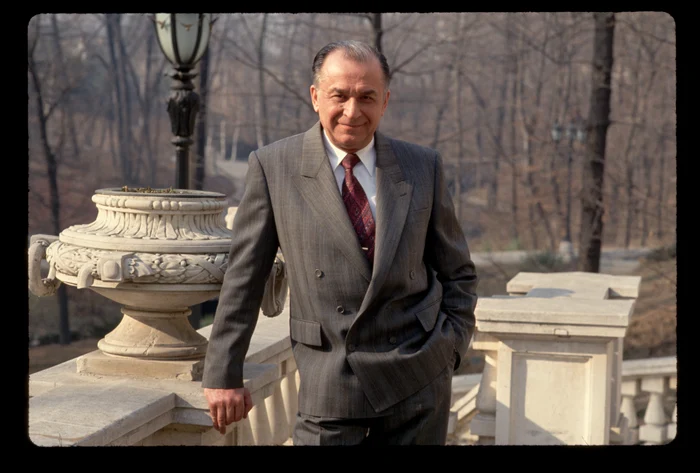
Ion Iliescu Photo Getty Images
How should we relate, as a society, to the inheritance of a leader who marked almost two decades of the political life of post -communist Romania?
I think we have to write the true history with the documents on the table and the fully open archives. Symbolically, Iliescu lived long enough for his disappearance to coincide with the definitive closing of the “transition”. We have to prove, as a nation, if we are able to stand on our feet, in the free world, or we will sell our freedom on rubles, proving that we prefer authoritarian regimes and that we had nothing to do in the EU and NATO. As for me, I am convinced that the immense majority of Romanians will always choose the free world, contribute to the structural reform of the “Iliescian state” (on the verge of collapse) and will make a civilized future, along with our Western partners and the brothers of the Republic of Moldova.
How could the former president be defined in a single word?
Matrioşka …
