
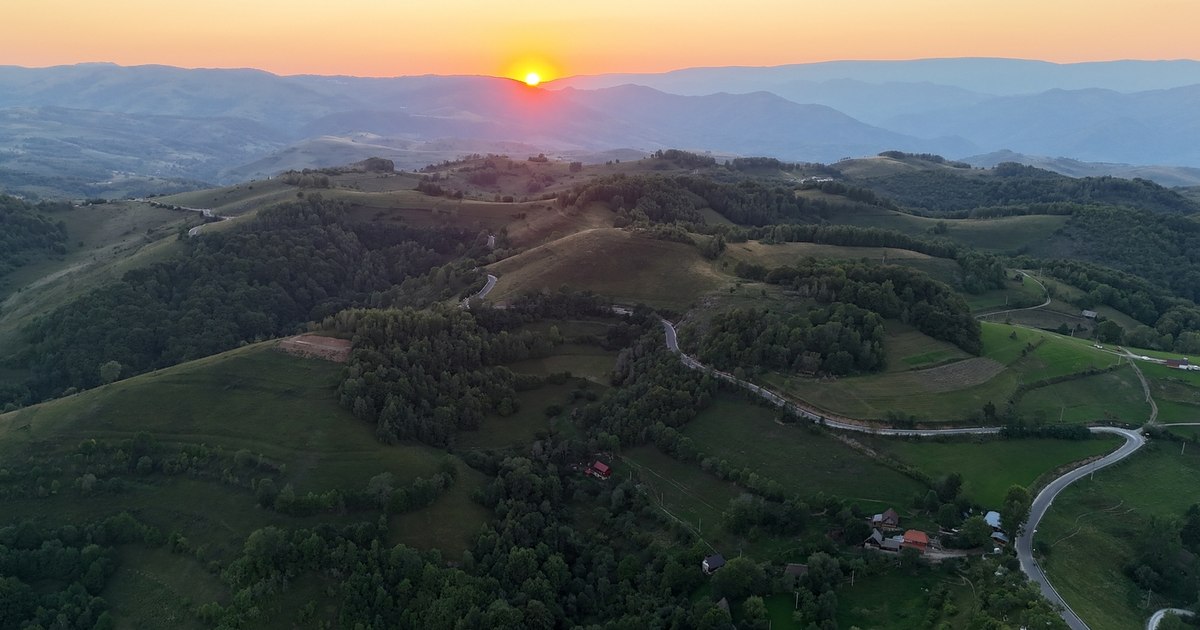
One year after the inauguration, Transapusean, the road that crosses one of the most spectacular areas of the Apuseni Mountains, has gained the appreciation of many Romanians. Some say it is even more attractive than the famous Transalpina and Transfăgărășan.
Transapusean. Photo: Daniel Guță. TRUTH
Although she is less famous than Transalpina or Transfăgărășan, Transapusean (107i county road in Alba county) has become, in less than a year after the inauguration, one of the most appreciated mountain roads in Romania.
Over 70 million euros have been invested, in recent years, by the authorities in Alba, with European funds, for the transformation of a local mountain road-with unpaved portions-into a modern road of almost 80 kilometers, which cross one of the most spectacular areas in the country: the Apuseni Mountains.
Built with European funds
The new mountain road, built in about five years, delighted tourists and has gradually earned a special place in the preferences of many travelers.
“I went through this route by bicycle. I crossed Romania both on the bicycle and through mountain running and hiking. For me, Transapuseni is Top 1 in Romania as a route. Authentic Romanian. It is, in my opinion, the most beautiful area in Romania. He reported a young woman who crossed the Transpose on the bicycle.
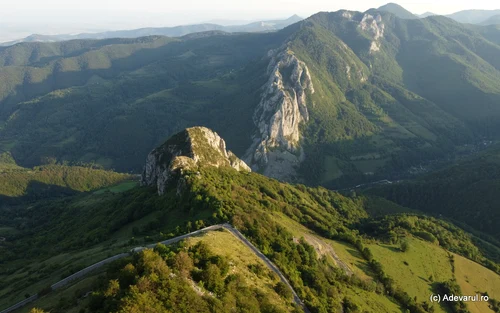
Image 1/15:
Transapusean, photo Daniel Guță Adevărul (16) JPG
Other Romanians complained that the mountain road is narrow on certain portions, so it was difficult for them to travel it with cars.
Transapusean represented, according to the Alba County Council, the largest investment ever made in a county road in Romania. Over 200 people worked on the DJ 107i yard, which crosses the localities Aiud (DN1), Aiud de Sus, Rîmeț, Brădești, Geogel, Măcărești, Bîrlești Cătun, Cojocani, Valea Barii, Bîrlești, Mogoș, Valea Albă, Ciuculești, Buciu, intersect with DN 74).
“The works within this project aimed at the rehabilitation of the carriageway by carrying out a foundation made of ballast and broken stone, to which were added two layers of asphalt mixtures-in total 80 km (120,000 tonnes)-, as well as special works, such as the casting of 56,600 cubic concrete in support walls, building of 15 bridges and bridges. The arrangement and installation of streams for water leakage on a length of 57 km and the installation of metal parapets on more than 50 kilometers ”, specified a statement of CJ Alba.
Why is the special tranapusean
The trail of Transpăuseana starts from Aiud, gradually climbing up to over 1,100 meters altitude, where the western plains are adorned with villages roared in hard to reach places, with archaic households, at great distances from each other.
After crossing the settlements of the Moles and passes by the natural reserves such as the Râmeț’s Detunates or Gorge, the road descends to Bucium commune, a historical place of the Apuseni, famous due to the stories of Ion Agârbiceanu, near the cities of Abrud and Câmpeni.
Unlike Transalpina and Transfăgărășan, which crosses wild alpine areas, the road from Apuseni is animated by mountain villages, today less populated than in the past, but largely preserving its patriarchal appearance. Living in high lands remains a distinctive element of this region.
“Without reaching the heights that give the beauty of the Făgăraș Mountains, Piatra Craiului or Rodnei, the Apuseni Mountains reveal to the tourists unexpected, of completely different nature. Nice, in the other mountains, you can not find a more harmonious combination between the line of the plains Nature, nowhere did the man connect so organically the mountain life, falling into the natural landscape ”, The authors of the Apuseni Mountains show in the 1980s showed the tour guide.
A-Frame huts, new house houses
On the hills crossed by Transapusean, travelers can see numerous traditional households specific to villages in the Country of Moors, but also modern “A-Frame” cabins, which integrate harmoniously into the landscape. The triangular houses, with contemporary design, are inspired by the traditional architecture of mountain dwellings, with high and sharp roofs, designed to face storms and viscols.
The common element of these constructions is the roof, specific to the old houses in Apuseni, which the motions – renowned for their mastery in wood processing – raised it first for functionality. The difference consists in the execution mode: at the traditional mountain houses, the roof is built separately from the walls, while in the “a-frame” cubes it also forms the walls of the house.
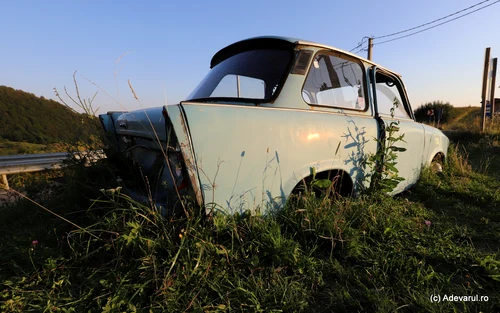
Image 1/15:
Transapusean, photo Daniel Guță Adevărul (128) JPG
“The starting point in the construction of the dwelling of the Moț was the archaic houses raised on the hay far from the village, in the mountain, inhabited only during the mowing and the wintering of the animals. There were small houses, with a single room, built of beams, with a very small window. They called moving houses ”, They showed Prof. Adela Pleșa and Prof. Simona Boncuțiu, in the study of traditional houses in the country of the Moors. Their functions and impact on tourism.
The houses of the motions were raised, in the past, beech wood and, later, fir, with shaped beams. They had high and sharp roofs, disproportionate in relation to the rest of the construction, which resembled a huge straw or shingle cap that protected the family’s home from the whims of the time. Animal huts also had similar archaic forms, and some can be seen today on the route of Transapusean.
The monuments of nature on the tranapusean
A special place, accessible from the Transapusean, is represented by the reserves empty and flocked, located on the radius of Bucium commune.
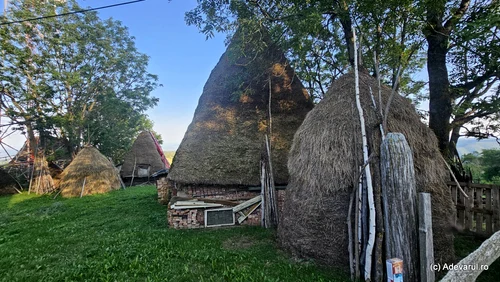
Image 1/15:
Transapusean, photo Daniel Guță Adevărul (191) JPG
The basalt columns of the empty detonate amount to an altitude of about 1,200 meters, offering spectacular views on the Metaliferi Mountains, the Vulcan Mountains and Roșia Montane. The two pools have inspired, over time, numerous local legends.
“Detunata is a basalt stone, composed of large prisms, which are at the bottom, oblisted from above, like huge trees, next to each other, in the Abrud mountains, to the navel-night from Bucium-Șasa. It appears as a big, huge house, in the middle of a tent. A circular form and that the part from the west has fallen in Europe, only about Scotland is said to have such places. wrote the publicist Ion Pop Reteganul, a former teacher in Bucium-Șasa, in the volume of mountains, animals and earth.
Râmețului Gorge is also among the tourist attractions on the trail of Transapuseana. Nearby, travelers can visit the Râmeț monastery, founded at the beginning of the 13th century, one of the oldest monastic settlements in Transylvania.
