
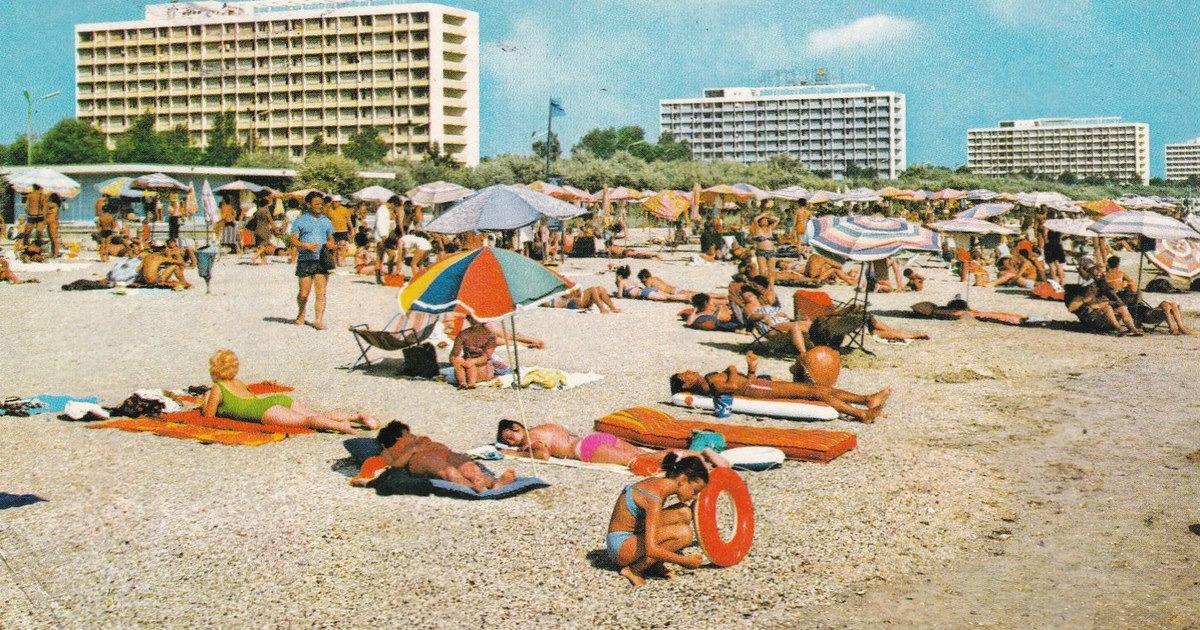
Five decades ago, the resorts in Romania were in full transformation, due to the large number of Romanians forced to spend their holidays in the country, but also of the chase of the Ceausescu regime after the currency. Many of the big hotels erected in the 1970s, meanwhile, arrived almost desolate.
Hotels on the Romanian coast in the 1970s. Source: delcampe.net
In the early 1970s, numerous tourist resorts in Romania were in the process of extension.
Romanians, holidays only in the country
Among the picturesque buildings, of the era, of the old resorts were erected, at an alert rhythm, hotel complexes intended for mass tourism, a phenomenon that had begun to take ground in socialist Romania.
The interest of Romanians for holidays and increasing the number of accommodation places in these resorts were favored by the changes that the country had gone through in the more than two decades of communism.
In the mid-1970s, Romania had reached a population of over 21.5 million inhabitants, with over four million more than in the 1950s, the growth being influenced by the anti-abortion regulations of the Ceausescu regime. At the same time, the migration to the industrial centers had made the resident population in cities, in two decades, by over ten percent, and a large part of it was represented by families of workers of rural origins.
While the daily living in the villages of Romania did not include the concept of holiday, the employees of the communist factories and factories benefited from holidays, for which they could book places in the resorts. The Romanians had minimal chances to spend their holidays abroad, so, due to the high demand during the tourist season, the accommodation spaces provided in resorts continued to extend in the 1970s.
Foreign tourists, the target of investments
As in the other countries in Eastern Europe and the Soviet Union, the tourism industry had become attractive to the communist regime and due to the currency that foreigners could bring to Romania, burdened by external debts in the early 1970s.
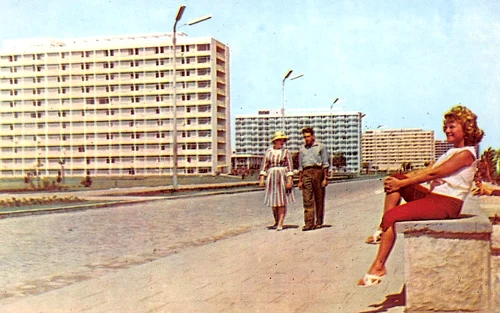
Image 1/18:
Mamaia resort in communism Source Delcampe (34) JPG
“Communist Europe has come to realize that it is generally easier to increase exports of tourist services than those of goods to the western developed, that the tourism industry requires smaller investments in relation to the volume of sales and that this industry has a period of recovery of the relatively short investment. The landscape and cultural features and, in most cases, offer special exchange courses for tourists and other incentives to attract Western visitors ”was shown in a report by the Central Information Agency (CIA) in the United States.
As on the shore of Lake Balaton in Hungary or on the Bulgarian shore of the Black Sea, on the Romanian coast, the first hotel chains meant to attract Western tourists were built in the 1960s. Other big hotels were erected in the old spa resorts, while the roads to the attractive areas of the mountains were rehabilitated to become more accessible.
The pursuit of currency
The beauties of Transylvania, Bucovina and the Danube Delta were also increasingly promoted in the offers of the external routes proposed by the National Tourism Office in Romania.
“Of the Eastern countries, Romania is probably the most active, in relation to the population, in extending its investments in new tourist facilities. At least six new hotels and tourist motels have recently been opened in areas outside Bucharest, and three large hotels are planned for the Capital. In addition, on the Black Sea coast. Construction programs from the USSR and Eastern Europe – expensive construction delays, poor quality and lower materials and equipment. it was mentioned in the CIA report.
Over 500,000 Western tourists traveling to Romania in the early 1970s, a rapid growth compared to previous years, with the relaxation of travel conditions imposed on wicked. At the same time, although the number of Romanians who could leave the country was still increasing, only 75,000 managed to go abroad in 1971, according to estimates in the CIA report. Then, Western tourists spent about two million dollars annually during the holidays in Romania, and their favorite place was the coast.
“The prospects for increasing Western tourism are the most promising in those Eastern European countries, such as Romania, where the management has recognized the value of the” tourist dollar “and has given a special priority to its cultivation”, the authors of the report added.
Mamaia, the Pearl of Tourism in Romania
In addition to the large beaches and hospitality shown by Romanians to the Westerners, foreign tourists were impressed by the extremely low prices of tourist services. If Romanians often faced shortcomings, including fuel insurance for the road to the sea, for Westerners such problems could be easily avoided.
“The shore covers about 150 miles, from northern Bulgaria to the borders with the USSR, and is occupied by a few remarkable resorts, where you can find everything: from campsites and holidays to huge hotels, built in contemporary style. In some places, small rocks covered with greenery, but most of the shore, is made of white, with a flat, with a flat, with a flat clear and warm of the sea ”, The report Frank Scholes, a Canadian who visited Romania in 1976, in an article published in the Canadian daily the Ottawa Citizen.
Of the resorts on the Black Sea coast, the most sought after was Mamaia, appreciated for her long -miles long beaches, bordered by Lake Siutghiol and by hotels, restaurants, cafes, clubs, discos, shops, sports fields and even a summer theater.
“Sometimes it is called Miami Beach of Romania, but the comparison is a bit forced. The beaches of Mamaia are better, and the rhythm of life is quieter. And even if the hotels are missing pizza and opulence in Miami, there are also the prices there. The peak of the season.note the Canadian tourist.
For Romanians, along with Mamaia, one of the most popular resorts on the Black Sea coast became Costinești, due to the growing number of young people who spent their holidays here.
Great hotels, less attractive at present
After 1990, many of the big hotels built during the communist period in the Romanian resorts arrived in comparison. In the Herculane Baths, for example, in the 1960s and 70s, several hotels with up to 15 floors were erected, baptized with historical names such as Dacia, Aphrodite, Diana, Hercules, Roman and Minerva.
The resort received, at that time, almost 100,000 tourists, most Romanians who came to treatment with thermal waters, known from the time of the Dacians and Romanians. After 1990, some of these big hotels were closed and came to ruin, like many buildings from the eighteenth -XIX centuries in the historical center. However, the resort on the Cerna Valley continues to attract over 100,000 visitors annually.
Around Lake Vidra, arranged on the Lotrului Valley, the communist regime had begun, in the 1960s, the construction of four tourist resorts: Voineasa, Vidra, Alba and Mura, which should have offered almost 10,000 accommodation places. The mountain land had been proposed as a possible host of the Winter Olympics, but the plans were abandoned. Today, many of the former tourist complexes then have remained in ruin.
