
“Romania will not be able to manage the energy pressure of the Boom and we will pay for expensive to supply the” green “data on paper”warns Dan Popescu, director of engineering @scopefusion.
Photo source: Shutterstock
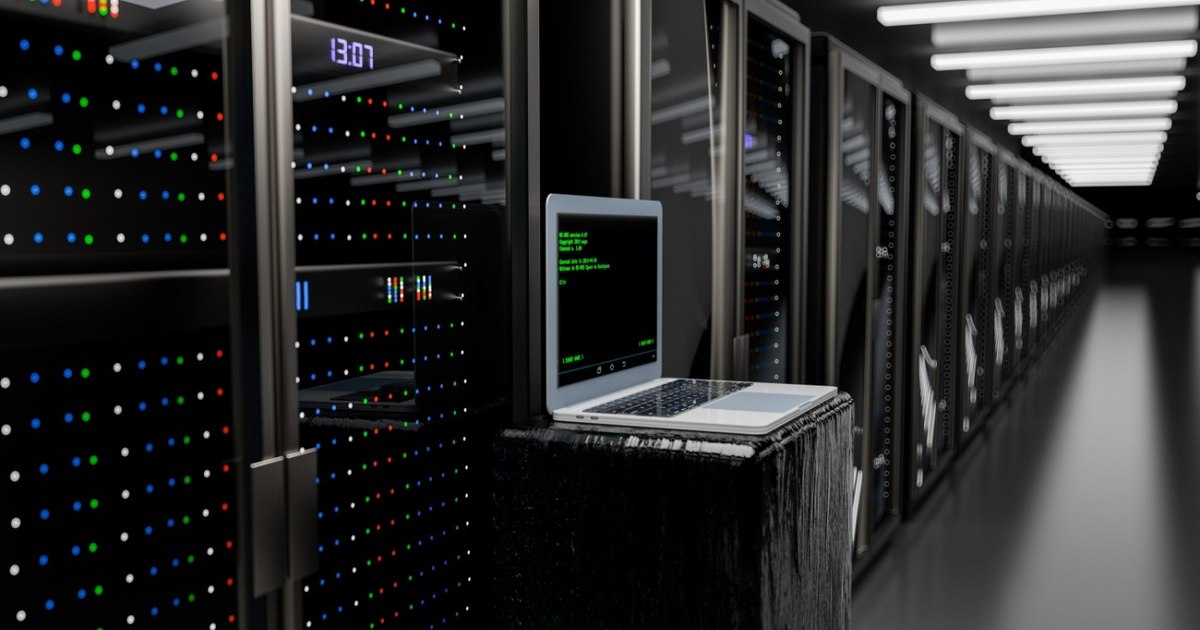
Artificial intelligence needs massive data centers, but Romania does not have energy infrastructure or political strategy to support them, he believes. His statement brings to the foreground an ignored reality in the public debate: if the boom you will reach here, the pressure on the electrical networks will be huge, and the additional cost will be borne by the citizens.
“Holes” in production and risk of imports
Dan Popescu points out that, although Romania has an independent energy system, there are “many production holes”, from only two active reactors to Cernavoda, to “Green Deal measures that limit us energy” and a “lack of political organization to open the potential”.
In his opinion, Romania could open some larger data centers, but not before reaching a major energy deficit. “In practice, if we do not solve the fundamental political-energetic problems, most likely we would import enough”says Popescu.
He also emphasizes the contradiction between technological plans and national security: “The energy security objectives with the Boom AI do not directly reconcile, if we do not solve the political and long-term energy strategy foundations ”, Any additional cost “The citizens support him through taxes”, Opin the specialist.
The myth of Romania as Hub It
As for Romania’s potential as Hub IT, Popescu clearly says that Romania cannot remain competitive as Hub IT. He also explains why. “Apart from 2-3 IT companies that have managed to grow internationally, the rest are in national conditions, without a real explosion. What we have is still the outsource industry. shows the expert.
About the European energy transition, his message is firm: “Energy transition in what? In Green Deal? We cannot speak, no, but it is not relevant to our economic and energy interests. Green Deal is a European project that is primarily ideological, not economic. No, Romania has no strategies at all. Of no way. On no subject ”concludes Dan Popescu.
Irish lesson and American scenario
However, the problem is not specific to Romania. A recent study published by the Financial Times showed that Ireland, which became the European capital of great cloud providers, is already experiencing limit situations. The data centers consume over 20% of the country’s electricity, and the International Energy Agency estimates that the share will reach almost a third by 2026.
Between 2019 and 2024, their consumption increased twice as fast as renewable energy production. In the days with strong wind, the network can be 75% clean, but on other days it depends almost entirely on gas. Even if the big companies report a consumption “100% green” Globally, the local reality looks different. The US is going through a similar scenario: almost 20% of the new gas power plants are intended exclusively for database supply.
At the same time, electrical networks, largely based on fossil fuels, are overloaded, while technological giants continue to announce that their energy is “100% offset” by green certificates. Romania, between plans and reality for the moment, Romania has no major data centers, of hyperscale type, but there are plans and discussions about attracting investments.
An analysis published in the spring of this year showed that Romania could become a regional pole for data centers, but the reality is that the energy infrastructure is not prepared for such pressure.
For now, Romania does not have a hyperscale data centers. However, there are 59 operational data centers, most of them small and medium, without the infrastructure needed to train the big models.
Romania between the Black Sea AMBIA AI Gigafactory and reality
However, Romania has recently entered the European competition for a historical investment: 20 billion euros through the Investai program, intended for the construction of 3-5 “AI Gigafactories” on the Continent. Bucharest proposed the Black Sea project of Gigafactory, a regional supercomputing hub that would be fed through an energy mix of up to 1,500 MW and equipped with over 100,000 AI accelerators.
The project has two candidate locations, Cernavoda and Doicești, and is presented as a center of technological sovereignty and cyber security for Central and Eastern Europe. Supported by the World Bank and a consortium of universities, research institutes and regional partners (Republic of Moldova, Ukraine, Turkey), the project would bring to Romania an estimated investment at $ 4-5 billion and a strategic geopolitical positioning at the Black Sea.
“We do not only build a factory, we set up a connected, safe and prepared region for the future. It is about technological sovereignty, cyber security and regional cooperation,” declared Bogdan Ivan, former Minister of Economy and the current Minister of Energy, at the time of the candidacy.
“We bring 4 billion euros to Romania and we are the strongest in terms of cyber security and technological sovereignty. (…) We submit, perhaps, the most important project for digital infrastructure and for the technological sovereignty not only to Romania, but of the entire region of the Black Sea, namely: Blakesea of Gigafactory It is made together with the best specialists of the World Bank, it brings together universities, the private environment and the countries in the Black Sea region ”, explains Bogdan Ivan, in June.
According to his statements, it is for the first time that Romania, since the integration into the European Union, has an application of this major at European level. “And this is done in partnership with those from the Republic of Moldova, with those from Ukraine, with Turkey and we intend to take partners and all our neighbors in the Central and Eastern Europe region, and the Center will be here, in Romania.”added Bogdan Ivan.
Diana Nițescu, CEO Top Minds, explains, for the truth, that the project has a solid foundation. “For now, I think it is only a project deposit. It has many arguments, including the fact that we have the Cyber Security center. Following the approval and establishment of the implementation framework, which will bring both advantages and challenges. It is important to remain realists, both nationally and from the perspective of startup and Ecosystem.Eri. ”
She believes that the initiative has the potential to become a European technological landmark. “It is a welcome opportunity. The AI now needs clear regulation, and this factory promises exactly this. If it will be well managed, it can generate real economic growth and accelerated internationalization, especially in large cities.”
As for social impact, she saw no risks. “At present, I do not estimate negative social effects. On the contrary, precisely because it will be a rigorously regulated European initiative, as is the Cyber Security Center, it will bring stability, innovation and collaboration,” said Diana Nițescu.
The decision on the winners is expected until the end of 2025. An official proposal call follows, launched in Q4 2025, which will allow the advancement in the industrial implementation phase. The purpose is that the first gigafabrici you have to become operational between 2027 and 2028.
But between ambition and reality are the same obstacles reported by Popescu: outdated energy networks, only two functional nuclear reactors and a “green transition” rather than operational. If Romania fails to solve these deficits, the risk is that Black Sea AI Gigafactory will remain a paper project, and citizens will bear the costs through higher invoices and imports to imports.
