
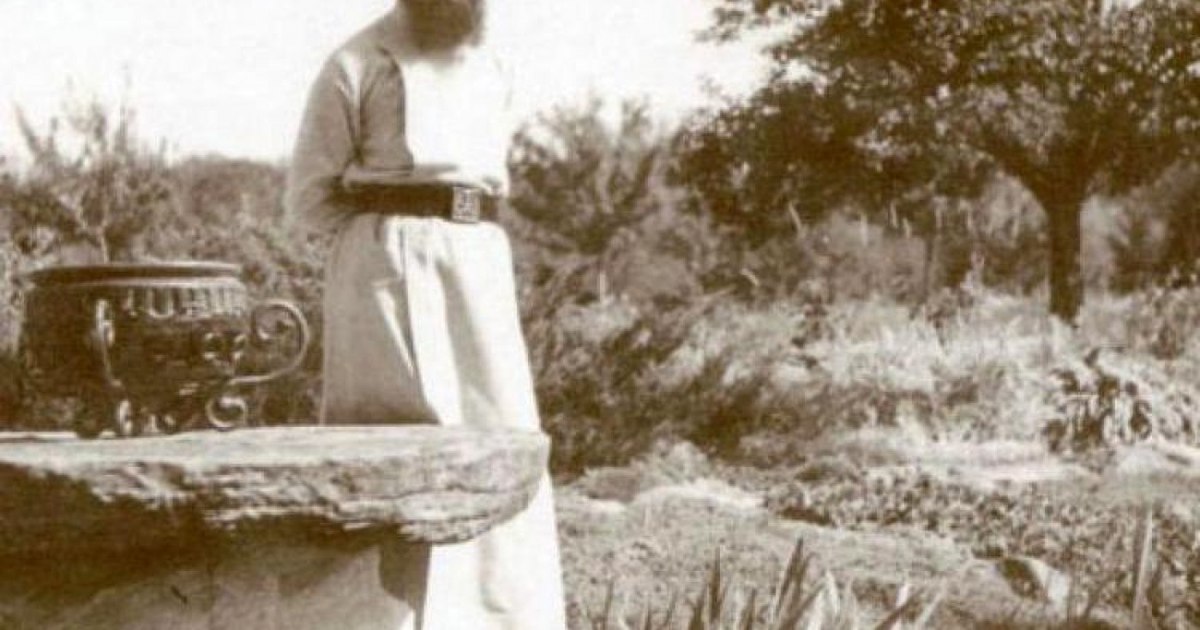
In the 1940s, the Brâncoveanu Monastery in the Făgăraș Mountains had become the place of the “Arsenie Boca”, and its spiritual since then attracted crowds around it. The fame of the austere monk related to these places continues to attract many believers and currently at the monastery.
Arsenie Boca in the 1940s. Photo: Daniel Guță. TRUTH
Brâncoveanu Monastery (video) from the town of Sâmbăta de Sus (Brașov county) was erected at the end of the seventeenth century, by the family of the ruler Constantin Brâncoveanu.
Located at the foot of the Făgăraș Mountains, in the vicinity of the city of Făgăraș, the monastery impresses with its architecture, being the only such historical place built in the region of Transylvania in Brancovenesc style.
Arsenie Boca at Brâncoveanu Monastery
But the popularity that the monastery has gained in the last decades was largely due to Father Arsenie Boca (1910 – 1989), his former abbot of the 1940s.
After, in 1939, he had lived several months of monastery at the monasteries on Mount Athos, the young deacon Arsenie Boca became a monk and then abbot of the Brâncoveanu Monastery. Appreciated for his artistic talent, but also for his “grace” to speak to the pilgrims, Arsenie Boca shortly won the hearts of the believers, including the members of the Royal House of Romania, who attended the settlement, and other personalities of the time.
In the early 1940s, his fame of godly monk created a real phenomenon around him. The spiritual from Sâmbăta de Sus was arrested in the summer of 1945, for alleged links with the Legionary Movement.
Except for some delactions, in which it was presented as “a legionary focus and we believe that it is part of the Legionary Clandestine leadership”, the documents kept in the state archives showed that it had not made political propaganda and had no close links with the legionaries.
“The named priest was not proven to make anti-government propaganda from man to man, nor is it in close connection with the reaction elements. But it makes an intense religious propaganda at the Brâncoveanu Monastery, from Sâmbăta de Sus, where he is visited by a lot of people, mostly by different people suffering, and the priest has a priest, believers ”is shown in an informative note of state safety, in 1945, kept at the CNSAS archives.
The phenomenon “Arsenie Boca”
In the autobiographical declaration given to the investigators, in 1945, from the arrest of the safety in Râmnicu Vâlcea, Arsenie Boca explains the origins of the “Arsenie Boca phenomenon”.
“In a winter, probably in 1941, we wake up with an avalanche of people of all ages and steps, hoping to talk to them about their troubles. Here I woke up with people, though I was not a priest. Christ-God and true man.wrote Arsenie Boca, in the 1945 statement.
Arsenie Boca also served at the Monastery in the Făgăraș Mountains until 1948, when he was arrested again and “exiled” at the Prislop Monastery, a place that was in a state of abandonment. The authorities of the communist regime were pursuing, and many of those who frequented the settlement in the country of Hațeg were gradually isolated by the pilgrims.
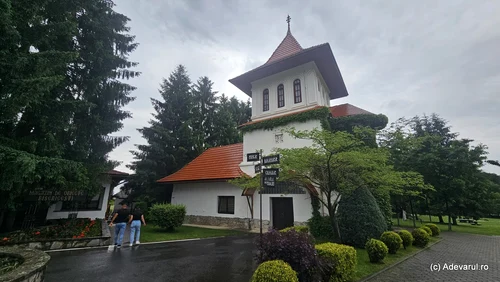
Image 1/19:
Sâmbăta de Sus Monastery Photo Daniel Guță Adevărul (28) JPG
The information provided by the network of informants around the monastery led to his arrest in January 1951. After a year and a half of detention, in 1952, Arsenie Boca returned to Prislop, but was still followed by the Security collaborators. Some of the close ones offered information to the Security about his activity, explaining in their turn how it appeared in the 1940s “the Phenomenon of Arsenie Boca”.
“His fame of a rigorous monk, of man of God, had gone to the edge of the country. The world was crazy about him. He cultivated this cult of personality and monk Arsenie – so he called him in the monk – he became a great man, renowned throughout the country. He was during the war. Everywhere, to see him, to hear him, to talk to the “saint” from Saturday. He passed in front of the crowds as a connoisseur of the mysteries of man and miracle worker ”, He described a former near, with the pseudonym Nicoara Iulian, in an informative note of 1964, kept in the archives of the former communist security.
He added that Arsenie Boca was leading to the monastery in Făgăraș an extremely severe life and was rigorously and exaggerated in clean, fasting and prayer life.
“For himself he began to dig in the rock of the mountain, at great heights, a cell, where he wanted to withdraw and live in isolation from the world.”add the informant.
Never acknowledged that he was attached to the Legionary Movement
In 1955, Arsenie Boca was again arrested under the pretext of alleged links with the members of the Legionary Movement. He was accused of “the omission of denunciation” of the legionary Nicolae Bordașiu, sought by the authorities, which he had housed at the monastery, and was subsequently sentenced to six months in prison. Since 1959, he was forced to leave Prislop Monastery (video) and give up the priestly activity, remaining employed as a painter in the workshops of the Patriarchate in Bucharest.
Despite the pressures exerted on him, Arsenie Boca has always denied belonging to the Legionary Movement or any other political involvement. Not even during the study period, he said, did not embrace the legionary ideas, fashionable in the late 1930s, among many Romanians.
“Three years I stayed in the boarding school, to be a guarantee for me that I did not deal with any waste of time. There were still legionary students who called us with them. I never went. The school absorb me totally and I had no time to waste. Independent of politics, I did not find a inclination towards the movement. said Arsenie Boca, in a statement given to investigators.
The priest added that, in the spring of 1939, he was allowed to leave the country, on Mount Athos, where he stayed for three months, precisely because he had no connection with the Legionary Movement.
“At the departure were the harshest researches that no one of those who were ever legionnaires could not leave the country. I, having absolutely nothing to active, obtained a travel passport: in Europe” Sans Russia “, from the Police Prefecture in Sibiu. Governments: Romanian and Greek, as I have nothing suspicious to the active, but the simple call to the inner perfection through the craft of the monk ”the father said.
However, the legionaries often came to the monastery in Făgăraș, in the early 1940s.
“The only links we had with the legionaries were the spiritual ones, which are natural between the priest and the believers”, stated Arsenie Boca, in the 1948 interrogation, the year in which he had been arrested by the communist authorities.
Currently, both the Sâmbăta de Sus monastery and the Prislop Monastery, the two settlements in which Arsenie Boca served in the middle of the last century, have become pilgrimage places, sought by thousands of Romanians.
