
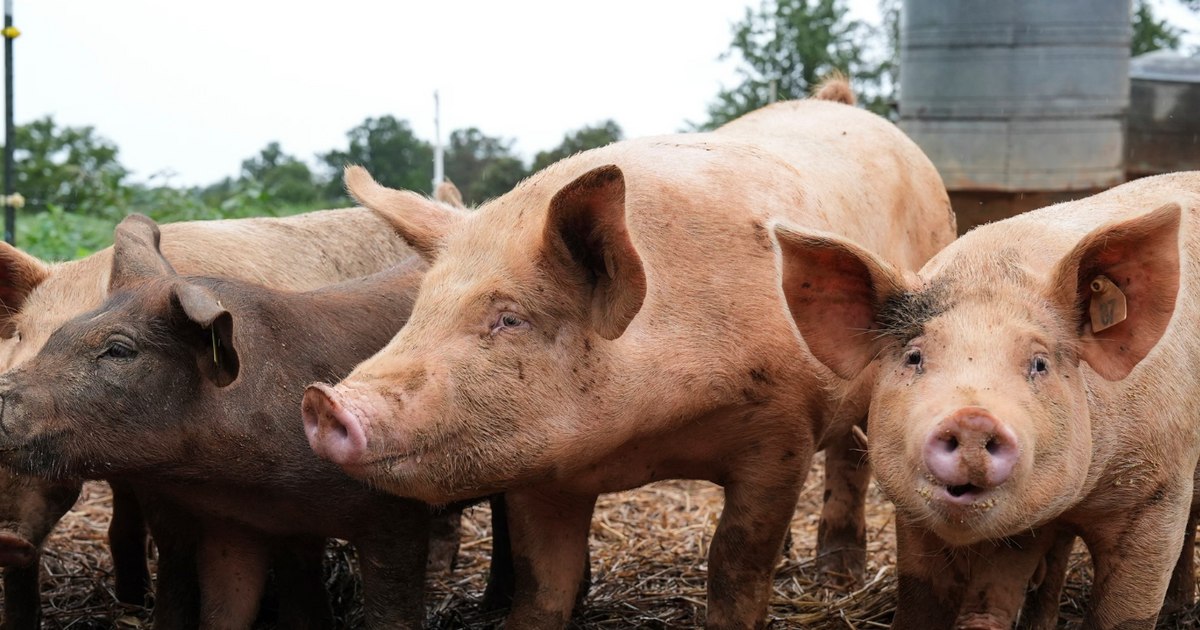
For the first time, the surgeons managed to transplant a lung from a genetically modified pig into a human patient, the organ operating for nine days. The discovery, announced by Chinese researchers, marks a new step in the field.
Pork lung transplant in a man marks a medical premiere / photo source: AP
The intervention had a limited success: genetically modified lung only nine days worked
The surgeons transplanted for the first time a lung from a genetically modified pig into a human patient and found that it worked for nine days, the researchers revealed, according to theguardian.com.
The work represents the most recent progress in the field of Xenotransplant – a technique aimed at solving the global crisis of the lack of organs: according to the World Health Organization, only up to 10% of the world transplant requirement is currently covered.
However, experts have emphasized that there is a long way to go until the pork lungs can be used in patients.
Dr. Justin Chan, surgeon specialized in lung transplant at Nyu Langone Transplant Institute, which was not involved in the study, described the research as “An exciting and promising work”, but it pointed out that the report looks at a single patient and represents “A limited success”. “These lungs cannot independently support a patient,” he added.
Andrew Fisher, professor of medicine of lung transplant at Newcastle University, agreed: “This research is welcome to deepen our understanding, but it is only an incremental step. It takes a lot more work and we are not at the dawn of an era of the pork lungs.”he said.
Xenotransplant, a technique meant to solve the crisis of lack of organs around the world
Xenotransplant has become a hot field of research in recent years, heart, kidneys and liver being already transplanted from pigs to people. The used pigs are usually genetically modified, by eliminating certain swine genes and inserting human genes, to reduce the risk of rejecting the organs by the human body.
Studies are often initially performed in patients in brain death, before being tried in some cases on living patients. Although there were only a few living patients who received pork organs, many died in a few weeks or months, although not always due to complications directly related to transplant. However, some transplanted pork patients survived several months, the organs still functioning.
But experts say that pulmonary xenotransplant is particularly difficult.
“Each breath brings the external environment inside the body”Fisher explained. This means that the lungs must be extremely capable of dealing with attacks from pollution, infections and other factors. “Therefore, the immune system of the lung is very sensitive and active, which in the context of the transplant – where we want the immune system to be very active – it is an additional challenge.”
In an article published in Nature Medicine magazine, China researchers reported the transplant of the left lung from a Chinese Bama Xiang, genetically modified Pig in six points, in a 39-year-old human patient.
Why didn’t the pork lung transplanted to man more work
The team found that the lung remained viable and functional for 216 hours and did not trigger hyper -rejection – a violent and rapid immune response of the welcoming body. There were no signs of infection.
However, 24 hours after the transplant, the lung showed signs of fluid and damage, possibly caused by the inflammation related to the transplant. And, despite the administration of strong immunosuppressive drugs, the transplanted organ was gradually attacked by antibodies, which has led to significant damage.
“The impact of damages was probably underestimated, because the human patient had one of his own lungs, who compensated for the deterioration of the pig lung”, Fisher explained.
Professor Peter Friend, from Oxford University, said the results are also complicated by the fact that brain death itself triggers an acute inflammatory state. “Therefore, part of what the researchers observe could be an effect of the condition of the patient’s brain death,” he added.
The researchers who conducted the study have acknowledged that the approach needs improvements.
“Continuous efforts are needed to optimize immunosuppressive regimes, refine genetic changes, improve the strategies for preserving the lung and evaluate the long -term functioning of the graft, beyond the acute phase”, They wrote them.
Friend mentioned that other ways to increase the availability of organs, including the remodeling of the donor organs with the help of stem cells are analyzed.
Some research groups also explore the possibility of growing organs “Humanized” inside pigs or sheep.
Fisher added that although the pulmonary xenotransplant has potential, another promising direction is the treatment of donor lungs considered inappropriate for transplantation, to make them usable.
“If we manage to do this, it could be implemented in a few months, and in a few years it could bring major changes.”he said.
