
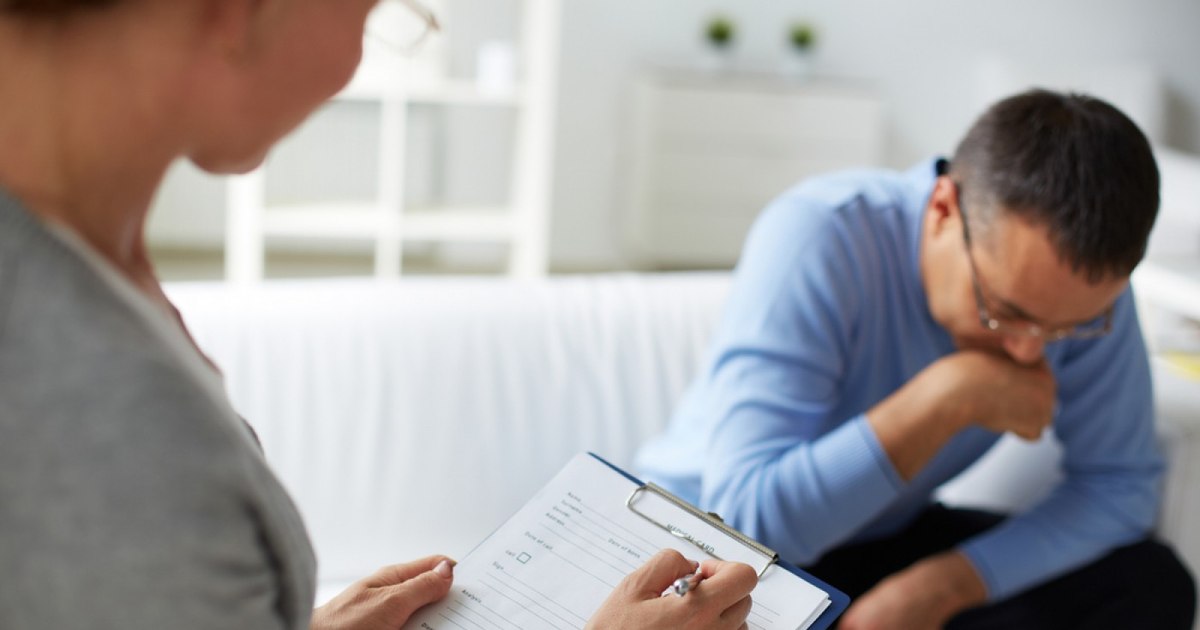
The Romanian Government approved, at the proposal of the Ministry of Health, the settlement of psychological services for oncological patients. It is a historical decision, which marks the official recognition of the fact that the struggle with cancer does not only mean medicines and treatments, but also emotional support. Specialists point out that this step will fundamentally change both the lives of patients and their families.
Psychological counseling, vital in the case of oncological patients shutterstock
In a significant movement for the Romanian health system, the Ministry of Health has officially announced that psychological services will be settled through the public health system for oncological patients. This decision emphasizes the recognition of the importance of emotional support in the treatment of cancer, not just the medical interventions.
“So far, cancer patients have been forced to bring a double fight – with the disease and lack of access to psychological support. As of today, Romania officially recognizes that the complete treatment of cancer does not mean only drugs, surgery or radiotherapy, but also emotional support“announced the Minister of Health, Alexandru Rogobete.
The new law provides for a stage implementation. Until June 30, 2026, any psychologist will be able to support oncological patients, based on the recommendation of the specialist doctor. Starting July 1, 2026, only psychologists with psychoncology training will be able to work in the public system, to guarantee the quality of services.
Psycho-oncology: one of the hardest fields
In an exclusive interview Adevărul, psychologist Oana Cueșdeanu, with 18 years experience in the field has spoken about the need for a special training course, whether we are talking about beginners or professionals.
“What new brings is the fact that they force psychologists to form psychologists too–anocology. There are special courses, in addition to everything you have as specializations, because it is one of the hardest fields in this area, of psychology ”says the specialist.
Asked if, at present, there are enough specialists prepared for this specific branch, she claims that “for now no”. However, seeing the full part of the glass, there are trainers who organize specialization courses. Even with almost two decades of practice, the psychologist recognizes that he needed such a course. Another important aspect on which it has attracted attention is that the faculties of psychology do not have this subject included in the program.
“I recently made a specialization course, DI have 18 years of experience. In these years I have seen many cancer patients, but now, working with a strictly specialized clinic on this side, I did a 6 -month course on psychooncology, which brings us an extra value. For beginners, such courses would be more indicated, I do not understand why they are not put in college, but this is another problem ”Oana Cueșdeanu told us.
The activity with oncological patients comes in the package and with a significantly higher stress index than in the usual practice.
“The stress index is much higher for the specialist, because the life stories are much noisy than what you normally hear in the office,” points out the expert.
Examples of such training courses:
– The “Restart to Life” Association organizes specialization courses in psycho-encology, accredited by the College of Psychologists in Romania, which offers 110 professional credits. These courses are held online, starting with September 2025, and are intended for psychologists who want to specialize in this field.
– Also, the “Smart PSI” Association offers a specialization course in psycho-encology, accredited by the College of Psychologists in Romania, which grants 20 professional credits.
– The “Lidia Stoica” Clinic in Bucharest is one of the few specialized clinics in psycho-economic in Romania, offering psychological services dedicated to patients with oncological disorders. It has been operating since 2018 and is one of the few entities that focus exclusively on this field.
Emotional burden: the five stages that a patient goes through
Each patient brings with him not only the physical symptoms of the disease, but also intense fears, guilt, family trauma and anxieties related to the future. The psychologist is in the first line of these experiences, being a witness at moments of despair and uncertainty, but also in stories of remarkable courage.
The psychologist explains the interior path of patients, inspired by Kübler-Ross’s well-known model, but adapted to the oncological reality.
“From an emotional point of view, the patient goes through five phases,” explained Oana Cueșdeanu, until he accepts the situation in which he is. Here are these:
- The shock: “When the diagnosis finds out, the patient is in shock, which is why the brain cannot process the information very correctly. It does not understand the diagnosis, nor the steps of treatment. The psychologist comes and supports him to accommodate with the idea of a new life.”
- The anger: “Later, it enters a frustration phase, being a very important point because it transits it for acceptance. We see very irritated and angry patients and it is important for the psychologist to be there and support them.”
- Guilt: “The degree of guilt is colossal, an emotion that blocks it in the treatment for treatment. It often delays to do what it should.”
- Negotiation: “The patient begins to think where he was wrong to get sick and seek explanations to play a feeling of control.”
- Sadness/depression: “It is a complex stage, because they begin to realize that life may shorten and that they can no longer do the things they have proposed.”
- Acceptance: “Finally, I reach the acceptance area, meaning that they are in an area of chronic disease and have to do certain treatments, but they have a medical team and there are solutions.”
The couple’s life, affected by cancer
Cancer can also be a heavy blow in terms of family life. Couple relationships are tested during treatment and not all manage to survive. Psychologist Oana Cueșdeanu came up with a concrete example.
“A patient who is diagnosed with breast cancer and loses his breasts, this will bring major changes in the couple relationship. Often, the partner is not able to support the woman and then divorces occur. Things are greatly amplified and complicated during the treatment period.”she tells.
International data support these observations: women with cancer have a higher chance of separating or divorcing compared to men, up to 20% in women diagnosed with aggressive tumors or mutilating treatments.
On the other side, in the case of men, the divorce rate is about 2-3%.
If we refer only to breast cancer, studies show that loss of body aesthetics and hormonal changes contribute significantly to torque tensions.
The lack of emotional support from the partner can lead to isolation, depression and even to postpone treatment, thus reducing the chances of survival. Studies show that 57% of separations in couples affected by cancer are directly related to the disease, and the psychological impact on the decision to divorce is evaluated at over 80%.
In this context, the fight is no longer only with physical disease, but also with depression. Psychological counseling becomes essential for a greater chance of the patient at healing.
“Our role, of psychologists, is 50%. Once you have a patient with depressive elements, who cannot get out of bed to go to do his treatment and postpone this, I have a lot of chances of survival,” says Oana Cueșdeanu.
The impact of the disease on family members
At the same time, loved people, members of the patient’s family and, even more so, the children, have a fierce fight. Psychologist Oana Cueșdeanu also draws attention to tragic situations: families who break down and children who run out of parental support.
“Nu only patients are our point of interest, but also the belongings. I am referring to family members, to the children of oncological patients. There are single mothers who have children in care. Even the other days I lost a mother whose 16 -year -old was left alone. It is a problem that we should orient a little more seriously”Says the specialist.
Ministry’s decision, an expected and necessary measure
Often, going to the psychologist also involves generous costs, which few can afford. All the more so as they have to bear the substantial price of oncological treatments. The new law that settles psychological services for oncological patients is seen by specialists as an essential step in accessibility of complete cancer treatment.
“In the cabinet, the number of cancer patients is not so high because they should endure their expenses alone, which is impossible, given that the treatments are extremely expensive. With this program, of course, the number of patients will increase. The law is very welcome, we were waiting. (…) The number of patients increases considerably ”says Oana Cueșdeanu.
Within the private clinic where they operate, there is already a special program, launched this month, through which the psychologist reaches the patient’s bed. Costs are also borne by CNAS. There is also a group of facebool where patients and belongings receive constant support, including outside the classic therapy program.
“The benefits are major, because we also have the patients, besides the patient. Already things are very functional, we are gathered in a community. We come to them and outside the program hours. We find solutions to keep them anchored to us, which greatly decreases their level of anxiety. They feel that they are part of a community, not only during treatment, but also when they are at home alone and scared by each symptom ”says the psychologist.
Possible discrepancy between rural and urban
On the other hand, access to psychological support is not uniform between big cities and rural areas. Oana Cueșdeanu, emphasizes the difficulties that patients in rural areas face.
“We manage to see patients who come from rural averages, but brought by their children. Indeed, we hear from these patients things about their knowledge that fail to go to the hospital. There are many people who fail to be implemented in such programs and then, categorically, it is much harder.”she says.
This discrepancy highlights the need for additional strategies, such as creating local counseling centers or online sessions for patients who cannot physically reach clinics.
Minister Rogobete mentioned that, in the next period, the Ministry of Health and CNAS will collaborate with professional organizations and medical companies for the rapid and coherent implementation of new measures, which could reduce this gap between urban and rural.
