
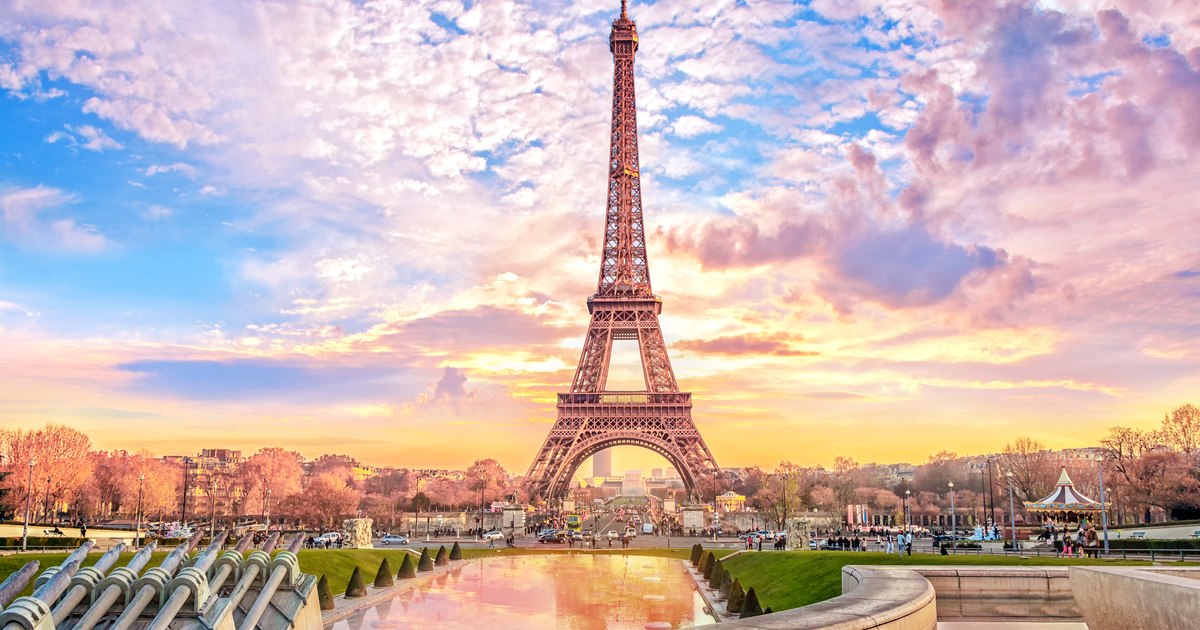
Few know that the Eiffel Tower, the symbol of Paris, “grow” Every summer because of the heat, and the Romanian ingenuity has contributed to the erection of this iconic monument.
Built for the universal exhibition of 1889, on the occasion of the Centenary of the French Revolution, the monument was designed by Gustave Eiffel and his team as a demonstration of technological progress. Initially called “The 300 -meter tower” and, ironically, “Babel Tower“ It was designed not only as an observation point, but also as a basis for radio transmissions, quickly becoming a tourist magnet.
In this article, you will discover the fascinating secrets of the Eiffel Tower: How a structure of over 300 meters can “breathe” With the seasons and why they are slightly inclined under the Parisian sun. You will find scientific details about the phenomenon of thermal expansion and how the metal chosen for construction gives the tower both resistance and elegance.
In addition, the article will reveal a lesser -known surprise: Romania’s contribution to the building of this symbol of France. The steel from Reșița and the technical innovation of the Romanian engineer Gheorghe Pănculescu, recognized by Gustave Eiffel, played an essential role in achieving this monumental landmark. Read on to discover how Romanian history, science and ingenuity meet in one of the most emblematic monuments in the world.
Eiffel Tower: The light and resistant structure of the Paris symbol
The most famous tower in the world is the Eiffel Tower in Paris, France. Although it is not the highest (330 meters, after adding a new digital radio reception antenna of 6 meters high) or the most visited (but it is in the top five worldwide), its global recognition is iconic: symbol of Paris and France, present in millions of photographs, films, advertisements and tourist materials.
Although it exceeds 300 meters, the tower weighs only 7,300 tonnes – almost as much as the air contains its volume (about 6,300 tons). The secret lies in the chosen material: the forged iron, capable of resisting high demands and providing stability even in front of strong winds.
The tower itself is a triangular gigantic structure with the lattices, as with the Garabit viaduct (also designed by Eiffel’s office, 565 m long) and the Forth Bridge in Scotland (2.5 km long), both built in the same period.
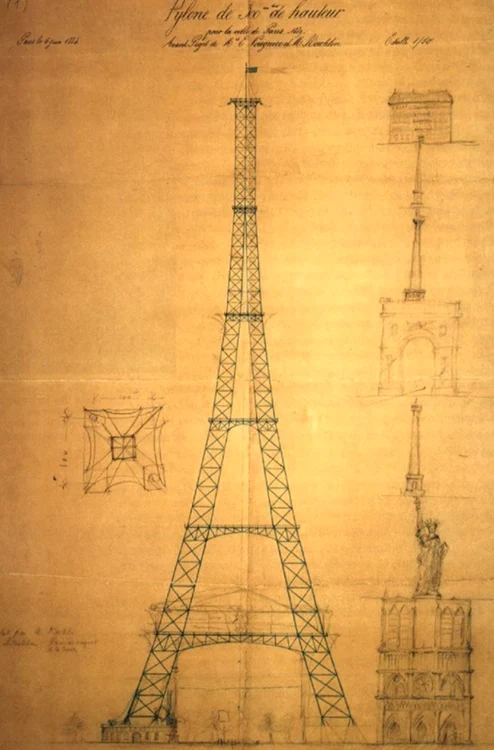
Although the tower bears the name of Gustave Eiffel, the initial idea of the construction actually belonged to the Maurice Koechlin engineers and Émile Nouguier, who worked in the company Eiffel. They proposed to erect the highest structures in the world at that time in … Barcelona. Later, Gustave Eiffel perfected and validated the sketch, transforming the project into what we know today as the Eiffel Tower.
Thermal dilation science: How the Eiffel Tower is growing and reduced
The phenomenon that makes the tower grow and decrease with the seasons is the thermal expansion. As the temperature increases, the materials of the materials are shaken more intensely, the distance between them increases, and the structures change their dimensions.
Iron and steel, from which the tower is built, have a expansion coefficient of approximately 12×10⁻⁶ (° C) ⁻¹. Specifically, an iron bar one meter is lengthened with only 12 microns at each additional degree – less than the thickness of a hair. But when the length reaches hundreds of meters, the difference becomes visible.
Thus, the calculations show that a 300-meter bar exposed to a 100 ° C variation would expand with about 36 centimeters. Obviously, a simple bar does not behave like a tower made up of over 18,000 pieces of riveted iron, oriented in multiple directions. In addition, throughout the day, the sun brightens one of his faces. It warms up more than the others, causing a slight curvature of the tower, as if it were inclined in the opposite direction.
In the case of the Eiffel Tower, the specialists estimate a real increase of 12-15 centimeters between winter and summer. This takes into account the fact that, over two centuries, the temperatures in Paris vary between minimums below -20⁰C and maximum of about 40⁰C, and under the effect of solar radiation metals can reach much higher temperatures in direct sunlight, often exceeding 60-70⁰C.
This phenomenon, explained in detail from The Conversationshows how the Eiffel Tower changes its dimensions according to the temperature variations.
Today there are many linear structures larger than those of the past, and the thermal expansion also affects the railway lines on which numerous bridges are built.
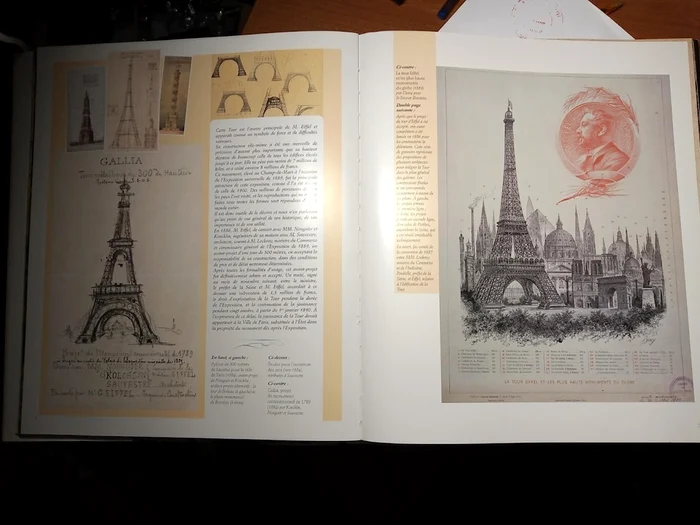
The Eiffel Tower of Paris and the history of its photo construction Alexandru Dima
How the Eiffel Tower is tilted under the Parisian Sun: The giant thermometer of Paris
The expansion does not only affect the tower vertically. Because the sun warms a part of the structure more strongly, the exposed face dilates more, which causes a slight inclination of the monument in the direction opposite to the solar rays.
Thus, the Eiffel Tower is not only an architectural landmark, a tourist magnet and a symbol of France. It’s a “thermometer” Gigantic, which changes its dimensions according to the weather, transforming science into an invisible, but fascinating show.
The Romanian contribution to the Eiffel Tower: the steel from Reșița and the genius of the engineer Gheorghe Pănculescu
The Eiffel tower is not only a symbol of Paris, but also a true bridge between France and Romania. A legend circulates that some of his pieces were cast from the cast iron produced at the first continuous flow furnace in Europe, located in Govâjdia, Hunedoara, and other steel elements came from the metallurgical factories in Reșița. Engineer Adrian Boeriu, who had a childhood in Hunedoara, argues that the base of the tower was built with Romanian steel, demonstrating the discreet, but essential contribution of the local industry.
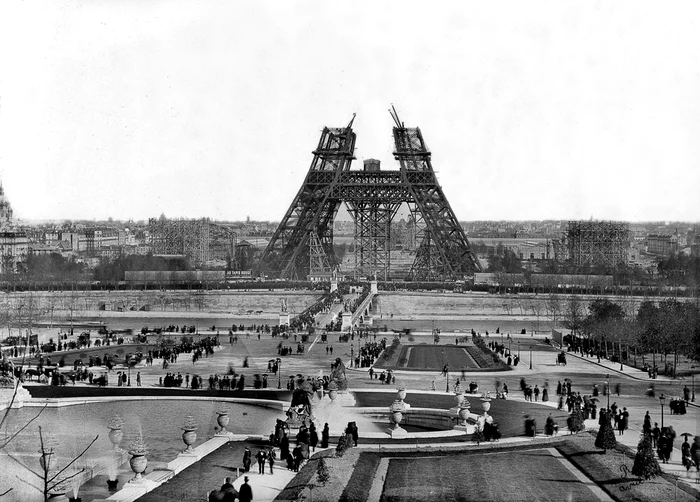
The Eiffel Tower of Paris Pictures of Photo Archive A Jour of Plus of Paris
The reality becomes even more impressive thanks to the intervention of the Romanian engineer Gheorghe Pănculescu. His revolutionary technique of combining metal beams was actually used in the construction of the Eiffel Tower, and Gustave Eiffel himself came to Romania to study the method, a fact later recognized by the builder in the work “Communication sur les travaux from Tour of 300 m”, Since 1887. Thanks to this innovation, the monumental landmark installation has ended in less than two and a half years – an amazing performance for that period.
The Eiffel tower is not only an iconic symbol of Paris and France, but also a monument of Romanian ingenuity – a proof of the international collaboration that connects Romania to one of the most emblematic landmarks of the world.
