
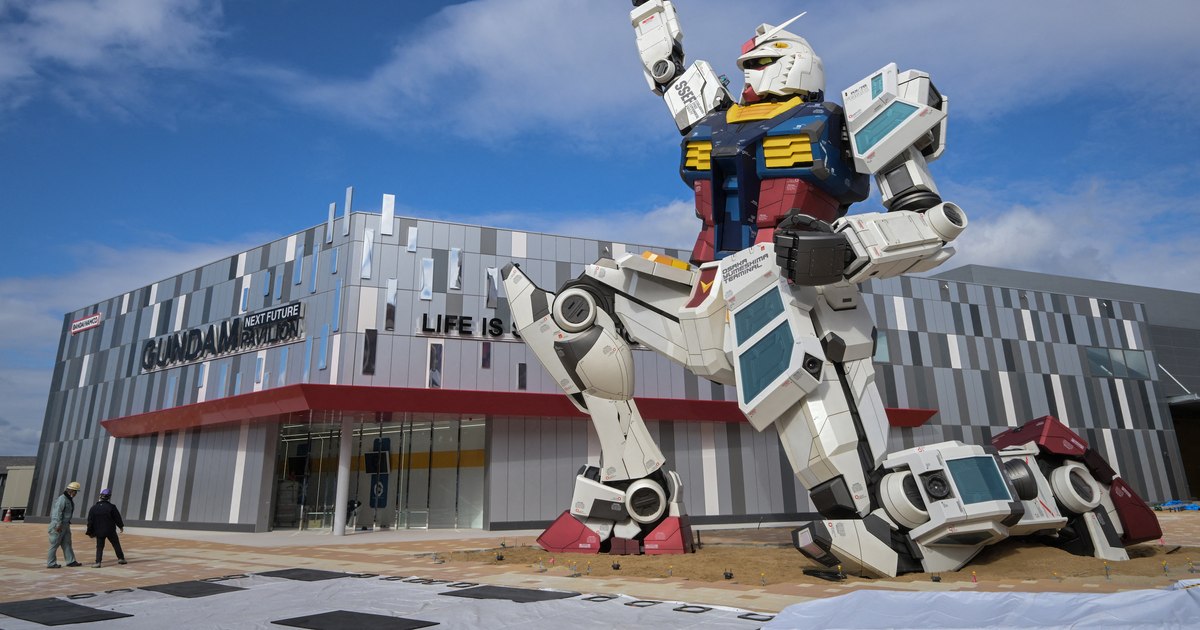
Japan, a country that harmoniously combines old traditions and advanced technology, remains one of the most fascinating destinations in the world. And this year, all eyes are going to Osaka, one of the two major administrative centers of the Kansai region, along with Kyoto.
Innovation is the basic word at Expo 2025. Photo: AFP
After Shanghai 2010, Milan 2015 and Dubai 2020, the global view of the future was taken over in 2025 by the Japanese city that houses, until October 13, 2025, one of the most anticipated public diplomacy events in recent decades: EXPO 2025.
Osaka was already the host of a world exhibition in 1970, the first ever organized in Asia. More than half a century away, the metropolis resumes this visionary role with a new inspirational message. 64 million visitors crossed the EXPO ’70 threshold, at Osaka, a record that resisted until 2010, when Expo Shanghai attracted 73 million visitors. The Expo 2025 exceeded the threshold of 10 million visitors at the end of July, and the organizers hope to attract at least 28 million visitors until the end. The costs of making this event are colossal: 400 billion yen (about 2.67 billion euros) invested Japan in organizing Expo 2025 and over 20,000 employees and volunteers are part of its team.
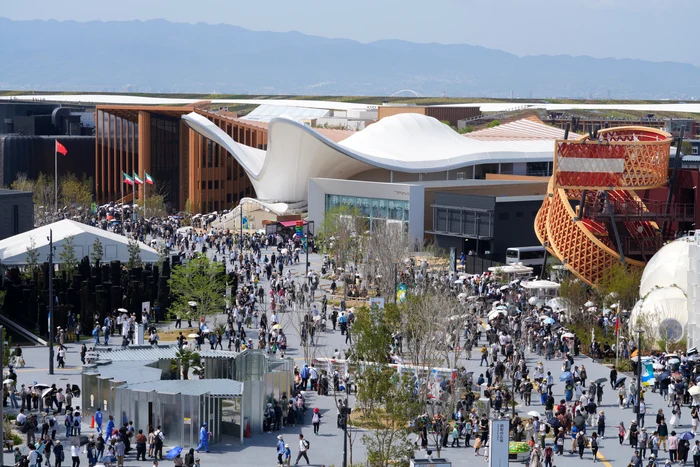
The second world exhibition hosted by Osaka. Photo: Shutterstock
Under the motto “Designing Future Society for Our Lives” (“Designing the Society of Viitorului for our lives”), EXPO 2025 aims, through the 158 countries, with some notable absences such as Mexico and Russia, and seven participating international organizations, including the European Union, the Red Cross and the United Nations Sustainable, more inclusive and more adapted to the challenges of the future.
One of the most captivating aspects of EXPO 2025 is the direct contact that visitors can have with top technologies – some just out of research laboratories, others already ready to be part of everyday life. Humanoid robots, present in several pavilions, such as those of Japan and United States, are no longer just static exhibits, but are able to support conversations or recognize facial expressions. Another major attraction is the area dedicated to innovation in medicine. Here, visitors can follow live – through immersive transmissions or virtual reality – surgery assisted by artificial intelligence.
“Dream Island” becoming reality
A few kilometers from the vibrant center of the city, the Japanese created in the waters of Osaka an artificial island, Yumeshima (in translation, “Dream Island”). Through controlled filling methods, Japanese engineers stored on the bottom of the sea, over two decades, millions of tons of excavated soil, sand and other materials from various urban sites, gradually strengthening them until a stable platform of over 390 hectares. Initially intended for port and industrial development, Yumeshima was subsequently integrated into the vision of urban extension of Osaka, being chosen to host EXPO 2025 due to its potential to become an urban development model from scratch. In the long term, the authorities plan the transformation of the island into an international entertainment hub, by developing an integrated complex that will include hotels, a huge casino, a formula 1 circuit and other cultural and recreational facilities.
A national pavilion designed by students
Located in the vicinity of the pavilions of the United Kingdom, the Netherlands and Poland, the exhibition space of Romania has an area on the ground of approx. 900 square meters, and is located in the vicinity of the United Kingdom pavilions of the United Kingdom and Northern Ireland, the Kingdom of the Netherlands and Poland.
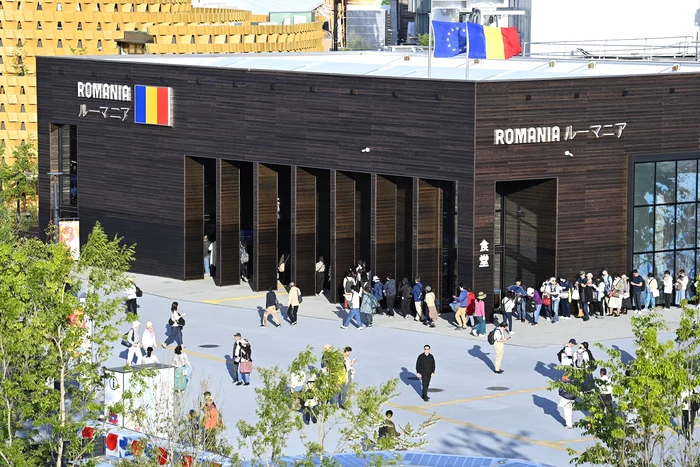
The generous pavilion in Romania in Osaka. Photo: Getty Images
The architectural concept of the pavilion was made by the students and selected in a competition organized by the Ministry of Foreign Affairs and the “Ion Mincu” University of Architecture and Urbanism in Bucharest, and the chosen theme was “Romania, Land of Tomorrow” (“Romania, tomorrow’s land”). In addition to the cultural program, which included, from the official opening of April 13 and until now, concerts held by the “George Enescu” Philharmonic Orchestra and the “Cioloncellissimo” Chamber Ensemble, but also representations of the Student Folklore Ensemble “Junii Brașovului”, Romania was well represented on the pale of the science, by The most powerful laser in the world with applications in medicine and nuclear physics -, artificial heart Mavis – a revolutionary solution for patients with severe heart failure, and nerverepack – neuroregeneration technology that plays the mobility of those affected by serious nerve lesions.
The EXPO 2025 offers different categories of price tickets ranging from 3,700 to 7,500 Yen (22 and 44 euros) for adults and 1,800 yen (10.5 euros) for children between 4 and 11 years old, for a single day. The season subscription costs between 7,000 and 30,000 yen (41-175 euros).
The ’70 EXPO space, transformed into a commemorative park
After the completion of EXPO ’70, the space was transformed into a place that today offers visitors a unique combination of nature, art and historical memory: the commemorative park (“Banpaku Kinen Kōen”). The central symbol of the former exhibition, the “Tower of the Sun” (“Taiyō no tō”), carved by the avant -garde artist Taro Okamoto, still dominates the landscape. With his three faces that represent the past, the present and the future, the tower remains an emblem of the Japanese avant -garde spirit. The park hosts Japanese and international gardens, including an area with cherries, extremely spectacular in the spring, a stadium, but also a museum that retains posters, movies, costumes and original artifacts during the world exhibition.
The bastion of the past that has been reborn countless times
In a metropolis of technology, Osaka Castle (Osaka-Jō) remains a silent witness of the glorious and troubled past of Feudal Japan. Located in the heart of the city, the castle is not only a tourist attraction, but also a national symbol of resistance and reconstruction. Raised at the end of the sixteenth century by the famous military leader Toyotomi Hideyoshi, the castle was meant to be the center of the unified power of Japan. At that time it was the largest fortress ever built in the “Land of the Raising Sun”. Its impressive architecture – the main tower with golden roofs and rich ornamental details – reflects the ambition and grandeur of the time.
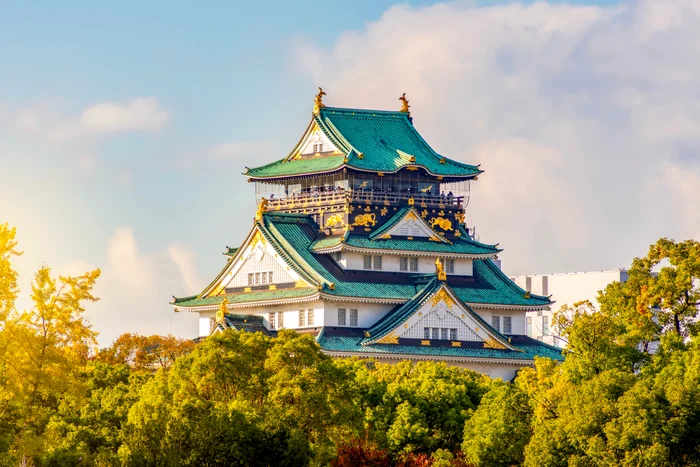
The wonderful medieval castle Osaka. Photo: Shutterstock
However, his moment of glory was short. After the death of Hideyoshi, the castle was destroyed in the battle of Osaka (1615), then rebuilt and destroyed, several times, following fires and bombings. The contemporary version of the castle, erected in 1931 and completely restored in the 1990s, preserves the traditional exterior structure and houses a modern museum dedicated to the history of Sengoku and Hideyoshi’s life. Here, the past of the samurai comes to life in every Hungarian. Visitors can climb to the top of the main tower, a panoramic observer that offers a spectacular view of the city. And around the castle, Nishinomaru gardens become a magical place during spring, when over 600 cherries bloom at the same time. It is a favorite place for locals for “Hanami” (admiring cherry blossoms), but also a space of peace and reflection in the middle of urban agitation.
A paradise of the Manga and Anime Universe
For pop culture enthusiasts, Osaka is a paradise of the Manga and Anime Universe, which is part of the DNA of modern Japan. In the heart of the Nipponbashi neighborhood, the Den Den Town area is the equivalent of the famous Akihabara in Tokyo: a small paradise for Otaku, full of figurine stores, manga, retro video games, cosplay costumes, but also themed cafes. During the weekends, the area is flooded by fans dressed in characters from famous universes – from Naruto to Attack on Titan or from One Piece to Spy Family. A landmark is super potato, a store dedicated to retro video games, where fans can find, for example, classic Nintendo consoles, several decades old, but perfectly functional. On the shelves, the Manga Secondhand collections stand next to the newest series, in a contrast that reminds of the way Japan always combines the past with the future.
Japan, the country of Fantesia Maga. Photo: Shutterstock
At the same time, the Universal Studios Japan theme park in the Gulf of Osaka hosts some of the most impressive attractions inspired by the anime world-including the Super Nintendo World area, where fans can experience their favorite stories in an interactive way.
Namba, magnet for tourists
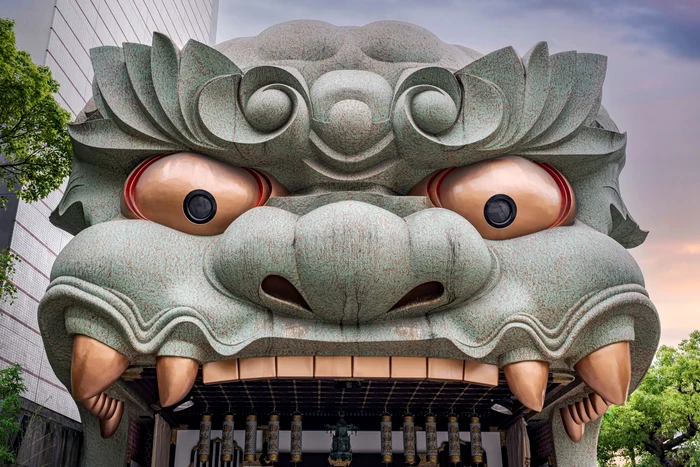
Located in the southern part of the city, Namba is one of the most popular commercial and entertainment neighborhoods in Japan. At the intersection of numerous train and subway lines, Namba is also a major transport knot, but also a tourist magnet for everything that means shopping, gastronomy, pop culture and nightlife. Perhaps the most famous area of the Namba is Dotonbori, a promenade along the channel of the same name, where the facades of buildings become screen. Here you can see the legendary Glyco Man running over the crowd, on one of the most photographed light panels in Japan. The streets in the neighborhood are tickled with restaurants, cafes and Izakaya (traditional men), where tourists can try the most emblematic local dishes: takoyaki (caracate dumplings), Okonomiki (salted pancakes with cabbage and meat), or kushikatsu (fries).
The oldest Buddhist temple
In a city known rather for its urban and gastronomic dynamism, the Shitennō-Ji Temple in Osaka offers an oasis of peace and deep history, at just a few subway stations of crowded commercial areas. Founded as early as 593, it is the oldest Buddhist temple in Japan built under the patronage of the state. The temple was established by Prince Shōtoku, a promoting figure in the history of Japan, known for promoting Buddhism as a state religion. The initial construction was inspired by the temples in China and Korea, and, although it was rebuilt several times (after fires and bombings during World War II), the temple has retained its original classic style-with a central pagoda, a main room (Kondō) and an East Gate (Nandaimon).
Osaka in numbers
• About 2.7 million inhabitants has Osaka, being the third largest city in Japan, after Tokyo and Yokohama.
• From an economic point of view, Osaka has an estimated GDP at over $ 400 billion a year, being second in Japan after Tokyo.
• Before pandemic, Osaka received over 12 million international tourists every year, being a major attraction in Japan.
• Studios Japan Universal Park attracts over 14 million visitors every year, being one of the most popular themed parks in Asia.
• Osaka has a humid temperate climate, with average annual temperatures of about 16 ° C, and winters are gentle, with rare snow.
• Osaka hosts 5 renowned professional clubs in folk sports (Baseball – Hanshin Tigers, Orix Buffaloes; Football – Gamba Osaka, Cerezo Osaka; Basketball – Osaka Evesa).
