
All five projects of the second package of fiscal-budgetary measures assumed by the Government in the Parliament arrived on the table of constitutional judges. The failure at the RCC of one of the projects would not mean the loss of the legitimacy of the current executive, which is made by the majority in Parliament by the coalition, emphasizes the analysts. In fact, previous experiences show that the executive can go further and can return to the legislative with a new project.
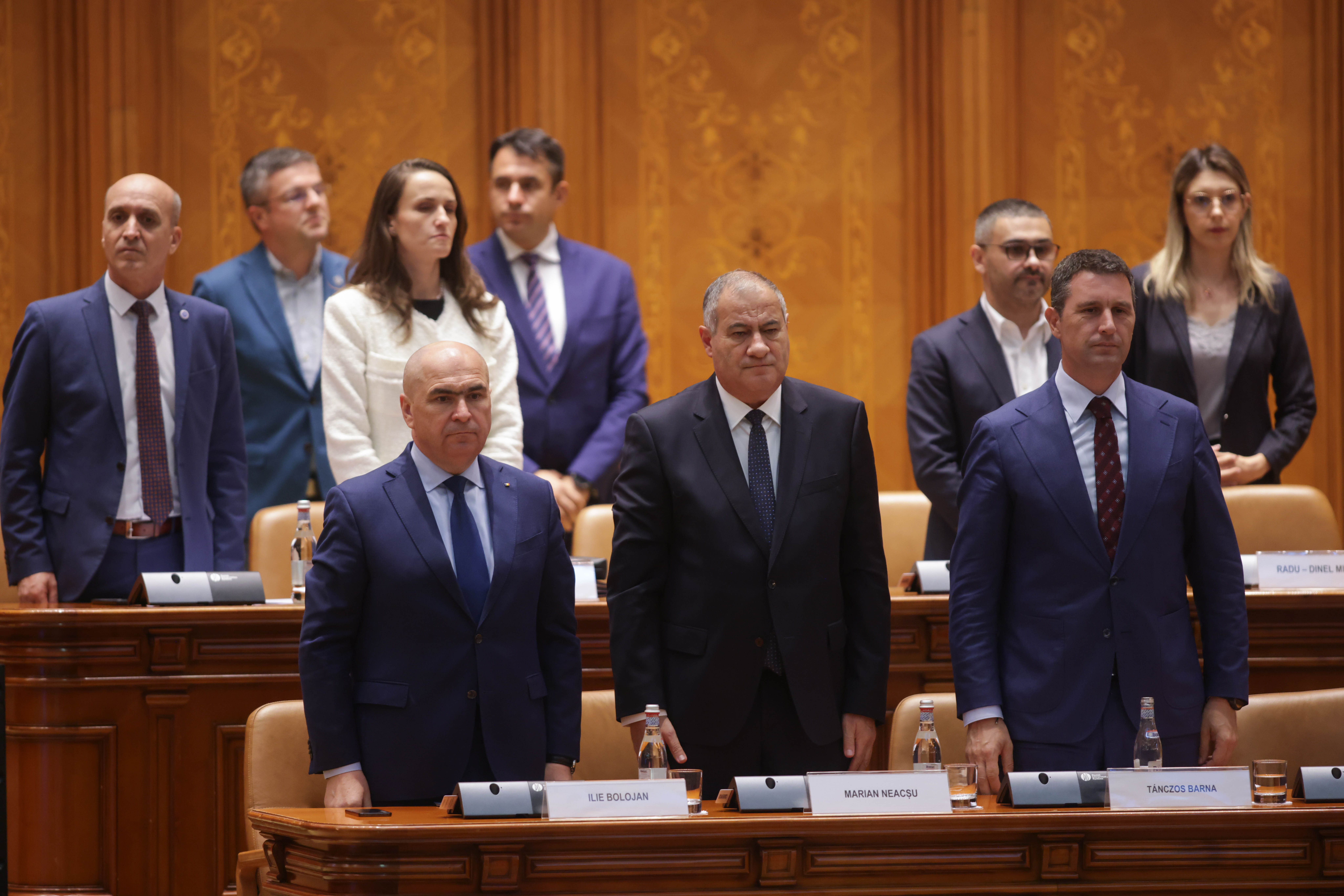
The prime minister has linked the chances of the reform of the Inquam/George Călin photo legitimacy service reform
“If such a package falls at the Constitutional Court, it is hard to assume that this government will still have the legitimacy to resolve other injustices, other accumulations that are gathered”, Prime Minister Ilie Bolojan said in an Antena 3 CNN interview, regarding the Government’s liability in Parliament on the first project of package II, the one who modifies the pension conditions of the magistrates.
The concerns expressed are not unmotivated, but according to President Nicușor Dan, the coalition has done its homework, to ensure that the initiative does not fall the CCR test: “When the Government came with the proposal, the people in the government looked at all CCR decisions, in order to prevent the project to be declared unconstitutional”, President Nicușor Dan explained in an interview for the observer.
“I do not think the Constitutional Court will give a check in white” – Radu Carp, law teacher
However, at the CCR, all the projects in the package of fiscal-budgetary measures arrive. Political analysts believe that projects have every chance of passing, and otherwise, the legitimacy of the government cannot be affected by such a denouement.
However, the CCR could make a nuanced decision on at least one of the initiatives. “Because we are talking about a draft law with several articles, it may be an article in OK and another is not a rule. The government did not assume what it will do in this situation. I am personally optimistic. I don’t think this will happen. However, it depends on the reading that will be made later by the RCC. (…) I do not think that the Constitutional Court will give a check in white on all that these projects mean. But I repeat, the essence will not be affected. (…) It may be invalidated or be an opinion only in relation to a particular article. And then, only on that article will come back with a new proposal ”, explains the law teacher Radu Carp, for “Adevărul”.
And in the case of a failure, even on the project that concerns the problem of the pensions of the magistrates, the government still has all the legitimacy, points out the specialist: “If we talk about the pensions of the magistrates, everyone realizes that a decision of the Constitutional Court that would reject the draft law would be in favor of the pensions of the magistrates.
The reforms that are targeted in these laws do not think they violate constitutional principles. Nor their adoption neither violates constitutional principles. So, even in the case of unfavorable decisions, I think that the legitimacy of the government is not affected, it must continue as long as it has a majority in the Parliament and try to reform the systems in Romania, even if these systems put a great resistance. (…) The legitimacy of the government comes from the mandate entrusted by the Parliament following the elections. Or the mandate, through the government program, clearly shows that this government wants to make reforms, so this is the mandate with which it is in government, to make reforms. If the parliamentary support loses, the government will be dismissed. But not an unfavorable decision of the RCC leads to the loss of the legitimacy of the Government ”, explains the editor chief Historia Ion M. Ioniță.
The precedent of the Boc office
“The legitimacy of any government starts from the Parliament”points out the political scientist Andrei Taranu, reminding that there is a precedent who shows us that the Executive can continue his mission: “In 2011, Prime Minister Boc assumed responsibility on the project merging project. In 2012, the CCR invalidated the combination of elections”.
The departure of the Executive came one month away, in February 2012, as a result of the protests triggered in the country after leaving the Undersecretary of State Raed Arafat.
The cabinet led by Emil Boc was even a champion in assuming liability in Parliament, and his experience offers a perspective on the current situation of the Bolojan Cabinet. The Boc office has used the procedure to commit the liability in Parliament more than 10 times.
And in two other previous situations the laws on which the Boc Cabinet has assumed their responsibility have fallen the constitutionality test. In their case, the government did not leave, but presented twice with projects in Parliament. The law of education and the law of unitary pay are the projects with which it first came in September 2009, and then returned at the end of 2010. That is, the executive was forced to restore the legislative packages and to resume the assumption procedure. The same thing could be done by the Bolojan cabinet.
All 5 projects of package 2, on the CCR table
The High Court of Cassation and Justice has notified the Constitutional Court regarding the law by which the conditions of retirement for magistrates are modified, the first project of package II, which escaped the censorship motion. Four other projects, although they have resisted in front of the censorship motions submitted as a result of the Government’s responsibility in the Parliament, will also reach the CCR judges’ table. The main opposition party, gold, notified the CCR.
“Instead of respecting the democratic vote and the parliamentary debate, the government has chosen to step on the Constitution and to assume, five times in a row, the responsibility on projects that hit directly in teachers, pensioners, mothers and Romanian entrepreneurs. Aur will attack four projects imposed by abuse.”, Motivate the party.
The project that modifies the pension conditions of the magistrates was adopted by the Parliament in the absence of a censorship motion. After all the censorship motions submitted to assume the other 4 projects have not collected the votes necessary for adoption, and they are considered adopted by the Parliament.
