
How many times have you not said “Blood water is not done”, “Do not wake the dogs asleep” or “The light of the eyes”, Without asking you where these words came from? You would be surprised to find out that many of them have their roots in the Middle Ages, an age full of armor, spectacular duels, bizarre laws and strict religious rituals.
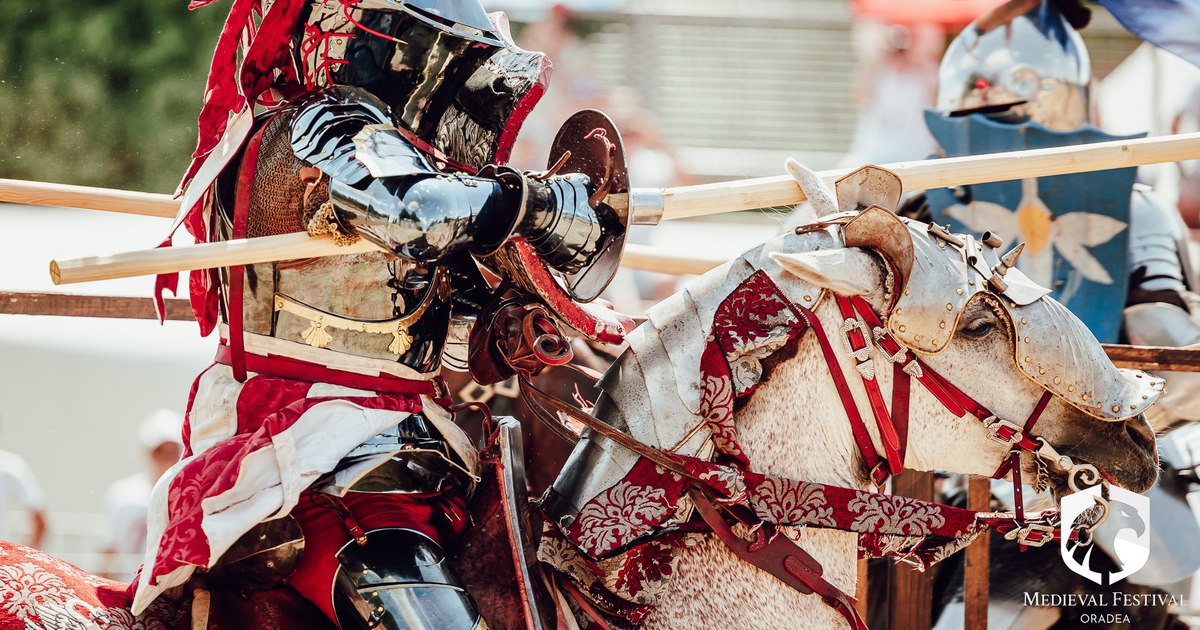
Knights in the Turnir, showing the context in which the photo of the Adevărul archive is thrown
These famous expressions are not mere formulas: they are miniature stories, kept for centuries and in Romanian, which carry us in the medieval courts, in the poetic gardens of the allegories or even in the rooms of King Alfred the Great. Each phrase hides a fascinating history, a habit or metaphor that has crossed the times and has reached our daily conversations.
From “To throw the glove”, Sign of a direct challenge, at “all that glitters is not gold”warning that appearances cheat, passing through “The eyes of the mind”which allow us to visualize in the imagination, or “Devil’s lawyer”the one who contradicts to test the truth, the following 10 expressions show us that the Middle Ages still speaks through our daily words.
Get ready to discover their origins and see how they were actually born-and you will look at the daily language with other eyes.
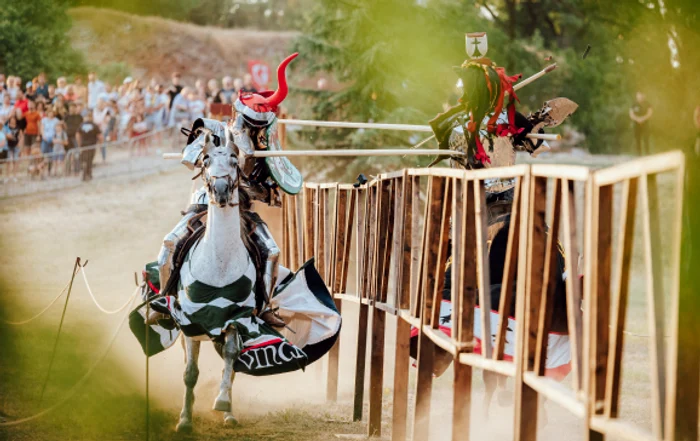
Knights in the Turnir, showing the context in which the photo of the Adevărul archive is thrown
10 medieval expressions that Romanians use daily
As you will see, these expressions are not only mere words: they hide fascinating stories from the Middle Ages, from the courtrooms and monasteries to religious tournaments and rituals. Each expression crossed the centuries and reached our daily conversations, keeping a fragment of the culture and mentality of time in which it was born. Below, we have selected 10 medieval expressions still used in Romanian, each with its origins and the way we meet them today.
1. “The light of the eyes”
In the early Middle Ages, the English called the pupil “The apple of the eye”because in the old English language the word æPPEL designate any round thing. Being the most delicate and essential part of vision, the pupil has become what is the most precious and dear. That’s how the expression was born “Apple of One’s Eye”met even to King Alfred the Great. Since then, the expression has remained alive in other languages - including in Romanian.
In Romanian, the consecrated equivalent is “The light of the eyes” – the image that expresses the same thing: someone or something you love above all.
2. “To throw the glove”
The medieval knights wore metal gloves to protect their hands. If a knight threw the glove at the feet of a rival, it was a challenge in the duel. The one who raises her accepts the fight. Hence the expression “To throw the glove”which we use today when we challenge someone directly, either in sports or in debate.
3. “To do the devil’s lawyer”
The expression comes from Latin: Advocatus Diaboli – “Devil’s lawyer”. This was the official title of an official of the Catholic Church, in charge of bringing all the arguments against the canonization of a saint. Its official role was called Promoter of faith (Fida Promoter) And it was instituted, it seems, by Pope Leon X, at the beginning of the sixteenth century. Practical, “Devil’s lawyer” It had to be the service skeptic, the one who raises all the possible objections.
Today, the expression has come to designate anyone intentionally, not from wickedness, but to test the solidity of an argument or an idea.
4. “Not all that shines is gold”
The expression conveys the idea that appearances can be misleading. The oldest known use dates back to the twelfth century, when the French theologian Alain de Lille wrote: “Do not consider gold everything that shines like gold.” Basically, theologians warned not to confuse the appearance with the essence.
In the fourteenth century Geoffrey Chaucer resumed the same thought in his work “The House of Fame”where he wrote: “There is no gold all that shines”. Later, Shakespeare popularized it in English literature. In Romanian we use it today: “Not everything he shines / shines is gold”.
5. “Blood water is not done”
The expression is often interpreted as meaning that family links are stronger than other relationships. Its origin suggests, however, a slightly different meaning: a story from the 13th century contains the verse: “Ouch Höer Ich Sagen, Daz Sippe Bluot von Wazzer Niht Verdirbet”, that is,: “I also heard that the blood of the relatives is not broken by water”.
To assume that “water” It alludes to baptism here, which would mean that blood bonds are considered more important than religious affiliation.
6. “Nobody Country”
Many believe that the expression has its origin in the First World War, but it is actually much older. In “Domesday Book” (the eleventh century) appears a place in England named Nomansland – Probably an abandoned settlement. Later, in the fourteenth century, the Londoners used the expression to designate a space north of the city walls, where the executions took place.
7. “A day in red letters” / “A holiday day”
In the fifteenth century it became a habit for all holidays and saints days to be marked in the church calendar, while the other days were passed with black. From this practice the expression appeared, which today designates a special, memorable day.
8. “A rotten apple ruins everything”
The expression, which means that a negative influence can corrupt the whole, comes from the literal observation that a rotten apple can ruin the rest of the apples in a basket. Geoffrey Chaucer suggests the same idea in “The stories from Canterbury”especially in “The story of the chef”where he writes about how the bad company can corrupt good people: “Better to remove the rotten apple from a basket / than let all the others break.”
Current sense: A bad individual or negative influence can affect the entire community or group.
9. “With the eyes of the mind”
The expression, which means to view something in the imagination, dates back to the twelfth century, when Joachim de Floris wrote in “Expositio in Revelation” (Exposure of the Book of Revelation): “Suddenly I perceived with the eyes of the mind something from the fullness of this book and from the entire harmony of the Old and New Testament.”
And Geoffrey Chaucer uses the expression in “The story of the lawyer”: “He was with those eyes of the mind, with whom people see, even after they blinded.”
Today, the expression means to visualize something mentally, to imagine or conceive.
10. “Don’t wake up asleep dogs”
The expression, which means to avoid arousing problems or intervenes in a quiet situation, has its roots in medieval England. Geoffrey Chaucer uses it in “Troilus and Criseyde”: “It is not good to wake up a sleeping dog”. There is even an older French version with the same meaning: “Do not wake the dog asleep”.
Current sense: Leaving things as they are to avoid unnecessary conflicts or problems.
How still live medieval expressions in Romanian: lessons from the Middle Ages
Whether we are talking about proverbs, poetic metaphors or medieval legal customs, the language of the Middle Ages is more present in our lives than we imagined. The expressions that crossed the centuries show us that, although the knights no longer fight in tournaments and the monasteries no longer dominate the cultural scene as once, their words continue to live among us. They carry us in the medieval courtrooms, in the gardens of poetic allegories or in manuscripts kept in monasteries – and remind us that the history of language does not die, but are transmitted from generation to generation, in our daily conversations.
