
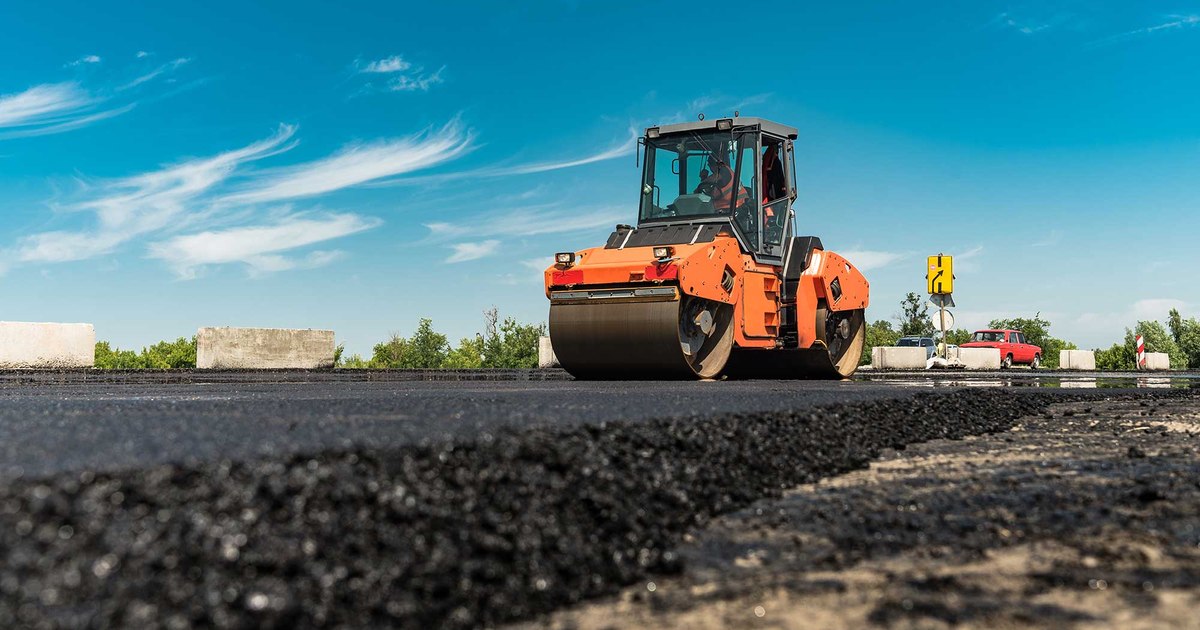
At first glance, a road seems like a trivial construction, made of asphalt and other materials derived from oil. But modern technology shows that the roads of the future can be much smarter and environmentally friendly. From the asphalt that can repair their own cracks, to the integration of technologies that allow the loading of electric vehicles on the go, recent projects outline a future in which roads will be very different from the ones we know today.
BioasfalT promises to change the future of roads: Resistance to cracks and durability Agro & CH
A concrete example comes from the University of Huelva, in Spain, where researchers work on more resistant roads, made of sustainable and cheaper materials, such as wheat straw. In a scientific article published in Carbohydrate polymersthey explain how lithium and oil can be replaced with cellulose in industrial and asphalt fat production.
More surprisingly, another group of researchers from Spain tests asphalt made of … cigarette butts. Studies conducted at the University of Granada show that these waste can be transformed into a valuable additive for roads: cellulose and plastic fibers act as a natural reinforcement, increasing the asphalt resistance to cracks and cracks. In addition, the process reduces the manufacturing temperature and pollutants emissions, making this asphalt not only durable, but also more friendly with the environment.
Thus, wheat straw or cigarette butts are no longer mere scraps, but materials that could forever change the way we build roads.
Bioasfalt Greenasphat: Sustainable and resistant roads with eco-friendly materials
“Over 90% of the asphalt modifiers currently used come from fossil sources. We managed to use a renewable and biodegradable modifier,” says José Enrique Martín Alfonso, professor and researcher at the University of Huelva.
The construction of roads and their use generate pollution, both from the rubbing of the wheels and from the manufacturing process. The Greenasphal project aims to reduce this impact, building eco-efficient roads, more environmentally friendly and durable.
In 2023, the first section of road with Bioasphat Green Asphalt was put into operation. It was manufactured at a maximum temperature of 150 degrees Celsius and is composed of a mixture of virgin aggregates, biigrant, milling material and rubber powder.
The roads of the future are no longer just transport – they can become safer, more durable and more sustainable.
Changing cellulose for sustainable and resistant asphalt
Traditionally, the asphalt was obtained from natural warehouses, but almost all the asphalt used today is artificial, derived from oil. Also known as bitumen or “Chapopote”this is a viscous, sticky, black or dark-brown material. In the asphalt mixtures, the asphalt acts as a binding agent and is almost completely found in gross oil.
As an alternative, Spanish researchers propose a much more accessible material: wheat. The key to the project consists of a chemical reaction called silication, which changes the structure of cellulose, making it water resistant and compatible with oils and bitumen. “The cellulose paste is very little compatible with the oil and bitumen, so for the first time, I changed it with silicon, which has a much greater compatibility.”explains José Enrique Martín.
The process begins by transforming wheat straw into cellulose paste – the same material used in paper manufacture. After purification and modification with silicon, the researchers obtain an additive with gelifying and structural properties, which can be integrated stable in lubricants or asphalt.
Industrial fats without lithium for durable bioasphat
Most industrial fats occur with lithium – a rare and highly sought after metal. Lithium is an expensive element, both economically and ecologically. “Lithium was an element that was not given too much attention, but now it is essential for batteries. For this reason, it has gained special importance, and its price has increased.”explains José Enrique Martín.
The wheat paste is proposed as a substitute, reducing the production costs of asphalt and industrial fats. The fat obtained with this additive lasts better to wear than lithium -based mixtures. At the same time, the asphalt becomes more elastic and tolerant of heat, deforming less even under heavy traffic.
Testing of bioaoasphalt and future of sustainable roads
In order to demonstrate the efficiency of the new material, the researchers performed laboratory tests, which included thermal analyzes, friction tests and microscopy. The next step is his testing in real conditions, on machines, vehicles and road segments.
However, José Enrique Martín warns that additional research on the use and composition of the material is required: “We focused on chemical compatibility, but now we are working on changing the size and shape of the cellulose paste to improve how it interacts with oil and bitumen.”
From wheat straw to cigarette butter: recycled materials for eco asphalt
This field of research is increasingly interest. In Spain, another group of researchers recently presented a type of asphalt that promises to change the way the roads are built – more resistant, more sustainable and, surprisingly, made from cigarette butts.
The study, published in the scientific magazine Sciencecirectshows how these waste can be reused as an additive in road construction. The laboratory results show that the mucus increases the resistance of the asphalt to cracks and cracks.
The research was carried out within the construction engineering laboratory of the University of Granada, led by Carmen Rubio Gámez and Fernando Moreno Navarro. They tested asphalt produced by 40% of recycled material from damaged roads and electronic cigarette granules. According to the researchers, during the manufacturing process, contact with the hot bitumen melts the wax from the granules and releases the cellulose fibers and recycled plastic. These fibers act as a reinforcement material in the asphalt matrix, increasing its cracking and cracking resistance. In addition, they retain part of the binder, which allows to increase its content and make the asphalt more ductile and flexible. The presence of the heavens has another advantage: it changes the viscosity of the bitumen and allows the production temperature to be reduced. Thus, both energy and polluting emissions are reduced.
The asphalt of wheat straw or cigarette butts is not only an innovative solution, but also a sustainable alternative that promises more resistant, cheaper and more environmentally friendly roads, opening the way to the future of the eco-friendly infrastructure.
