
With the launch of the new Romanian Language and Literature program for public consultation, a series of reactions appeared. Although there are no longer mandatory authors, only recommended ones, many voices criticize the absence of any contemporary writer from the list. The proposal also comes with new didactic strategies, such as making an immersive or reflective journal. We also asked students for their opinion on the new program. ,,I find it more flexible and more skill-oriented, not memorization-oriented”says Bogdan Gogan, secretary general of the National Council of Students.
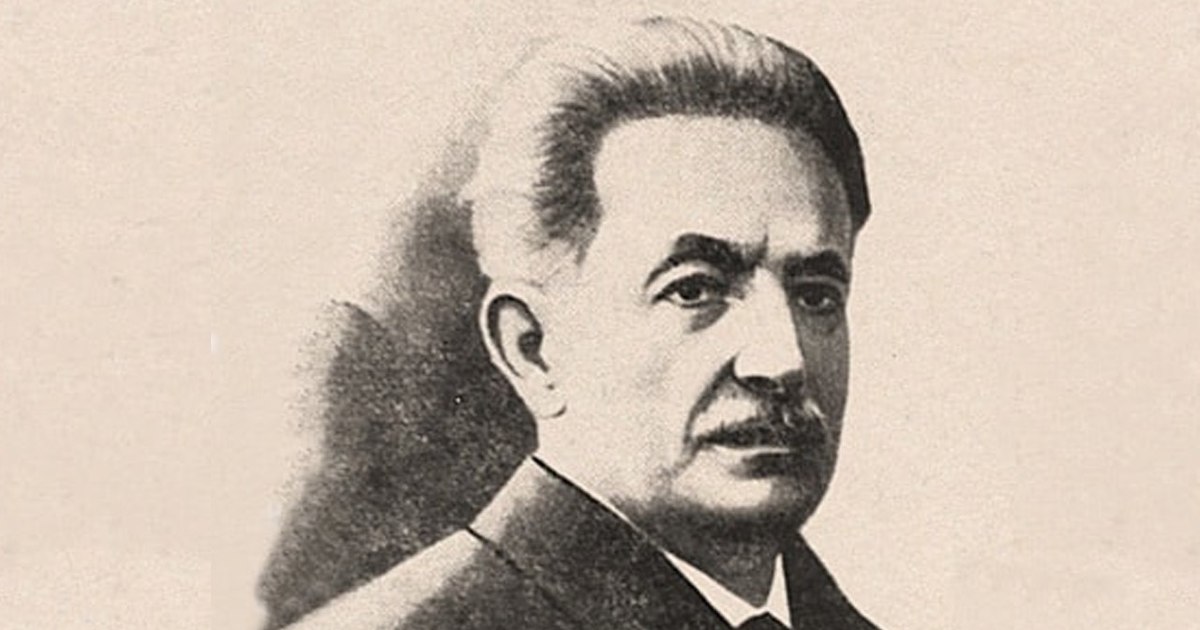
Ioan Slavici, one of the recommended authors in the 9th grade
No mandatory authors in the new program, only recommended
In the proposed curriculum for the 9th grade, there is no longer an official list of “canonical authors”, i.e. authors considered “basic / mandatory to study”. Instead of this list, “recommended authors” appear.
The lists of authors recommended for literature, in the 9th grade, vary according to the profile. For the Real profile, the following are recommended:
– Romanian writers – Ion Neculce, Anton Pann, Dinicu Golescu, I. Codru-Drăgușanu, Mihail Kogălniceanu, Costache Negruzzi, Dimitrie Bolintineanu, Vasile Alecsandri, Grigore Alexandrescu, Ion Ghica, Radu Ionescu, Nicolae Filimon, IL Caragiale, Ion Creangă, Ioan Slavici;
– Universal classics – Niccolò Machiavelli, Montesquieu, Molière, Alphonse de Lamartine, Stendhal.
For the Humanist profile and the Pedagogical profile, the following are recommended:
– Romanian writers – Ion Neculce, Ion Budai-Deleanu, Anton Pann, Dinicu Golescu, I. Codru-Drăgușanu, Mihail Kogălniceanu, Costache Negruzzi, Dimitrie Bolintineanu, Vasile Alecsandri, Grigore Alexandrescu, Ion Ghica, Radu Ionescu, Nicolae Filimon, IL Caragiale, Ion Creangă, Ioan Slavici
– Universal classics – Niccolò Machiavelli, Baldassare Castiglione, Montesquieu, Denis Diderot, Johann Wolfgang von Goethe, Molière, Alphonse de Lamartine, Victor Hugo, Stendhal, Honoré de Balzac.
,,They illustrate concepts such as cult fairy tale, folk tale, biography, comic, context, chronicle, popular culture, written culture, individual/collective identity, Enlightenment, cultural institution, national history, historical legend, folk legend, literature, travel memoir, myth, realistic short story, short story, romantic, orality, portrait, premodern(ity), Realism, Renaissance, novel, Romanticism, School Transylvania, Humanism“, the proposal states. These are basically the main topics studied, which are also found in the Baccalaureate exam. No contemporary author, whether Romanian or foreign, is on the list. And no woman.
Mircea Cărtărescu and Ana Blandiana are however mentioned in another section, “Methodological Suggestions”.
“The vision of the current program is organized around a diachronic criterion, which follows the evolution over time of literary and linguistic phenomena. The teacher will initiate the teaching of the subject by introducing the notions of language and literature as multi-layered, convergent and evolving systems. Thus, literature is seen as: representation of the world (through themes, motifs, vision of the world); as an institution (aspects of literary life: newspapers, magazines, theaters, etc.); as a creative space (biographies of writers); as a tableau of genres (literary genres and species that make up a variable system over time)”, write in the document. In this direction, teachers are recommended to organize the didactic content by thematic groupings. Cărtărescu appears as a suggestion on the theme “The zero moment of the discovery of literature as a world (fragments of memorialistic texts)”, with the text “How I Woke Up in the World”from the book “Pure youth, wrapped in pixels” “More-than-the-past.” Diary 31 August 1988-12 December 1989″.
Didactic strategies recommended for teachers
The new program comes with several didactic strategies recommended for teachers in activities focused on the acquisition of literary competence. These are:
- Concept maps on issues specific to the era
- Group projects
- Essay on the influence of ideological vision on the arts of a cultural period
- Immersive journal that captures the spirit of an era. Students write a fictional journal “from inside” an era, imagining the experiences of a young scholar, poet or artist, to understand the cultural mindsets and atmosphere. For example: “The Diary of an Enlightened Boyar of the 18th Century” – about the ideal of knowledge and modernization; “Pages from the diary of a romantic poet” – about the aspiration to the absolute and the conflict between the real and the ideal.
- Journal of reflection, comparing values from different eras and analyzing their relevance. Students formulate personal reflections on how the cultural and aesthetic values of the past can be recognized in the present, developing their critical thinking and cultural sensitivity. For example: comparison between the myth of the romantic genius and the image of the contemporary creator in the mass media.
- At the end of each school year, systematization and summative evaluation activities are recommended, in which students will develop projects with the theme “People of their time”. Through these, defining personalities for the respective era will be presented, highlighting the essential biographical events that influenced the development of Romanian culture/Romanian society.
Students: The new curriculum, more flexible and focused on literature
“The new program seems to me to be more flexible and more oriented towards skills, not memorization. The teacher is no longer tied to a fixed canon, and the focus falls on understanding and interpreting texts, which better meets the needs of today’s students. However, the curriculum still remains quite focused on literature, while the grammar part remains undersized.”says Bogdan Gogan, student in the 11th grade and general secretary of the National Council of Students
He also believes that the document should have contained even more elements for understanding non-literary texts, given the high degree of functional illiteracy.
The lack of current literature, criticized by students
And the lack of current authors is seen as a minus by the National Student Council representative.
“I think that the absence of contemporary authors and women writers in the new program represents a real limitation of the reform. Even though the syllabus leaves the teacher free, I think there should still be a list of recommended authors that also includes female voices and current authors. Such a list would not be a fixed canon, but a modern resource from which teachers could select according to grade level, so that students would also come into contact with contemporary literature, not just the classics. In the absence of this diversity, we risk perpetuating an incomplete image of Romanian literature and depriving students of contact with themes, styles and perspectives relevant to their generation”. says Bogdan Gogan.
How contemporary Romanian writers see the program
Ioana Nicolaie, one of the best-known contemporary authors in Romania, vehemently criticizes the proposed version.
“Now, if it takes them years to propose a program, then it will be a friendly one, I thought, with contemporary writers, with pages where bizarre words like mobile phone, internet, artificial intelligence, etc. will appear. High school students have stopped reading for years, even though some teachers struggle with all their might to convince them that there is no real education without reading books. It was impossible not to come, finally, a program based on the idea of ”pleasure of reading”. Well, what is actually happening with this new curriculum is hallucinatory: it takes us back decades, it puts us in the same canon from the time of communism, as if there wasn’t another half century of literature.” Ioana Nicolaie posted on Facebook.
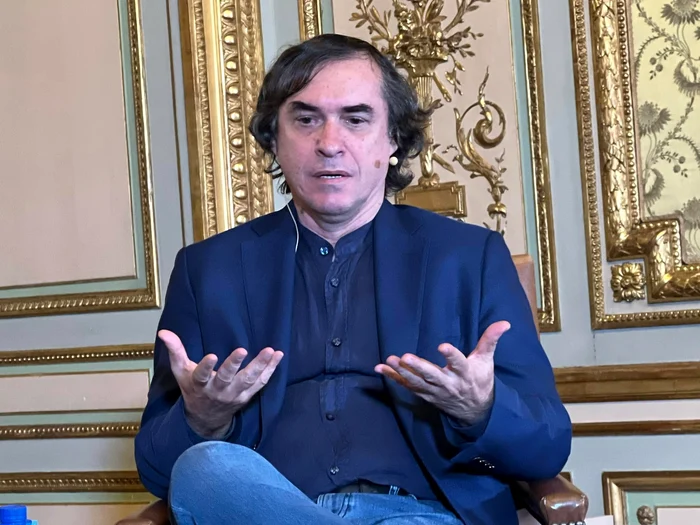
Mircea Cărtărescu PHOTO Facebook
Her husband, Mircea Cărtărescu, wrote, instead, a satirical text: “The modernists went crazy! A commando of unconscious Dadaists and integralists came up with a new program for the ninth grade of high school, in which young authors and not yet validated by critics such as Ion Neculce, Ioan Codru Drăgușanu or Dinicu Golescu, tongue-breaking experimentalists, usurp the rightful place of the classics revered and loved by students, Pitarul Hristache, Macarie, Eftimie and Azarie, to name just a few. Where are the famous Pripeales? Where is Palia from Orăștie? Where are the Teachings of Neagoe Basarab? In the name of decency and common sense, stop these challenges! Return to the Cyrillic alphabet, to the clean Romanian language of Glad, Gelu and Menumorut! Let the sad chroniclers read each other!”.
The writer Radu Vancu believes that, instead of making high school students read more, the new program will push them further away from literature.
“It’s the night of the mind, forgive my non-academic expression. Even back in my day, half a millennium ago, when I was in the ninth grade, chroniclers were absolute bores. (…) If we want to disgust our children with literature, chroniclers & old literature are the perfect recipe. They will grow up convinced that literature is a defunct art, which cannot interest anyone who wants to understand the contemporary world, with its so passionate themes: AI, breakthroughs in the mind sciences & natural sciences, gene editing, global warming, the anxiogenic loneliness of networks, etc.
The ninth grade was, for the Romanian teacher, the most permissive: for one year he had the freedom to bring the children contemporary writers, who would show them that literature is also about all contemporary themes (…) That literature can be their ally in this new world. An ally I can learn from. And which can bring them pleasure & joy, at least as much as games & networks. Now, that possibility has closed.” wrote the Romanian author.
Education Specialist Șerban Iosifescu he also criticizes the lack of current literature in the curriculum proposed for the 9th grade:
“In the Romanian language, the study goes “diachronically” and starts, as before, with the old literature and stops in the 19th century. Is this the best way to develop the pleasure of reading, in a language and with texts that have no relevance for today’s students (especially since we are talking about compulsory education)? I really wonder how the study of literature will continue and, above all, how (if it will be) contemporary literature will be studied, especially that of the last two decades (abundant and interesting), much closer to students than Ion Neculce, Anton Pann or Diderot”.
The proposed version of the program for Romanian Language and Literature is not final. It is in public consultation until December 12. The Ministry of Education announced that it is waiting for opinions and proposals on the e-mail address [email protected].
