
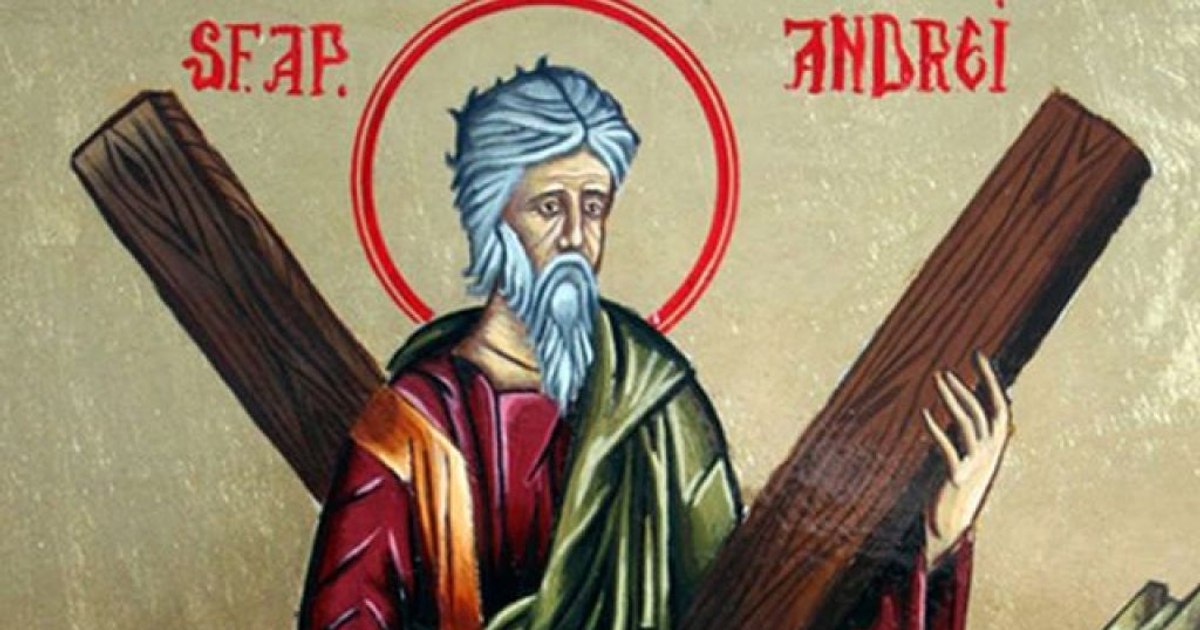
In Romania, the feast of Saint Andrew is marked both religiously and through popular traditions, passed down from generation to generation. The night of St. Andrew especially is linked to numerous superstitions and customs. By far the best known is sprouting wheat.
When and why to put the weed in the bud
The wheat sprouted by Saint Andrew is a combination of popular traditions with religious faith, but also pre-Christian customs. In tradition, wheat symbolizes the abundance of the house and the prosperity of the family. That is precisely why those who follow the custom plant wheat either for each member of the family or for the children.
There are several options for when the wheat can be planted – either in the evening of November 29, on the eve of the feast of St. Andrew, or on November 30 in the morning or even in the evening of the day when the Holy Apostle is celebrated.
According to popular lore, the appearance of sprouted wheat provides clues about the future. If the wheat grows green, tall, rich and vigorous, it is believed that the coming year will bring health, prosperity and good harvests. Between children, the tradition can also be seen as a competition. Whose wheat grows bigger and more beautiful.
Saint Andrew’s Day, celebrated on November 30, also symbolically marks the beginning of a new agrarian cycle. So the ritual can also signify the desire to stay connected to nature and the rhythm of life.
The bear’s dream, another tradition
In popular tradition it is also said that unmarried girls can find out their urst on the night of Saint Andrew. For this to happen, it is said that he must put 41 grains of wheat under his pillow. If you dream that someone takes their wheat, then you will definitely get married, says tradition. And in the dream, the face of the future husband would also be shown to them. Moreover, this day is popularly linked to “fate”.
Saint Andrew superstitions
For others, St. Andrew’s Night can be seen as scary. In folk lore, the boundaries between worlds are said to thin out on this night, and evil spirits, undead and spirits manifest among the living. That is precisely why it was popularly said that the chimney of the stove, the window and the threshold of the doors must be plugged, in order to ward off the undead. Also for protection, garlic was placed on the windows. Others even protected cattle pens. It was also believed that garlic keeps away illness and family misfortune.
Religious traditions
Beyond the superstitions, Saint Andrew remains a very important religious holiday. The faithful go to church and pray to the Holy Apostle. In some regions, prayers are said for the protection of the household and the family, by sanctifying the water and the house.
At the Cave of Saint Andrew, in Constanța County, a pilgrimage takes place attended by thousands of believers.
