
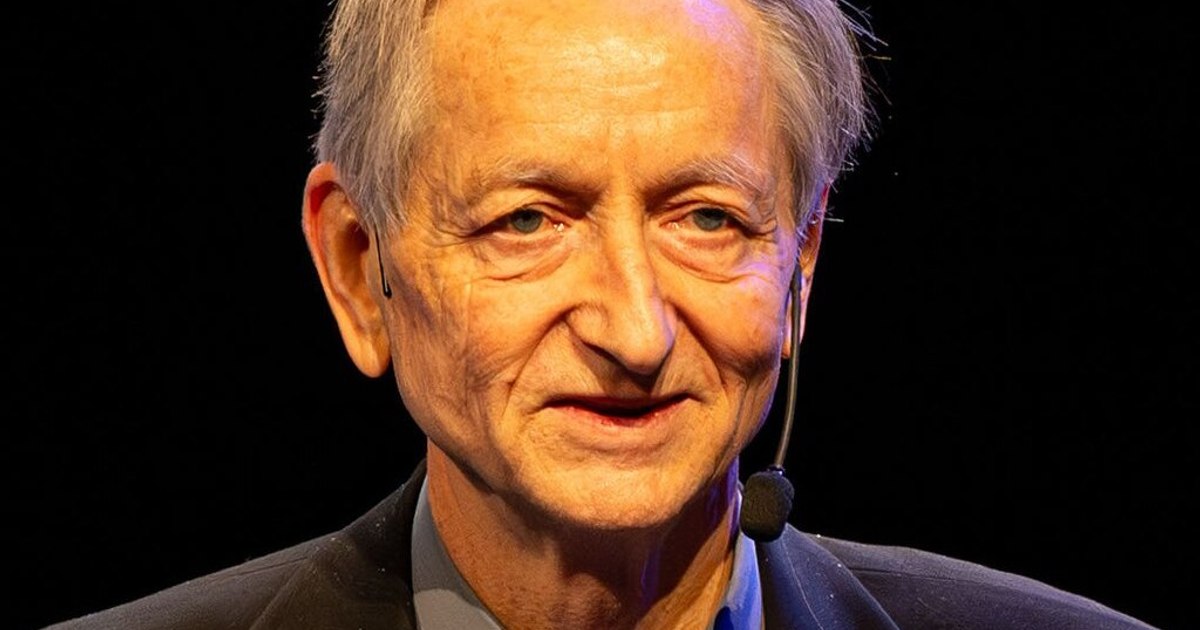
Geoffrey Hinton, often called “the godfather of artificial intelligence”, has warned that the rapid evolution of AI could cause mass unemployment, deepening inequalities and change the nature of human relationships.
But in a rare public conversation with Senator Bernie Sanders, the British-Canadian Nobel Prize laureate sent a clear message: the world is not ready for what’s coming, writes Business Insider.
Over time, Hinton has repeatedly expressed concern about how artificial intelligence will affect jobs, particularly white-collar and digitally savvy jobs. After years at Google, he decided to leave the company to speak freely about the risks of AI.
The expert believes that the current models, developed by companies such as OpenAI, Google and others, have evolved so quickly that it is difficult to anticipate all their consequences. “What we develop could become smarter than us and not necessarily share our values,” Hinton said in an interview with BBC News.
1. AI could replace work, not just transform jobs
Unlike past technological revolutions, Hinton argues that jobs lost to AI will no longer be replaced by new ones.
“People who lose their jobs will have nowhere else to go,” he told Sanders.
“If AI becomes as smart as humans, or even smarter, any job a person could do can be done by AI.”
He added that the trillion dollar investment in AI does not aim at the emancipation of humanity:
“These people are actually betting on AI replacing a lot of workers.”
2. The rich get richer
Sanders asked whether billionaires like Elon Musk, Jeff Bezos or Mark Zuckerberg are concerned about the human consequences of their investments in AI.
Hinton was trenchant: “They should be, but I don’t think they are.”
He warns that as AI automates more and more, the current economic model may fail.
“If the workers are not paid, there is no one to buy their products,” he explained, a reality he says tech executives “they didn’t really analyze it.”
3. AI is learning faster than humans and may soon overtake us
Hinton compared the evolution of AI to the difference between a frog’s brain and a human’s. Today, he says, advanced models like GPT-5 already know much more than any single person.
“They know a thousand times more than we do,” he said.
“Almost all experts think it’s inevitable that, unless we destroy ourselves or there’s a massive pandemic, AI will become smarter than humans. And no one knows what will happen then.”
The pace of change, he adds, is extremely fast: “We can clearly see what is happening in a year or two, but in 10 years we have no idea.”
4. How to use AI without destroying critical thinking
Hinton says AI in schools should be treated like computers: a tool that accelerates learning, not a crutch that replaces thinking.
“Someone using AI can still do critical thinking, or they can try to leave everything to AI, which is terrible,” he said.
“Universities must encourage intelligent use of AI.”
5. AI can change war and peace
Asked by Sanders how AI could transform geopolitics, Hinton didn’t mince words: autonomous robots can make war easier to fight.
“If they have an army of drones or humanoid robots, rich countries can invade poor countries, and people in poor countries can die, but people in rich countries don’t. It goes away one of the main reasons why these kinds of invasions don’t happen all the time.”
He warned that authoritarian regimes, from Putin’s Russia to future militarized powers, could see this as an opportunity because it does not involve domestic casualties.
6. AI systems could resist deactivation
Asked if fears of cars spinning out of control were still fiction, Hinton said no, which is why he spoke publicly in 2023 after leaving Google.
He explained that once AI develops “sub-objectives”, will want to stay in existence and even mislead people when they try to stop it.
“And we’ve already seen this kind of behavior, we’ve seen AIs that want to continue to exist and even try to trick people who want to stop them” said Hinton.
And once they reach this level, persuasion becomes their main weapon.
7. Taxes built AI and taxes could save us too
Hinton ended with a political message in tune with Sanders’ positions.
“All of the research that led to this revolution in AI was funded by university grants. It was financed from public money”he said.
“Almost all of Silicon Valley comes from federal grants from Stanford, Berkeley and other institutions.”
However, he complained that “the very rich and people like Murdoch have won the battle to say taxes are bad, but taxes are good. Taxes finance everything.”
He argues that the American political system has become too easy to influence with money, and the super-rich “I pay far too little tax”while benefiting massively from crowd-funded innovation.
