
Romania’s National Day brings a three-day mini-holiday, in which the Great Union is celebrated since December 1, 1918. Winter fairs are open, the season begins in some mountain resorts, and almost a million Romanians celebrate, on November 30, together with Saint Andrew.
From Saturday, November 29, most Romanians enter a long weekend, full of festive events.
Romania’s National Day is celebrated on Monday, December 1, it is a day off and it is added to the weekend marked by another important holiday for Romanians: Saint Andrew, the Protector of Romania, the apostle whose name is borne by hundreds of thousands of Romanians. This period also marks the entry into the calendrical winter, and for lovers of Romanian mythology, the Feast of Saint Andrew can mean the “Dacian New Year”.
In some mountain resorts, this extended weekend may mean the opening of the winter tourist season, even if, as in recent years, although snow fell on the highest peaks of the Carpathians, on the slopes later. Despite the period of austerity invoked by the local authorities, the central areas of many cities in Romania have already been decorated for winter, and for some of them the beginning of winter celebrations bring the “tradition” of festive lighting, sometimes accompanied by concerts and festivals.
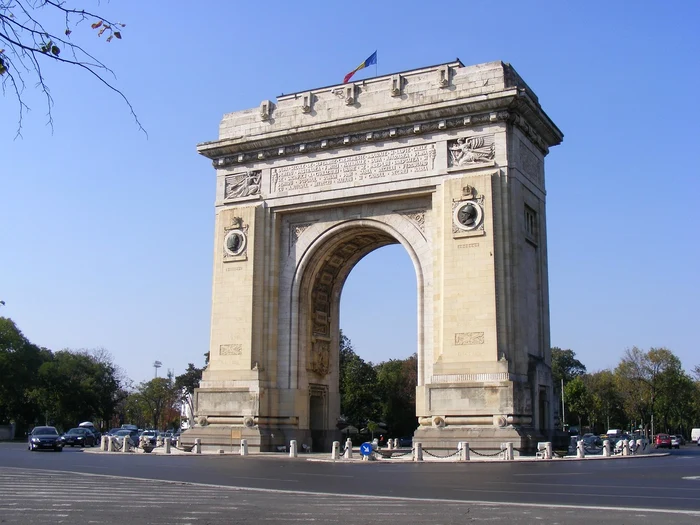
In Bucharest, the most anticipated event on December 1st is the Military Parade in Arc de Triumf Square. More than 2,900 soldiers, 220 vehicles and 45 aircraft will participate in the event, and an exhibition of military equipment will be located in the Arc de Triomphe area, open to the public after the end of the official ceremony, until 2:30 p.m. The December 1st ceremonies in the Capital will be preceded by other festive events, the most important being, on Saturday, the opening of the Christmas Market in Piața Constituției, considered the biggest event in Romania dedicated to the winter holidays, and the lighting of the city’s festive lighting.
Outside the capital, several places in Romania have become popular destinations around December 1st.
Alba Iulia, the city of Marii Uniri, is increasingly sought after by tourists
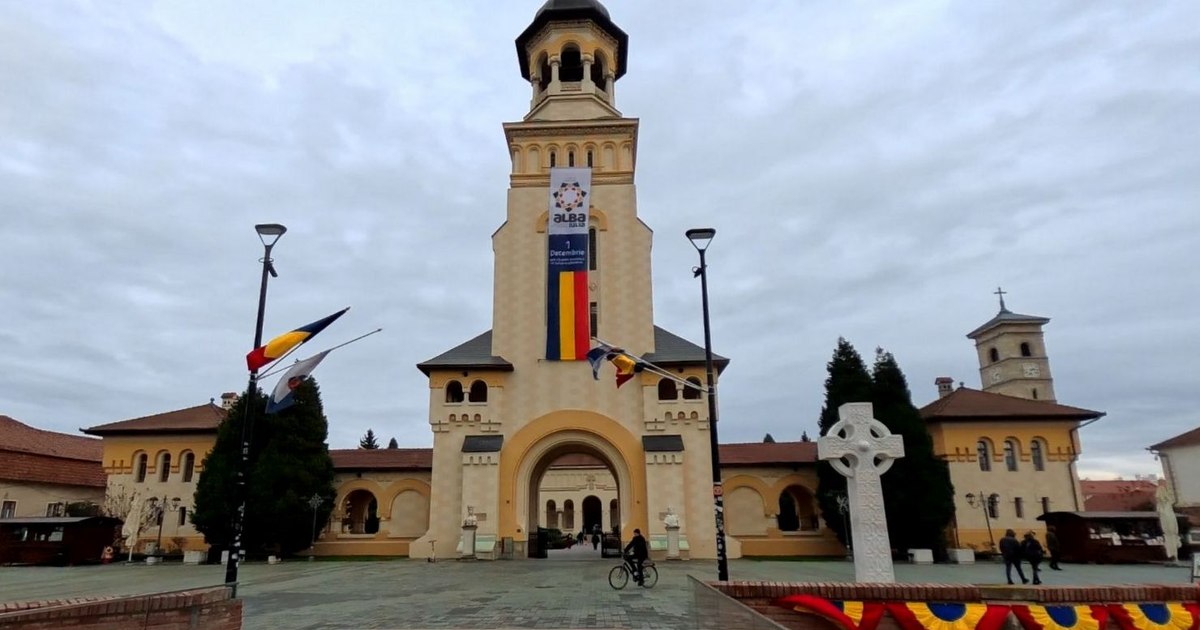
Three centuries old, the Alba Carolina fortress in Alba Iulia (video) is one of the traditional places to celebrate Romania’s National Day.
On December 1, 1918, one of the most important moments in Romania’s history took place in Alba Iulia: the proclamation of the union of Transylvania, Banat, Crișana and Maramureș with the Kingdom of Romania. More than 100,000 people then arrived in the ancient city at the foot of the Apuseni, to celebrate the Great Union, whose resolution was signed in the Union Hall in the center of the Alba Iulia citadel.
On the weekend, but especially on Monday, December 1, thousands of people are expected in Alba Iulia, where the fortress becomes a place of celebration again. There will be religious events, folklore shows, historical reenactments, exhibitions, craft fairs, concerts and fireworks.
“The central moment remains December 1, the day when Alba Iulia receives, as every year, Romanians from all corners of the country and the world. The military parade, the retreat with torches, the Kaleidoscope of the Union, the Te Deum, the reception of messages from the seat fortresses and the great concerts in Cetății Square will transform the city into a celebration of identity and gratitude. Access to all events is free, within the limits of available seats”announces the Alba Iulia City Hall.
One of the most anticipated moments of Romania’s National Day is the military parade, which will begin at 2 p.m., on 1 Decembrie 1918 Boulevard, in the vicinity of the bastion fortress.
Alba Iulia is one of the oldest cities in Romania, being an urban center since the time of the Romans, when it was known as Apullum. In the Middle Ages it was a princely city, and in the 20th century it entered history as the city of the Great Union. Apart from its historical landmarks, it is also one of the most popular cities as a tourist destination, thanks to its fortress and accessibility.
In the last decade, the area between Alba Iulia and Sebeș became the meeting point of the A10 Sebeș – Turda and A1 Bucharest – Nădlac highways, investments that meant direct highway connections between Alba Iulia and the cities of Cluj – Napoca, Sibiu, Deva, Târgu Mureș, and almost completely on the highway with the municipalities of Arad and Timișoara. At the same time, the railway highway that crosses Alba Iulia on the route of the oldest railway in Transylvania, Alba Iulia – Arad, opened in 1868, was modernized largely with European funds and from the state budget.
Searched historical places around Romania’s National Day
The big cities in Romania have a rich offer of events for the mini-holiday on December 1st. Along with them, a few places less visited during the rest of the year come alive near Romania’s National Day.
One of these is the Cave of Saint Andrew, in Dobrogea, visited by many Romanians on November 30, the date on which Saint Andrew is celebrated. The settlement in the town of Ion Corvin, Constanța county, is, according to legends, the place where Christ’s apostle would have arrived before leaving for Patras, in Greece, where he met a martyr’s end.
Apostle Andrew was crucified upside down on an X-shaped cross, known today as St. Andrew’s Cross. Tradition says that he also arrived in Dobrogea to preach the Gospel. Saint Andrew’s Cave becomes a place of pilgrimage on November 30, and thousands of people are expected here. The religious service will be officiated by Archbishop Teodosie and will be followed by a traditional carol concert.
Another place sought after on December 1 is Sarmizegetusa Regia, the capital of pre-Roman Dacia and the most famous Dacian citadel in Romania. In recent years, its temples located at over 1,200 meters above sea level, in the Orăștiei Mountains, have become a meeting place for Romanians who wanted to celebrate the National Day by remembering their ancestors.
Many wear folk costumes, wave tricolor flags and play Hora Unirii among the ruins of the sacred precinct of Sarmizegetusa Regia. Others remember the “Dacian New Year”, reflecting the “Andesite Sun” and the Great Circular Sanctuary, which some ancient archaeologists associated with possible time-measuring tools.
The Bucegi Mountains, full of symbols
In the Bucegi Mountains, the Sphinx and Babel were “adopted” by many Romanians as national symbols. Some daredevils dare to explore them, but these days the mountain trails in Bucegi become extremely risky, due to the winter weather, blizzards in the alpine areas and the possibility of avalanches.
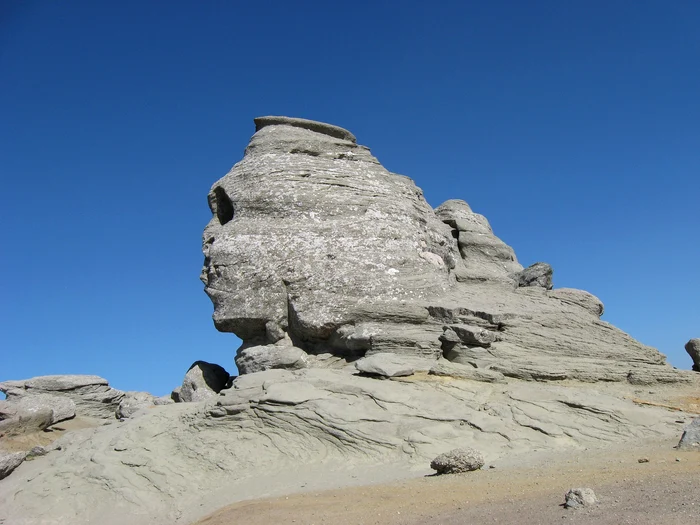
The Bucegi Mountains comprise the largest agglomeration of rock formations with a “human” appearance, “chiseled” by the climate and the passage of time, which some scientists, such as Nicolae Densușianu, considered the creations of prehistoric populations.
“They were sacred places of the tribes in prehistoric times, and their highest peaks, Caraiman and Omu, were consecrated to the most important divinities, Omu being the place where Saturn was worshipped.” Densusianu wrote.
According to the historian, the Bucegii were the sacred mountain of the prehistoric populations of Dacia, and the Sphinx represented Saturn, the supreme deity, personification of Heaven and Earth. In turn, the Babels on Caraiman Peak were considered megalithic altars dedicated to female mountain deities. Some of his theories, although controversial, were embraced by some Romanians and integrated into romantic interpretations of ancient history.
And other historical places and natural monuments in Romania are sought after on Romania’s National Day, due to their symbolism.
Among them are the Figure of Decebal (Mehedinți) from the Cauldrons of the Danube, the Brâncusi Ensemble from Târgu Jiu (the Table of Silence, the Gate of Kisses, the Column of Infinity), the Heroes’ Mausoleum from Mărășești, Parângul Mare Peak (2,519 meters), one of the highest, but accessible in winter, mountain peaks, Corvinilor Castle from Hunedoara.
