
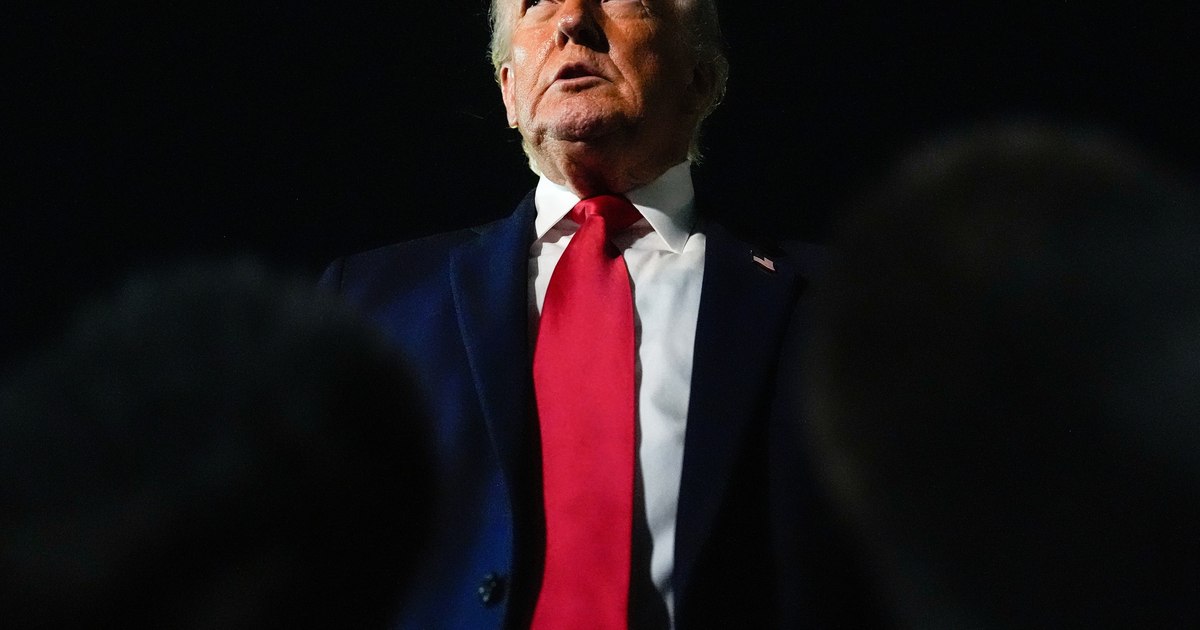
Donald Trump’s speech at the World Economic Forum in Davos resonates on all levels. People all over the world listened in amazement to the American president’s statements, which show that relations between the US and Europe, but also the world as we know it, are changing significantly. Inevitably, there are reactions in society such as fear of what will happen next, anxiety or anger. We analyzed the impact of big politics on everyday life with political scientist Cristian Pîrvulescu and psychotherapist Dorina Stamate. “In the coming period, resilience and adaptability will no longer be theoretical concepts, but essential psychological survival skills”. attracts the psychotherapist’s attention.
Trump, fear and the world in transition
Donald Trump’s speech came out of the paradigm we were used to in the case of US presidents: moderation, diplomacy, respect for allied states. And it further reinforced Canadian Prime Minister Mark Carney’s world-attention claim that “The old world order is not coming back”.
Beyond the geopolitical implications of the statements, ordinary people remain. Those who have always in history borne the consequences of the decisions of political leaders. For many, fear was the natural reaction: to the change of the world as we know it, or to humanity’s darkest nightmare – another world war.
“The international order does not disappear, but is reconfigured through institutions, rules and power relations that are more difficult to adapt than political discourses. For society, the problem is not the rupture, but the period of accommodation, with social costs and a lot of uncertainty”, says political scientist Cristian Pîrvulescu.
From a psychological perspective, things are not so simple.
“When we witness a speech that deviates from the patterns we are used to, our brain quickly goes into a state of alert, because one of the fundamental needs of the human psyche is predictability and when this breaks, fear naturally appears, not as a weakness, but as a protection mechanism”. explains Dorina Stamate, psychotherapist.
In addition to fear, in the face of geopolitical changes, other psychological reactions can also appear: increased anxiety, hypervigilance, anger, the need to find culprits, but also a tendency to emotional withdrawal or even denial.
Dorina Stamate says:
“Some people become overly preoccupied with the news, others choose to avoid it completely, both of which are attempts by the psyche to regulate their stress. There may also be a sense of learned helplessness—that state in which the person feels that no matter what he does, the outcome will not change—which can lead to apathy, depression, or cynicism. These are all normal human reactions to prolonged uncertainty, not signs that <
How can we reduce anxiety?
Fears are natural reactions to the feeling that the world is getting out of control, explains the psychotherapist, and the first step is to recognize them.
“We work with these fears by bringing them from the vague area of ”something bad will happen” to a more concrete area: what exactly scares me, what is about me and what is not about me. Psychologically speaking, fear becomes overwhelming when it is diffuse and unarticulated, and simply putting it into words, discussing it with other people, and contextualizing it historically — understanding that humanity has gone through periods of rupture and chaos — already reduces its intensity.” says Dorina Stamate.
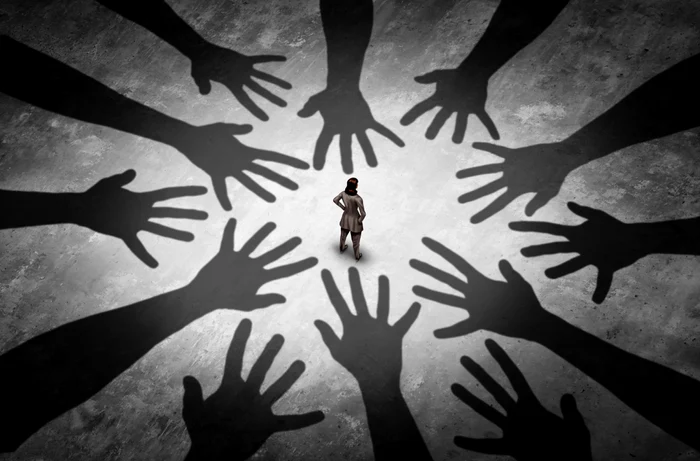
Conversations with other people, mutual support and a sense of community can also reduce anxiety, “because fear is amplified in isolation and diminished in relationship”. At the same time, the psychotherapist emphasizes:
“Reducing anxiety does not mean ignoring reality or forced optimism, but building islands of control and safety in everyday life. Anxiety decreases when we shift our attention from large global forces over which we have no influence to concrete things: daily routine, close relationships, body care, sleep, movement, and clear limits on information consumption. It is extremely important to select news sources and establish clear intervals in which we inform ourselves, because constant exposure to alarmist messages keeps the nervous system in a state of constant alert.”
The key to interpreting Trump’s speech is from a political scientist’s perspective
Political scientist Cristian Pîrvulescu says that, although fear is natural, the risks are not as great as we might fear:
“Donald Trump’s speech is not so much frightening as it is messy. He does not herald a new world, but suspends the language of the old order without replacing it with something coherent. Fears are natural, but they should not be placed on an existential level. The risks are mostly economic and institutional, not apocalyptic. Fear arises from lack of clarity, not from imminent danger.”
How will Romania be influenced by the change of rules? The political scientist says:
“In a more unstable context, institutions become more essential, not less important. Pressures will be related to security, administrative capacity and internal consistency. It’s not a moment of panic, but one that penalizes improvisation and ambiguity.”
I asked the political scientist what history teaches us. The political scientist drew a parallel between the lessons of the past and Donald Trump’s speech.
“History shows that transitions do not destroy order, but move and adapt it. The old world does not collapse, but is transformed by the decisions of the actors.(…). The essential difference is between those (not actors) who understand these mechanisms and those who believe that a discourse can replace an order. In this sense, the problem is not that the rules are changing, but that some actors prefer to talk over them, as if they don’t exist.”
The role of resilience and adaptability, “We have an extraordinary capacity to reorganize ourselves internally when the external reality changes”
Beyond the political actors, at the societal level, two concepts from psychology, which have shown their extraordinary importance throughout history, will return to the fore in the post-Trump world.
“In the coming period, resilience and adaptability will no longer be theoretical concepts, but essential psychological survival skills. Resilience is not about not feeling fear, sadness, or anger, but about being able to move forward in spite of them, adjust your expectations, let go of illusions of absolute control, and find meaning even in unstable contexts. Adaptability involves mental flexibility — the ability to accept that the world is changing, that some certainties are being lost, but that we can learn to live and function in the new conditions without losing our humanity.” says Dorina Stamate.
It is also important not to forget that:
“From a psychological point of view, people are not fragile by definition; on the contrary, history shows us that we have an extraordinary capacity to reorganize ourselves internally when the external reality changes, and the key will be not to do this alone, but together, with empathy, dialogue and care for our mental health”.
