
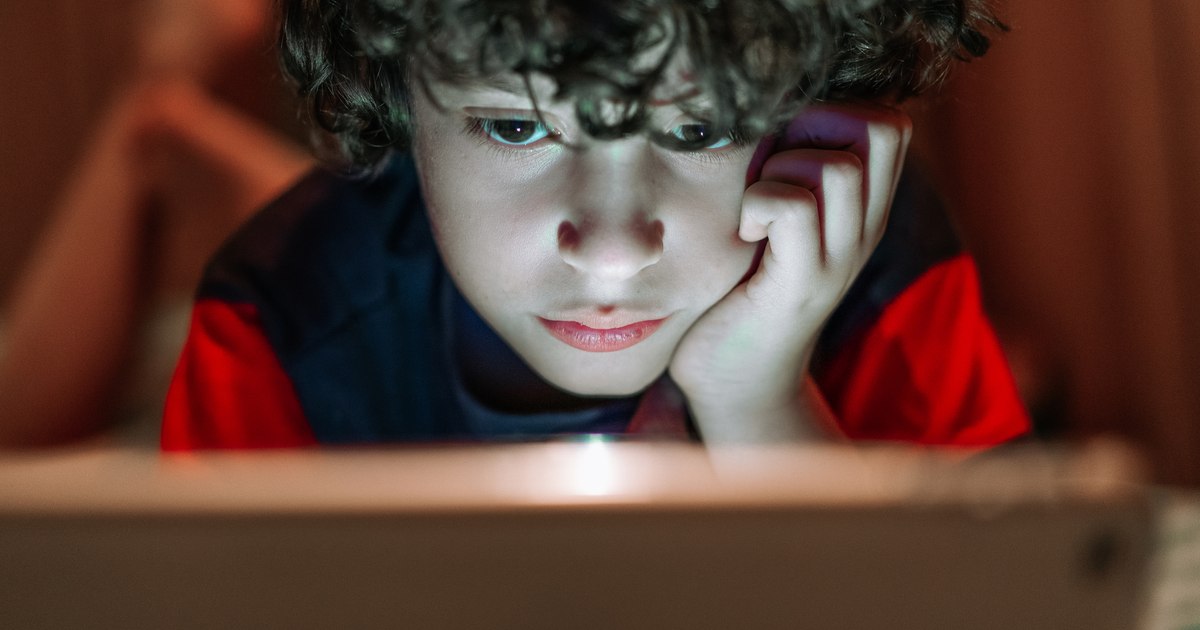
Middle and high school students could have a new subject: Media and Digital Education. The legislative proposal belongs to PNL deputy Ionuț Stroe, but the idea is by no means new. NGOs, psychologists and digital content experts have been talking about the need for education in this area for a long time. We also wanted to find out the opinion of the students and we talked with Bogdan Gogan, vice-president of the National Council of Students. “The introduction of Media and Digital Education in the secondary and high school cycle is absolutely necessary in the current context”he emphasizes.
What the legislative proposal looks like
Media literacy, critical thinking, media content analysis, responsible and safe use of digital technologies, personal data protection, digital ethics – these are just a few of the concepts that would be studied by students in the Media and Digital Education discipline. In addition, children would learn how to create, evaluate and manage digital content for informational, educational and civic purposes.
In the statement of reasons, the initiator Ionuț Stroe emphasizes:
“In the current structure there is no distinct, mandatory discipline that integrates in a systematic way the essential area of media and digital literacy, although this is an absolute necessity in a profoundly transformed informational ecosystem.
The current socio-technological realities, marked by the multiplication of information sources, the exponential increase in the volume of digital content and accelerated changes in the media environment, have determined, at the European and international level, the adoption of educational policy guidelines focused on the consolidation of media and digital skills”.
If the project is adopted, the Ministry of Education will have to develop, within six months at most, the corresponding school programs, as well as the methodologies for training the teachers who will teach the new subject. The ministry will also have to allocate the necessary financial resources.
What the students say: “We are exposed to a very large volume of erroneous or manipulative information”
,,Students definitely need digital education, even if not all are aware of this”is the opinion of Bogdan Gogan, vice-president of the National Council of Students. He also explains why he believes that Media and Digital Education is absolutely necessary in the current context:
“The problem is not the lack of information, but the fact that we are exposed to a very large volume of erroneous or manipulative information. Young people in particular need to understand how important it is to be able to discern between false information and valuable information that can be used constructively in the future.”
Besides the risk of misinformation, another great danger of the online space, says Bogdan Gogan, is the addiction generated by social networks.
“Digital platforms are designed to capture and hold users’ attention, which can lead to a loss of control over time spent online and reduced ability to concentrate”draws the student’s attention.
Among many children and adolescents there is a perception that they know better online than adults. Does that make them more protected? Bogdan Gogan says:
“It’s true that young people are doing better than their parents from a technical point of view, using devices and apps. However, this does not mean that they are prepared to critically and responsibly manage the content they consume. In many cases, adults can be more selective and cautious about information or interactions online.”
Would the schedule be too busy?
I also asked Bogdan Gogan if he thinks that any subject could be abandoned in favor of this new one.
“I don’t think we should necessarily think about sacrificing a subject when we want to introduce a new one into the curriculum. The problem is not just the number of subjects, but the way they are structured and updated. Media and Digital Education obviously corresponds to the current realities, but instead of giving up another subject completely, perhaps a reorganization of the contents would be more effective”, says the vice-president of the National Council of Students.
The European Commission checks algorithms
Also related to digital education and protecting children and adolescents online, the European Commission has announced that it is working on an application through which young people can safely report cyberbullying and receive the necessary support.
At the same time, the Romanian MEP Roxana Mînzatu declared that the European institution started to check the big platforms.
“The discussions went from the theoretical level to practical application and concrete investigations. The priority is to check how the big platforms comply with the rules on the protection of minors and the transparency of algorithms. There is an emphasis on reducing the risk of addiction and overexposure, transparency of how content recommendations work, real options for users to control what they see online, annual risk assessments by platforms and mandatory corrective actions. The commission has requested detailed information from platforms such as Snapchat and YouTube, and proceedings are underway against TikTok, Facebook and Instagram.”said Mînzatu in an interview for edupedu.ro.
“Without EU intervention, social networks will have no reason to adjust the mechanics of their algorithms”
We asked digital content expert Cristian Bolocan for his opinion on these steps. The approach shows that we have reached the point where we are truly aware of the dangers, he says. But without clear regulations networks will have no interest in adapting their algorithms. The reasons have to do with money, explains the expert.
“It is clear that the purpose of the platforms is to bring you as a user, so that later you become “captive” in polarized bubbles, and the algorithm refines itself and delivers you content much more aligned with your personality, interests and needs. As each user enters an “addicted” stage, the algorithm begins to deliver too much advertising because it is already validated that the user is 100% engaged in using the platform. (…)
Adaptation of algorithms is essential and should be done exclusively by the social networks themselves. Somehow, the conflict comes from the fact that the very mechanisms of social engineering introduced into the algorithms make social networks monetize up to 20% more through advertising, and this goes against their financial policies. Without an intervention from the EU, social platforms will have no reason to adjust the mechanics of the algorithms, because this can bring financial damage.” adds Cristian Bolocan.
