
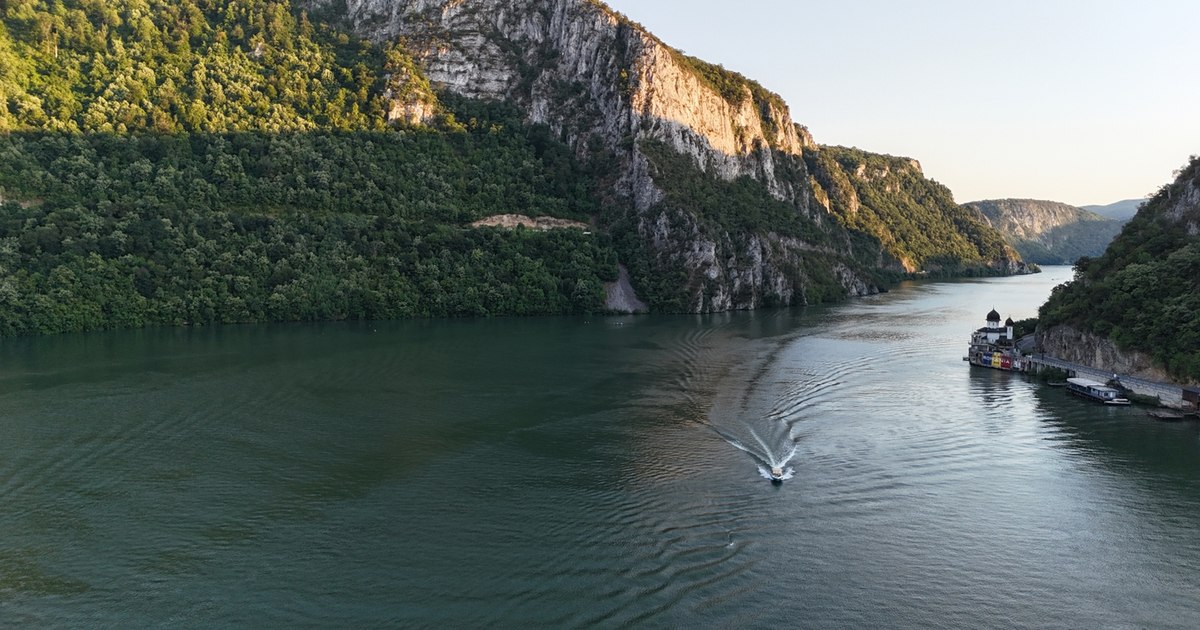
The Danube Gorge stretches along it a lot of places with strange histories that continue to arouse wonder and fascination. The Iron Gates, the Danube Boilers, but also a mysterious cave dug above the river gave birth to the most disturbing legends.
Crossed by the Baziaș – Orșova (DN 57) and Orșova – Drobeta Turnu Severin (DN 6) roads, the Danube Gorge comprises a 140-kilometer route, with a lot of impressive places, some quite unusual.
The Danube enters Romanian territory at Baziaș and flows, almost 1,000 kilometers away from the former Danube port, into the Black Sea. The gorge, between the localities of Baziaș and Gura Văii, the latter the historical site of Portile de Fier and the Iron Portile I hydroelectric power plant, represents the most spectacular portion of the river.
In the 1960s, the Iron Gates region went through the most extensive transformations in its history.
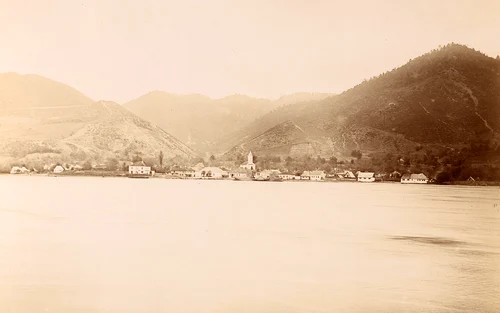
The development of the Hydropower and Navigation System Portile de Fier I led to the raising of the dam at Gura Văii (Mehedinți) and raising the level of the Danube by almost 60 meters. The hearths of numerous localities were swallowed by the waters, the largest of which was the city of Orșova, then with over 5,000 inhabitants. The villages on the banks of the Danube affected by the establishment of the reservoir were also displaced, and the island of Ada Kaleh, the site of an old fortress, disappeared into the depths, its mostly Turkish population being relocated.
Spectacular new roads were built on the Romanian bank of the Danube, and viaducts connected the mountains. The Orșova – Drobeta Turnu Severin railway was moved to a new route, and many localities, including the city of Orșova, were rebuilt for a new start.
The Iron Gates and the Danube Boilers
Roads, canals and ancient settlements, medieval fortresses and the land of stone cataracts from Portile de Fier, located between Orșova and Drobeta Turnu Severin, which once made life difficult for sailors and almost impossible for large ships, have reached the bottom of the water.
“Here the Danube reaches the famous Iron Gates, the most dreaded obstacle to navigation. This is a three-kilometer-long shoal of crystalline shale rock that cuts diagonally across the river to the Serbian shore. The most dangerous part is Prigrada, an area 250 meters wide, where, at low water in summer, the rocks protrude 0.5-1.5 meters above the water, so often side by side that, as the saying goes, “you could jump from one to the other”. I could not see this wild picture now, only the rushing of the water and the waves betrayed the fact that the road was barred by dangerous rocks below. wrote Cluj professor Veress Endre, in 1893, after a trip on the Danube.
Upstream from Orșova, the Danube Cauldrons are “guarded” by the Figure of Decebal, a sculpture more than 40 meters high, carved into a rock on the left bank of the Danube, at the entrance to the Mraconia bay, between the towns of Eșelnița and Dubova. Excavated in limestone, Cazanele Mici and Cazanele Mari, each nearly four kilometers long and 150–300 meters wide, are considered the most spectacular area in the Danube Gorge. Before the establishment of the reservoir, the Danube reached its maximum depth here and represented, along with the Iron Gates, the most dangerous part of the river.
“In Kazan Pass and above this strait, also called the Little Iron Gate, the waters gather in a great and deep mass, forming a kind of colossal cauldron (anaphor) in the bed of the river, affording a most grand spectacle. The slope being great, even when the waters are at a medium level the cascades which the current forms in this steep portion of the river are well observed. Some say that the mouth of the Kazan is about 260 meters and a depth of about 50 meters. Others mention a colossal whirlpool with a depth of 60 meters.” informed the sailor Mihail Drăghicescu, in the 19th century.
The shores rose like two limestone walls, rocky and very high.
“Looking at them from the bottom up, towards their tops, you get the impression that they never end. In the middle of the stream, after the anaphora, there is the sharp Iukriff rock, over which large vessels can only pass when, at Orșova, the water level is five feet (1.6 meters) above zero“, added the sailor.
The legendary places in the Danube Gorge
Along with the Danube Cauldrons and the Iron Gates, feared by sailors in the past, several places in the Danube Gorge have sparked people’s imagination over time.
Near the village of Coronini, the Babacaia rock rises from the middle of the river, a stone corner with a height of seven meters, the only natural monument of its kind in the gorge. Her appearance sparked a lot of legends, although her main role was a practical one. In the past, chains were tied to it between Golubac Citadel and Ladislau Citadel on the Serbian and Romanian banks of the Danube, to stop ships from passing through the area without the sailors paying taxes.
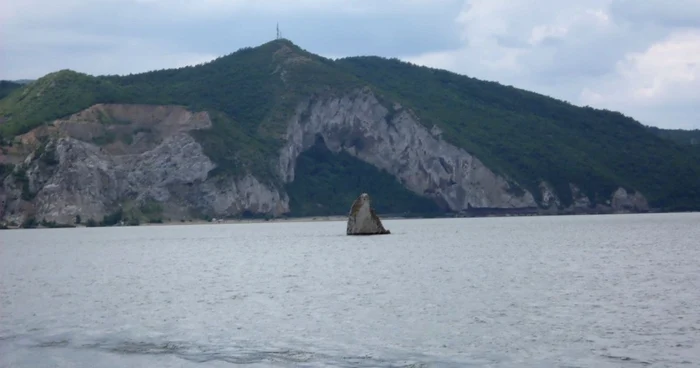
“Several legends have been woven around this rock. One says that a Serbian voivode would have tied his wife to him, telling her: ‘Babo, kaji se’, which would mean ‘Wife, repent.’duplicated”, says the Tourist Information Center of the river city of Moldova Nouă.
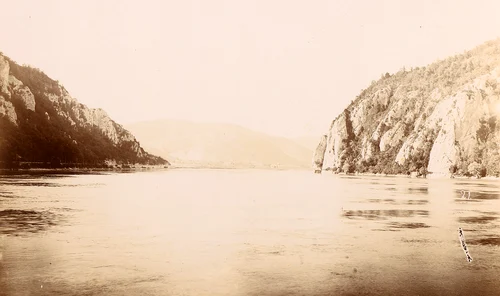
Other legends speak of the princes and princesses of the past who ended up here, chained to the stone spur.
Several caves in the Danube Gorge have been inhabited since ancient times. Near Dubova, the Bat Cave, over 1.6 kilometers long, has the longest galleries, formed by the Ponicova stream, and can be visited both by boat and on land.
Located 200 meters downstream and accessible only by water, the Veterani Cave is 87 meters long and preserves traces of old structures (stone walls, water basins, level floor), which show its strategic use in the past.
A legend says that a silver treasure of Empress Maria Theresa and the treasures of the Serbian Tsar Obrenovic were hidden here. And also here, according to another legend, the Dacians would have built an altar to worship the divinity Zamolxis.
The cave that housed the swarms of killer flies
But the strangest legends describe the story of Gaura cu Muscă Cave, inhabited since ancient times and decorated with cave paintings ever since. Located 12 kilometers downstream from Moldova Nouă and about 30 meters above the road from the Danube Gorge, the cave was fortified in the Middle Ages and later used as a garrison. Its legends, however, talk about the swarms of insects that ruled it and turned the land into an almost uninhabitable one.
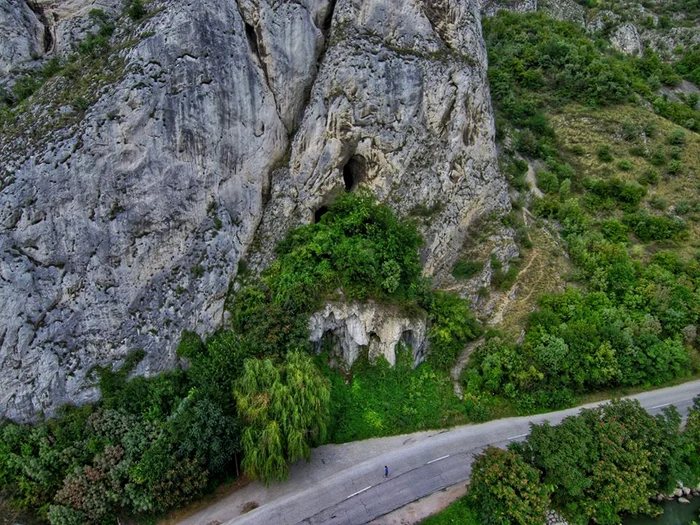
The cave was named Gaura cu Muscă because, according to a legend, this is where the dreaded columbac fly (Culex columbacensis) came from, born from the head of a 12-headed dragon killed by the local hero Iovan Iorgovan. Historical testimonies from past centuries show that swarms of “Golubac” flies decimated the herds of the locals in the Banat lands.
“In innumerable numbers, these insects pounce, without distinction, on oxen, cows, horses, sheep, goats, and pigs. In vain do the poor animals try to defend themselves from this nuisance, by leaping violently and beating the air with their tails. They finally fall dead, either during the attack itself, or 3-4 hours afterwards, or at the latest during the following night.” noted the Italian Francesco Griselini (1717–1787), a well-known scholar of the time, who spent several years in Banat.
The scholar related that the flies, though no larger than mosquitoes, appeared especially in the spring and flew in vast swarms that looked, from a distance, like thick clouds of smoke or like columns of steam rising from the surface of the sea.
“It is commonly believed that these flies make their appearance from certain crevices in the mountains on the left bank of the Danube, near Golubac, whence, scattering, they take their flight in innumerable swarms, both in Serbia, and in the Banat, and in the neighboring provinces. The Romanians, superstitious and unenlightened, even maintain that they issue only from one hole. Near this hole or cave they would be shot down Saint George — according to Romanian legend — the infernal dragon and, cutting off its head, would have thrown it into the mentioned cave. Thus, these harmful flies would come out of this monster’s head.”informed the Italian scholar from the 18th century.
Flies were wreaking havoc among the cattle
Johann Friedel, an 18th-century scholar who traveled the Danube, also described the mysterious cave and the swarms of noxious flies it harbored at length.
“We advanced from resort to resort, in the small luntre that I described above. The land we are passing through is remarkable. A phenomenon that deserves special attention and a more careful research is the cave that can be seen above all, on a rocky slope. At Sânziene and at Sfântul Mihai, a fly comes out of this hole, followed by an unspeakably large swarm of small flies. They fly, as it beats the wind, either across the Danube, or scattered through the mountains of our land. These flies, when they come, cause immeasurable damage among the cattle, which run in terror to the stables when they feel them approaching“, noted the traveler born in Timișoara.
He mentioned that flies produced infections that often led to the death of cattle and horses. The meat of the killed animals was considered poisonous, as they died, the locals believed, poisoned.
“The sanitary committee of Timișoara did, of course, the proper investigations, but the gentlemen were not initiated into the secrets of Aesculapius; therefore, everything remained at the level of theory and no measures were taken against the evil. They were content with the advice: “When the flies come, you must close the cattle”. Twice an attempt was made, with much effort and great expense, to build the mouth of this cave, but the air pressure every time he broke the wall from the inside, when the fire or steam was ready to come out, everything remained as it wasit was”, recounted the traveler.
Since the 1960s, when the river level rose, the swarms of flies no longer made their presence felt.
