
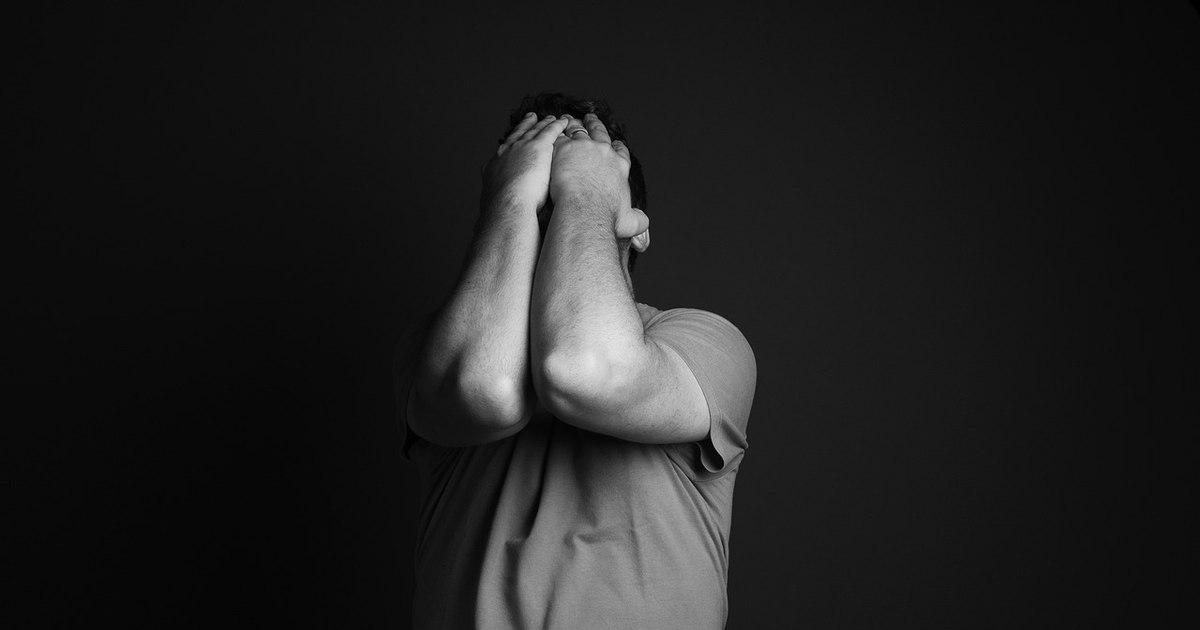
The statements of the TV presenter Gabriela Cristea and the actress Ioana Ginghină, which suggested that depression comes from “too much free time”, are strongly contradicted by doctors, who categorized them as dangerous and stigmatizing. Specialists emphasize that depression is a disease that requires medical treatment, and superficial approaches deepen the guilt and helplessness of patients.
What Gabriela Cristea and Ioana Ginghină said
Gabriela Cristea: “I also went to a psychologist, but I went with one concrete thing: I wasn’t sleeping anymore. And I found out it’s from menopause. And I adjusted. Eye point, hit point. But now everyone is depressed. I think they have too much time”
Ioana Ginghina: “Just before I think I was discussing with a guest that even if someone annoys you, it gets you out of depression. That they annoy you and…”
Gabriela Cristea: “You have an activity. But if you stand like an ox on its tail, it’s normal that you ask yourself all the existential questions in this world. And we don’t even have, let’s be honest, how the Greeks were when they invented democracy, those landscapes take your breath away and you sit like that and look like an ox on its tail. Because I do this thing too. When I go to the sea I sit like this, my bladder flows and…”
Ioana Ginghina: “Yes, but with you it’s rest. (…) But it’s something else when you’re always on a break.”
The dialogue above was held by the two stars in the podcast moderated by Ioana Ginghină. In the comments, not a few drew their attention to the fact that the topic of depression should not be treated superficially and that such labels can stigmatize.
Why the approach is wrong
Dr. Miriam Galescu, a psychiatrist based in Washington, in the United States, shares the same opinion. Even if the intent is not necessarily negative, words have immense power and potential for great harm, especially when it comes to emotionally vulnerable people.
“I think it’s very dangerous to talk about depression like that because we’re adding a level of guilt and shame to what these people are feeling for something they can’t control and didn’t bring on themselves. Patients already have the feeling of helplessness. And when someone comes and says <
>, and they know very well that they have already tried these things and it was very difficult for them, I think they can go deeper into these feelings of helplessness and shame. Which we who treat depression struggle a lot with. We struggle to explain to these people that it’s not their fault they feel this way, it doesn’t mean they’re weak, it doesn’t mean they don’t know how to take care of themselves. It means that just like you can have arthritis and it becomes a disease that you have to take care of, or you can have diabetes or hypertension, you can have depression or anxiety, and we’re here to guide them.”
That is precisely why, emphasizes Dr. Miriam Gălescu, it is very important to destigmatize depression:
“We have to understand that, like the other organs in our body, the brain needs care and that from time to time it can get sick if we exceed its capacity to function. As for any other organ in the human body, we must go to a doctor and to specialized personnel to guide us on how to take care of the brain. And from the soul, implicitly”.

The warning of the psychologist Sorina Brif
In a country like Romania, where there is not enough awareness, stigmatizing statements are even more dangerous.
,,Without treatment, mental health problems can have a devastating effect on people’s lives, and the risks are very high. How bad can tags like <
According to her, in our country depression is often treated late.
“Depression in Romania is still seen as a weakness rather than a disease, and Romanians are known as the nation that ends up going to a psychiatrist or psychotherapist as a last resort. In our country, depression is mainly treated in crisis, not in prevention. In other words, we wait for the man to fall before we extend a helping hand. And this is state policy.. Studies show that it can take up to 11 years from the onset of symptoms to a diagnosis, and the main obstacles are denial of the problem in 60% of cases, fear of judgment in 56% and shame in 53%. These numbers don’t just describe young people, they describe 35, 45, 55-year-old adults who are functioning dysfunctionally for years on end and call it resilience.”

Beyond the ‘baby blues’: ‘Postpartum depression is not a personal failing’
What is depression and how does it occur?
Unlike sadness, depression persists and profoundly affects the thoughts and behavior of those who suffer from this condition, called disease of the 21st century.
We can tell we’re dealing with depression when feelings of sadness persist for more than two weeks and are accompanied by other symptoms, such as low energy or the fact that we no longer find pleasure in things we used to enjoy. Sleep and gastric disturbances may also occur.
“We talk about depression when we don’t have an immediate reason, such as mourning, for example, which explains the patient’s condition. Most of the time, depression can be triggered even without a reason, through an accumulation of relatively small factors, but which reach a level where they exceed the body’s ability to adapt. (…) Depressed people generally isolate themselves a lot, because social contact no longer gives them pleasure and can be felt as pain. An almost physical pain”explains psychiatrist Miriam Galescu.
Why does depression occur and how is it treated? The psychiatrist says:
“It is a disease that has a physiological substrate. There is still debate regarding this substrate, current theories focus on neurotransmitter dysregulation. (…) With the help of medicines we try to regulate this biochemical regulation. Psychotherapy is also very important. Most of the time, we get the best results by combining psychotherapy with medication, depending on the severity of the depression. (..) Medicines bring the patient to a level where he can incorporate therapeutic methods. Many times, the patient is too sick to be able to apply the things we say.”
Psychologist Sorina Brif adds:
“Depression is not prolonged sadness and it doesn’t go away if you think positively or go out more. Not even if you listen to music or ignore your thoughts, as I keep hearing. It is a real neurological disorder, where brain chemistry, specifically the balance of serotonin, dopamine and noradrenaline is disturbed, just as in diabetes the pancreas no longer produces insulin correctly. It’s not a choice, it’s not laziness, it’s not a weakness of character. It can hit a parent with two jobs, a doctor, a performance athlete, a man who from the outside seems to have everything”.
What does it mean to fight depression?
Dr. Miriam Galescu describes depression as a struggle that,it leaves you without weapons before you start fighting”.
“It takes away your energy, it takes away your motivation, it makes you feel chronic pain, it makes you not want to ask for help and isolate yourself from your loved ones and support system. It’s a hard disease to deal with, because it inactivates many of your defense mechanisms from the beginning,” the psychiatrist draws attention.
Can we do anything to prevent this fight?
“The most important factors in preventing depression are real human connection, to be seen, heard, truly supported by those around us, to feel that our life has a purpose and that we are pursuing that purpose”says the doctor.
Are we turning into our parents or not? Psychologist: “Repeating their mistakes is, paradoxically, a way to stay connected to them”
On the other hand, it also recommends keeping in balance the elements that can lead to anxiety or depression:
“It is a fragile balance. If you have anxiety, it’s easier to treat, and if we do the things that make us anxious, the anxiety decreases. Whereas with depression it is the opposite: if we do the things that depress us, we will become much more depressed. So even if it’s sometimes something intimidating, like doing a new activity, it’s true that if we do it we might have a little more anxiety, but it will protect us from depression. While accumulating things that we still do not do or feel that we cannot do or that they are not meant for us even though we want them, leads to depression”.
The importance of awareness
So, depression is not about willpower or “free time”, but about brain chemistry, genetics and psychological factors. Understanding this condition and choosing words carefully when talking about the disease is essential to not aggravate the suffering of people who are dealing with the pain anyway.
The good news, say experts in the field, is that new generations are more aware of depression and more psychologically educated. On a general level, however, certain mentalities remain firmly ingrained.
“Perhaps the hardest thing to change in our country is not the system, but the nation’s favorite motto. <
> was a sign of resistance for a long time, but it has become a trap. It needs to be replaced with something more honest: when you can’t anymore, it’s ok to seek help. Specifically, we need real access to therapy settled through the public system, campaigns that also speak the language of the +40-year-old who believes that depression is for others, and public voices that understand that their platform comes with responsibility. We are still at the stage where awareness means more noise than infrastructure”, draws the attention of psychologist Sorina Brif.
