
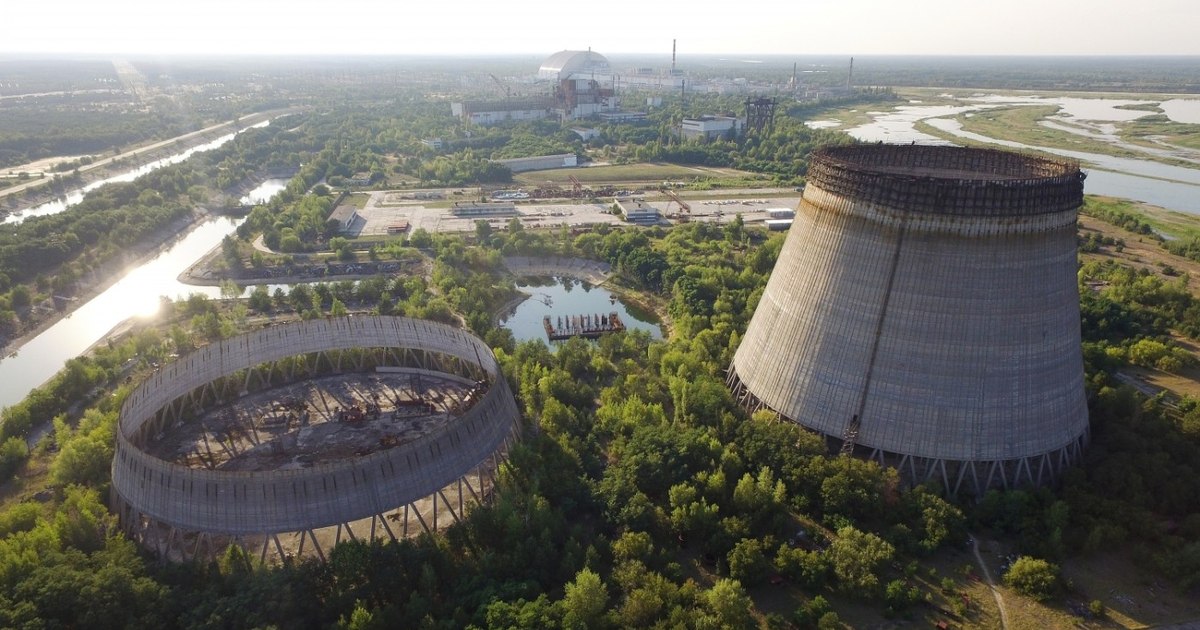
In the radioactive ruins of Chernobyl, scientists have discovered a unique phenomenon: a fungus that grows better in the presence of radiation that kills everything else.
Chernobyl power plant PHOTO: Getty Images
In the Chernobyl exclusion zone, where people cannot enter due to dangerous radiation, life continues as if in silence. Among the abandoned buildings, researchers discovered a black fungus, Cladosporium sphaerospermum, that appears to be taking advantage of the deadly radiation for other life forms, according to sciencealert.com.
Scientists say the mushroom’s pigment, melanin, could enable the conversion of ionizing radiation into energy, a process called radiosynthesis. In simple terms, the fungus could “feed” its own growth with the radiation that kills other organisms.
The discovery began in the 1990s, when microbiologist Nelli Zhdanova and her team documented 37 species of fungi in the area of the exploded reactor. C. sphaerospermum not only dominated the samples, but tolerated alarming levels of radioactivity.
Later, the team of professors Ekaterina Dadachova and Arturo Casadevall from the Albert Einstein College of Medicine demonstrated that the fungus not only survives radiation, but even grows faster in its presence.
Experiments have shown that the mushroom’s melanin functions as both a protective shield and possibly an energy absorber.
In 2022, a team of researchers took C. sphaerospermum to the International Space Station.
The results showed that the fungus reduces the amount of radiation that gets through it – a hint that it could be used as a biological shield in space missions.
Although the idea of radiosynthesis remains unconfirmed, the behavior of the fungus fascinates the scientific community. Other melanized fungi do not exhibit the same adaptation, suggesting that C. sphaerospermum has evolved a unique ability to live and perhaps even thrive in the most hostile environments.
Life, this mushroom seems to remind us, always finds a way – even among the radioactive ruins of Chernobyl, the quoted publication points out.
The explosion of the Chernobyl reactor in April 1986, the worst civilian nuclear disaster, led to the evacuation of surrounding villages and health problems for thousands of people.
