
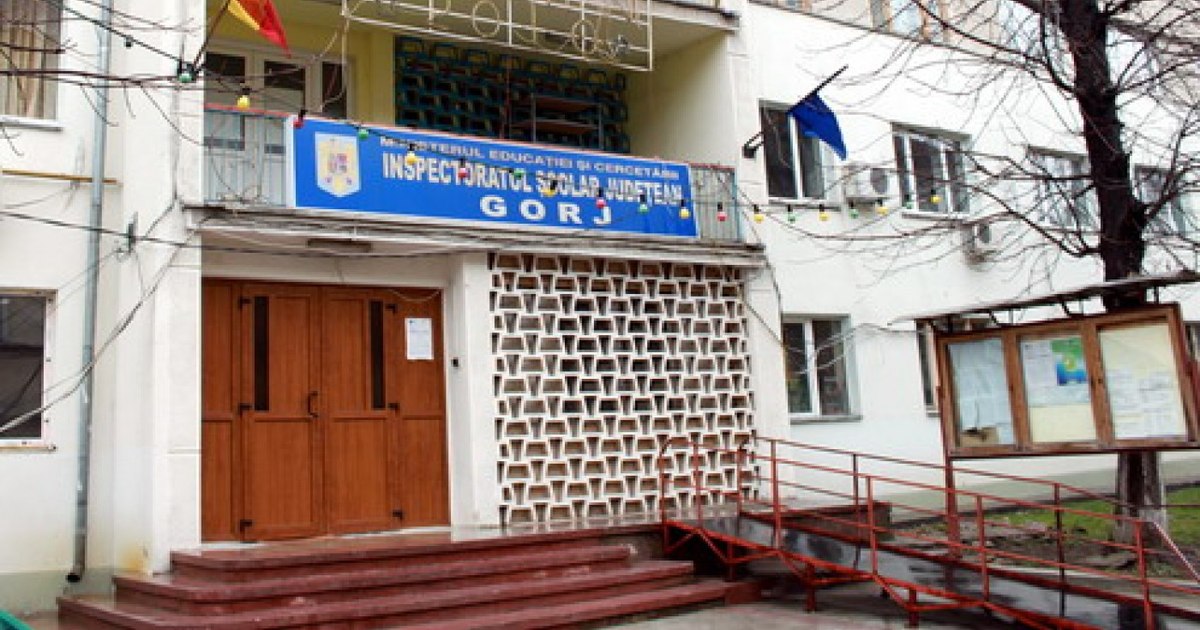
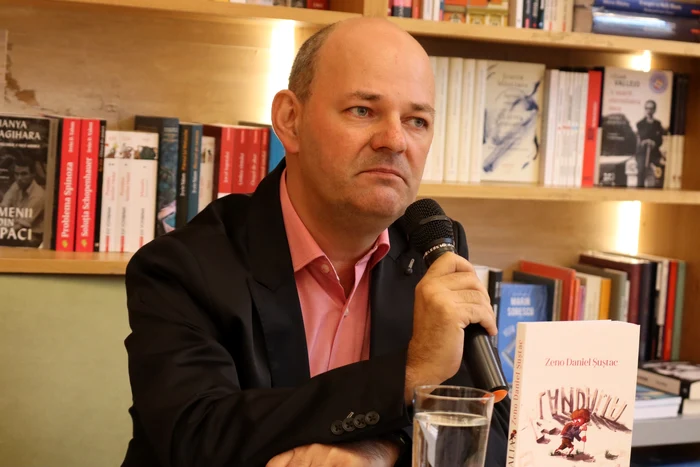
Association for the Depoliticization of Education announces that he has submitted to the Minister of Education, Mihai Dimian, a proposal that involves the abolition of school inspectorates and their replacement with other structures, according to European models. The main reason cited is the politicization of these institutions. ,“We can no longer allow the professional CV in education to remain less relevant than the appropriate party card”says Zeno Daniel Şuștac, the founder of the association.
“The current model is built on political control, not on competence”
The truth: Why do you think there is a need to abolish school inspectorates?
Zeno Daniel Suștac: It is well-known in Romanian society and in the international educational world that the current model, generating functional illiteracy, school dropout and country vulnerabilities, is built on generalized political control, not on competence, dedication and professionalism. At the level of the European Union, we do not find a similar structure anywhere; competence in education, society-state educational partnership and respect for teachers are valued in EU countries.
Dedicated and high-achieving people in the educational system are overshadowed by crooked hierarchies where the leadership of ISJs is entrusted to “favorites”, not earned through performance and seriousness. The practice of giving “power” without merit has been making educational construction vulnerable for decades and must be urgently stopped; being a politician is not – in itself – a merit. Most of those appointed to lead ISJs are politicians, mainly party members with leading positions. They are often promoters of professional mediocrity, many have no major achievements in the field of education, but paradoxically, they lead the teaching elite at the local level.
These practices, perpetuated for over three decades at the ministerial level, are a shame on the face of national education and should be stopped urgently. We can no longer afford the professional CV in education to remain less relevant than the right party card.
What do you think are the biggest deficiencies within the inspectorates?
To put it bluntly, without fear or manipulation, ISJs are educational sinecures reserved for politicians and their protégés, artificial structures of political control in education. The experience of the last decades shows that school inspectorates do not function as support structures for schools, teachers and students. These structures, whatever their name (inspectors or directorates), are undoubtedly intended as instruments of bureaucratic control and political influence at the local level.
Appointments to leadership positions are frequently the result of political negotiations, not professional competence, which directly and dramatically affects the quality of the educational act.
“Abolition of ISJs does not imply a power vacuum”
What do you think the inspectorates could be replaced with? What should be the main role of possible future structures?
The successful European models, known at the level of the Ministry of Education and Research, based on institutional collaboration within the European Union, demonstrate that the existence of such intermediate structures is neither necessary nor efficient.
“The school’s exit from communism” – Urgent measures that the Education expert, Marian Staș, asks of the new minister
Countries such as Finland or Estonia operate without school inspectorates, relying on local autonomy and professional responsibility, while others, such as the Netherlands, clearly separate the function of administration from that of evaluation, through independent and depoliticized bodies.
There are other successful models (France, Germany, etc.), but none of them are political sinecures. I tend to believe that this is the reason why the current structures are maintained in Romania.
The abolition of ISJs does not propose a power vacuum, on the contrary, it proposes the transfer of their duties to meritocratic and independent professional bodies.
What tangible benefits do you think students and teachers might experience?
In their current form, ISJs make indigenous education vulnerable by maintaining a deeply politicized, non-meritocratic and ineffective administrative level. At the national level, the ISJs keep more than 3,000 people in the system and feed them with public money (most of them entered the system through the back door) and incur annual costs of more than 200 million euros, being one of the most expensive schemes in the Romanian state. Redirecting a billion euros into education over the next 4-5 years would make a huge difference.
Before sending the proposal to the Ministry of Education, you consulted with the parents on the group Parents of Students from Romania. What was their feedback? Have you also talked to teachers?
The overwhelming majority of those who expressed themselves empathized with the option of abolishing those structures as quickly as possible.
In the case of teachers, there were more private discussions. Few teachers publicly take on such a struggle that can have unimaginable career costs. In 2026 a teacher’s political career is in the pen of the school inspector general.
How necessary do you consider it to be, at the moment, a public discussion about the situation of the inspectorates?
From my perspective as a campaigner for quality education and president of the Association for the Depoliticization of Education, the discussion about the depoliticization of education is one of the most important topics in Romanian society. An effective antidote to reducing the degree of politicization would require the establishment of independent authorities to manage the education system, which are not influenced by frequent political changes and have autonomy in decision-making.
At this moment we are faced with the lack of will to depoliticize the Romanian school. Guilt must be sought not only at the level of the ministry, they also exist at the level of the President, Parties and Parliament. We have justified reasons to look with concern at the future of education, its quality decreases from year to year. If there was responsibility, interest, will and assumption, effective depoliticization tools are easy to identify, adopt and use:
New details related to the “Garden of Horror” in Craiova. The teacher allegedly taped the children’s mouths and forced them to hit each other
• the organization of public competitions, with independent evaluators, based on objective and transparent criteria, for the occupation of the positions of director, general school inspector, etc.
• introduction of independent audit and monitoring mechanisms (to ensure transparency and accountability of the decisions taken)
• the implementation of strict sanctions, with the role of deterrence, for those who use political influence to obtain personal benefits within the educational system
• the active, real inclusion of parents, teachers and the community in decision-making processes related to education, their involvement including in the selection process (to reduce external influences and ensure that decisions are made in the interest of students), etc.
• increasing the autonomy of schools in the process of selecting principals, allowing school boards to have a more active role in appointing and evaluating them
• establishing clear standards and strict regulations for all leadership positions in the field of education, in order to prevent political influences and ensure a fair, meritocratic process, etc.
Do you have a message for the Minister of Education?
To be brave, to think about the good of teachers and students, not to play petty political games, to realize that this is his chance to do something remarkable. He can remain in the history of Romanian education as a man who dared, or as a simple executor, the choice is his. To dare more than the predecessors and look higher than them, the rest comes naturally.
