
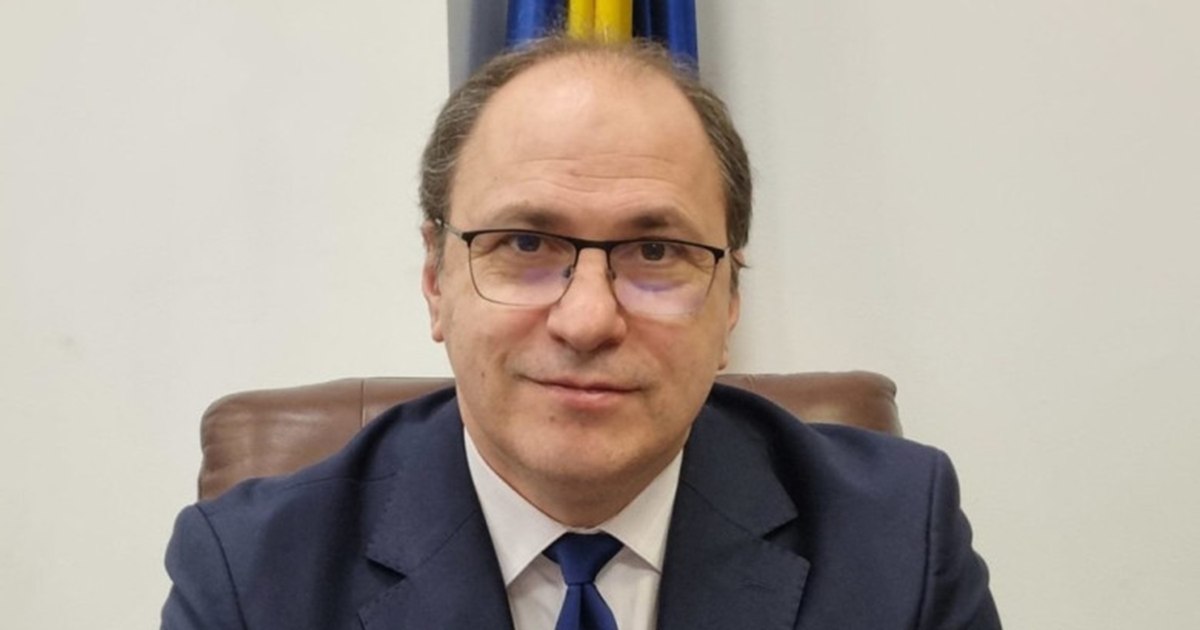
“I ask all parents, before they talk about school, to ask themselves if every day they have told their children to learn,” is the statement of the Minister of Education, Mihai Dimian, which caused a lot of criticism in the public space. It all came in the context of detailed analysis of the results of the National Assessment simulation, which showed that more than half of the pupils who took the test did not know the correct form “not to be”. The minister canceled the role of the school and placed most of the responsibility on the shoulders of the parents. In total inconsistency with the real role of the education system – that of providing education to all children, regardless of the environment they come from – many voices from among parents, students and teachers attract attention.
The results and the minister’s statement
The analysis by items of the Ministry of Education showed that 8th grade students have great difficulties when it comes to writing with one or two ‘i’s”. 54% of the students who took the simulation of the National Assessment of the Romanian Language did not choose the correct option between “don’t be angry” and “don’t be angry”. At the same time, 40% chose the option “a few kilometers”, instead of “a few kilometres”.
In a statement to Stirile Pro TV, the Minister of Education scolded parents for these results: “I request all parents, before talking about the school, ask themselves if every day they have told their children to study. Before talking and criticizing the school. Until we do that, please stop discussing what the teachers do and don’t do in the school. Every parent should send their child to school, because many of those who got 1 don’t even show up to school and then come with certificates justifying absences“.
Director: “Children without parental support must be given more attention”
In the vulnerable community in Călăraşi county, where Viforel Dorobanțu is the director of a school, things are seen differently from the perspective from the ministerial chair.
“A statement that, perhaps, wanted to convey something else reached society in the form of a “story” to parents. It’s just that, at least in the community of Curcani, its implementation is very often impossible because, as you can see, the parent is absent from the child’s daily life, gone abroad to work!”
In an answer to Adevărul, the director draws attention to an essential aspect when it comes to education:
“Beyond the responsibilities that parents have, the school being a public service cannot provide differentiated education depending on the initial educational baggage that a child brings from a family”.
The minister’s statement distances itself from the approach that the Ministry of Education and the decision-makers should actually have, Viforel Dorobanțu believes:
“In my opinion, the Ministry of Education should be aware that more attention should be given to children who do not have parental support. But, especially in the current political context, only poor children and without parents do not bother the politicians!”
Regarding school dropout, the director shows that it is a real but very sensitive problem that should be treated seriously:
“School dropout is high where parents are not physically near their children. The causes are, most of the time, related to poverty, the lack of education among parents and the material constraints that these families are forced to overcome. Unfortunately, the school tries to make up for this lack of parents in the child’s life, but often fails and all that remains is to advise, to the extent that this counseling is accepted, those in their care the child finds out. As the data shows, he is not successful, which is not only attributable to him, but to all actors around a child. Anyway, the school must offer equal opportunities for education to any child, but, unfortunately, this does not happen due to reasons related to the school, to the psycho-pedagogical training of the teaching staff.”
“It’s like I go to the hospital and the doctor tells me that I didn’t operate myself”
In a message addressed to Minister Mihai Dimian, History professor Marcel Bartic came up with statistics that show a social reality that the minister did not take into account in his statement:
Teachers could receive 50% more hourly pay, starting in the fall. The Minister of Education is looking for solutions
“In Romania, the latest statistics indicate that 33.8% of children, i.e. 1.25 million, are at risk of poverty or social exclusion. We are in a shameful third place in Europe in this regard. The risk of poverty increases even more, to 75.8%, in the case of children from families with a low level of education. (…) Approximately 16% of children between the ages of 6 and 14 are not enrolled in school, and at high school the dropout rate increases to 32%. (…) The data were taken from the Save the Children reports and the National Statistics Institute’s bulletins. How, in what way, how long do these children go to bed at the end of the day? Who do you ask to tell the children to learn, how long is the main concern of their families?
In the teacher’s opinion, the school cannot function effectively if it ignores the students’ social context:
“And if they don’t learn, what do we do? Do we ignore them? Do we turn them into trash? Do we blame them? Well, that’s why they sent them to school, because their parents can’t or don’t know how to help them. That was the point of school. As I told you, it’s like when I get sick, I go to the hospital, and the doctor tells me that I didn’t operate on myself.”
Gabi Bartic, specialist in education: “The postal code should not decide the future”
Education specialist Gabi Bartic also talks about the purpose of school. This draws attention to the fact that the minister’s speech risks legitimizing a system that, instead of correcting social inequalities, reproduces them:
“In this formulation, there is a risk of conveying that a child’s education depends, in essence, on the environment from which he comes — that, in a way, the zip code ends up determining his real chances. Or this is precisely the role of the public school: to break this dependence. To give every child, including those who grow up in families where parents did not have access to education or cannot support learning at home, the chance to reach solid basic skills. If we accept the idea that without the support of the family the child does not have how to learn, then we are no longer talking about a system that corrects inequalities, but one that reproduces them. And that is far too high a stake to be treated as an exclusively parents’ problem.”
Father: “Let him look in his own yard first”
Iulian Cristache, former president of the National Federation of Parents, does not dispute that family involvement matters, but believes that the tone and context of the statement were deeply wrong.
The new Minister of Education does not know what the passing average is for the Baccalaureate. The mistake repeated twice in front of the press
“He made a big mistake! And tone-wise. He was very upset that parents were outraged by the results of the mocks. First of all, he should look to see why these students who end up getting 1’s, 2’s and 3’s in class have much higher grades.”
Iulian Cristache also talks about dysfunctions that parents have no way of fixing:
“Instead of blaming only the parents, he better look in his own backyard and see what control system he has — management control starting with the teaching part, continuing with the learning part, so that he can reduce some of the volume of the meditations.”
“It’s natural for a parent to have a say”
Mihnea Stoica, former president of the Dâmbovița Student Council, is disturbed by another thing that the minister let to be understood: that parents do not have the right to criticize the school.
“The minister’s statement shows, like many of your predecessors, a misunderstanding of the problems in the Romanian education system. Of course, parents play an essential role in the education of students, this cannot be disputed. However, Romania is a country where private lessons have become the norm and not the exception. 48% of parents pay for lessons. This demand exists precisely because of the gaps in the education system. Thus, it is natural for a parent to have a say said about what is going wrong in the education system after it pays 7000-12000 lei per year for the schooling of a single child, especially in the context of the general increase in prices that we are currently facing”,
is Mihnea Stoica’s opinion. In addition, he adds:
“Parents don’t complain about teachers’ work out of hatred, but out of a desire to change a faulty system, and the minister should understand why this frustration occurs in society.”
