
Romania is sliding dangerously towards an illiberal governance model, warns the “State of Democracy in 2025” report. In a year marked by failures of intelligence services and politicized electoral institutions, civil and political rights know a slow but steady degradation. Ovidiu Voicu, director of the Center for Public Innovation, explains in an analysis for “Adevărul” how the laws written in the 90s came to be used today as a shield against citizens and why access to information of public interest is under unprecedented siege.
The report “The State of Democracy in 2025″ raises alarm signals on several levels, such as the integrity of the electoral process, access to information of public interest and decision-making transparency, but also the right to free assembly.
“In the reports that we do, we look especially at the state of citizen participation, at the civic and political dimension. The common thread that we see is that, when we talk about all kinds of civil liberties and political rights, we have a slow but visible degradation of both the legislative framework and the practices. We need to sound the alarm that we may end up in a dangerous situation, of falling towards a different form of government: a democracy illiberal or even an authoritarian state“, says Ovidiu Voicu, executive director of the Center for Public Innovation, one of the NGOs that drew up the report.
Vulnerable elections and weakened institutions
“The failure of intelligence services to prevent hybrid attacks and disinformation during the canceled 2024 election remains an unresolved issue in 2025, in the absence of an official report explaining the vulnerabilities”it is shown from the first lines of the analysis.
Also, reference is made to the fact that the Permanent Electoral Authority operated under a prolonged interim. At the same time, according to the authors of the report,“the new management appointed in November 2025 confirms the model of politicization of the institution”.
The lack of transparency in terms of party funding is another point that has been raised.
“The funding of political parties has increased a lot and no clear rules have emerged to report/say what happened to the money, even though it is public money”says Ovidiu Voicu.
Access to information under pressure
The report also signals legislative attempts to limit access to public information.
“We periodically signal that there are parliamentarians with creative ideas who try to limit access to information. We had two such projects in 2025: one from some PNL parliamentarians, who wanted there to be a category of information that, upon the arbitrary decision of the head of the institution, would be exempt from communication. That is, the head of any public institution should be able to decide that certain information is secret, without having to justify it. And an initiative of the UDMR, which introduced a bizarre concept of behavior polite of the citizen: that is, they would have given the heads of public institutions the freedom to reject requests, petitions or requests for access to information because the citizens did not behave nicely“, exemplifies Ovidiu Voicu.
Although these projects have been temporarily halted following public backlash, they have not been withdrawn, the report’s authors point out, making them reusable at any time.
The right to protest, limited
The analysis shows that citizens’ freedom of assembly continues to be affected, due to an outdated legislative framework, as well as abusive practices.
The legal framework was written in the 90s, during the Mineriad era. The law was not written to protect the right to free assembly, but to protect the state from miners. And somehow it is now used to defend the state of citizens,
draws attention to Ovidiu Voicu. And again, he gives several relevant examples:
“In localities where protests are organized, the law provides the mayors with tools to arbitrarily prohibit or harass the organization of a demonstration. In 2025, PRIDE-type demonstrations were especially affected. Another example is that the law leaves a wide margin for the Gendarmerie to intervene to intimidate the demonstrators or to put an end to a protest. There have been examples of abusive fines, including at the Collective commemoration. And there are numerous situations in which The gendarmerie intervened aggressively when some of the participants referred to the conflict in Gaza and discussed the genocide of the population, so there are themes that intervene more strongly than others“, he points out.
A bill aimed at correcting these problems has been blocked in Parliament for several years, says the director of the Center for Public Innovation.
Ovidiu Voicu claims that the regulations would have made a clear difference between the various types of public gatherings:
At the moment, the law imposes the same obligations regardless of whether you organize a match at the stadium, a concert or a protest. Social and political demonstrations – whether protest or support – should have their own regulation to protect the constitutional right to free assembly.
The project, which from 2022 is blocked at the Public Order Committee in the Chamber of Deputies, also eliminates the possibility for mayors to decide arbitrarily whether or not to allow demonstrations. And it also included specific regulations for flashmobs or spontaneous protests.
Pope Leo, warning about democracies that risk slipping into “majority tyranny”. Allusion to Trump’s criticism
Now spontaneous demonstrations are treated as if they should be announced. How to announce a spontaneous demonstration?
“Fast-forward” legislation and the blocking of normative acts in Parliament
Another critical phenomenon according to the authors of the report is the excessive recourse to emergency ordinances. In 2025, the Government adopted 93 such normative acts, a practice that bypasses the parliamentary debate.
“This kind of emergency regulation is very harmful. On the one hand, when you act fast, you act badly. And we end up with ordinances that need to be changed after a month. We remember the discussion with local taxes. Which were changed by ordinance, and then it took two more ordinances to correct the errors.”says Ovidiu Voicu.
The problem is doubled by the deadlocks in the Parliament.
“When the new legislature took office, it already found over 1,500 bills on the legislative agenda. The oldest remaining from 2020. We talked about the bill on public meetings. There’s a similar one that improves access to information of public interest. And other bills that get stuck in all kinds of obscure bodies. And as long as Parliament fails to improve its own functioning, governments will be very tempted to use emergency ordinances“, emphasizes the director of the Center for Public Innovation.
Pressures on journalists and civil society
The report also describes an increasingly hostile climate for journalists and activists, marked by intimidation, strategic lawsuits (SLAPP) and smear campaigns.
These actions are not necessarily aimed at winning in court, but at discouraging civic engagement and draining the resources of those targeted.
The phenomenon is amplified by the rhetoric of some political leaders, who publicly attack critical voices, contributing to the deterioration of the democratic space.
Justice, between mistrust and resistance to reform
Although usually the annual reports of the NGO Coalition for the Citizen do not include elements related to Justice, 2025 was an exception. Ovidiu Voicu also explains why:
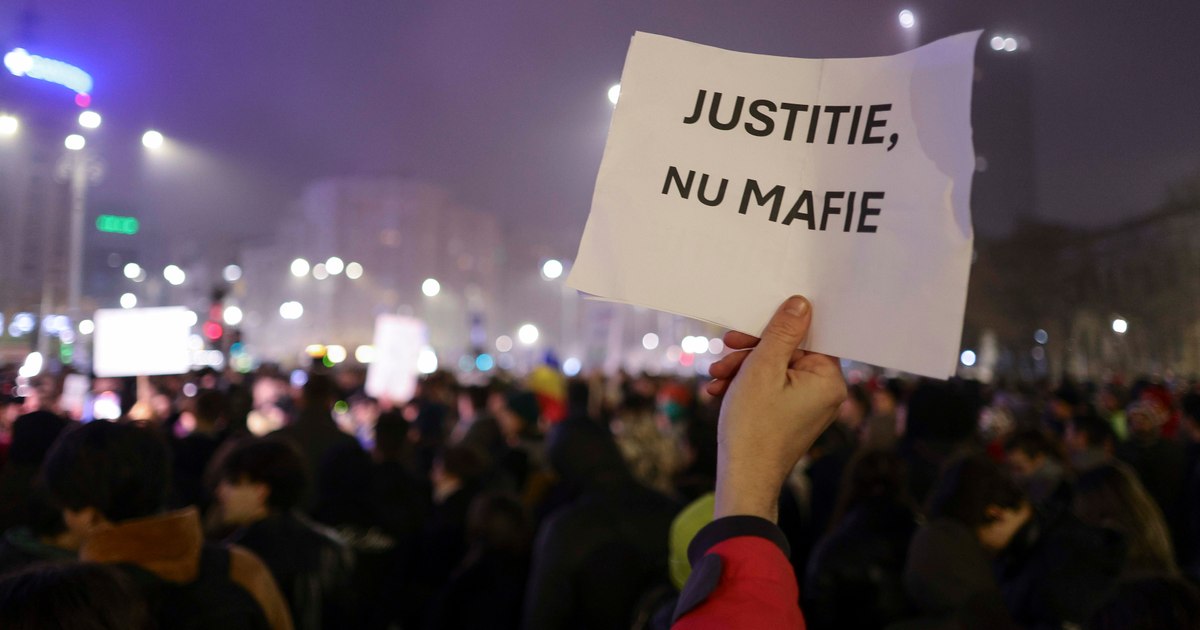
“We finished the year with citizens in the streets to defend the Justice which seems to be captured – not by politicians this time, but from within. And from here we found that the trust in the institution of Justice and in the act of justice that can do justice decreases a lot.”
The civic activist also gives examples of events that brought things to this critical point:
“We had controversial appointments at the High Court of Cassation and Justice, even the president of the institution was appointed hastily, in a process that started much earlier than the law stipulated. Also, there is a tendency now to classify declarations of wealth and interests. There was a decision of the Constitutional Court last year, which refers to certain components related to family income, and in Justice it is even more serious, because there are decisions to no longer make public the declarations of wealth in full wealth and interests of the magistrates. And, last but not least, we have a strong resistance to reform. There has been a lot of public talk about the reform of pensions. The Recorder documentary once again showed the problem: the random allocation of files is not really random“.
Artificial intelligence swarms could significantly affect the balance of power in democratic societies
Positive aspects of the year
Despite the overall negative picture, the report also highlights some positive developments, especially under the pressure of international commitments.
“There are several areas in which, spurred on by the desire to be part of the OECD, but also by the reforms in PNRR, we have seen progress. The most important is related to the Digitization part. Digital platforms of the Romanian Government have appeared, such as e-consultare.gov.ro or infotransparenta.gov.ro, through which you can participate in the debate on normative acts, you can send requests for access to information to almost all institutions in Romania. It is a step forward and from I also pointed out that we are discussing more seriously – also out of the desire to join the OECD – laws that better regulate the transparency of interests and we have a law on bribery, the ban on holding a position in the private sector in the same field that you led in a public institution.“, explains Ovidiu Voicu.
The activity of civic organizations that ultimately led to the adoption of the law to prevent femicide is mentioned in the report. So is the adoption of anti-harassment legislation in the workplace.
