
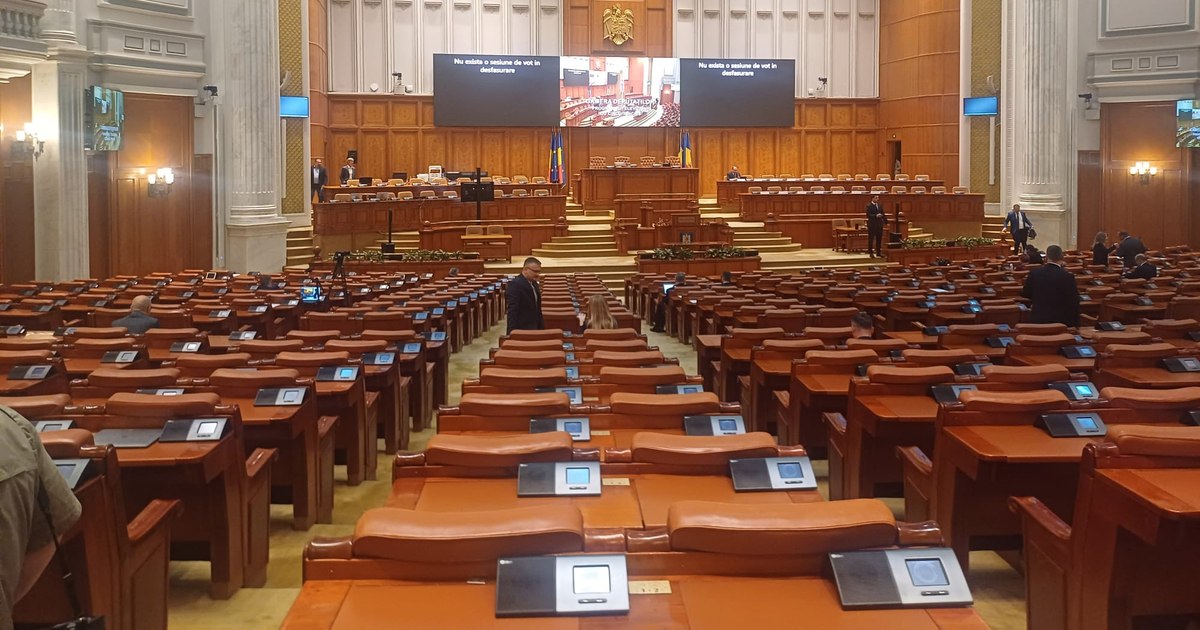
The deadlock between PNL, USR and PSD shifts the focus of political negotiations to unaffiliated MPs and small parties, while pressure on PSD to assume government is growing.
The impasse between the major parties has opened a new negotiating front, based on the support of small groups, independents and last-minute compromises. Given that a stable majority seems difficult to build in the classic formula, political calculations move to the votes of parliamentarians who have either left the parties on whose lists they entered Parliament, or are willing to vote differently from the line imposed by the leadership.
Ilie Bolojan declared, on Wednesday, that unaffiliated parliamentarians can have a decisive role in the formation of the future government, in the context in which approximately 10% of the elected members of the Parliament are no longer part of the parties on the lists of which they ran for the 2024 elections. In parallel, the PSD is also trying to attract the support of this group of parliamentarians. Also on Wednesday, at Interviurile Adevărul, Sorin Grindeanu described the non-affiliated people who voted for the censure motion as “people of prowess”.
Political analyst Cristian Andrei believes that the party now under the greatest pressure to take over the government is the PSD:
“The deadlock in the negotiations brings PSD more and more under the spotlight. The party is slowly and increasingly being pushed towards forming a cabinet and finding a majority, even if it does not have the necessary votes today. The expectation has grown that PSD will take the initiative, there have also been messages from the party along these lines. Hence the calculations that everyone makes about this large group of unaffiliated parliamentarians, because any version of the government will be a “forced” one, with tight votes.
According to the analyst, the main unknown remains whether the PSD will prefer to support a technocrat prime minister to avoid the political costs of the government or whether it will directly assume the leadership of the Executive.
“What remains in discussion now is whether the PSD will want to remain hidden behind a technocrat, so as not to settle the social and political stress, or whether it will assume the premiership, i.e. whether Nicușor Dan will want to have a turnkey premiership and control in this way at the Victoria Palace”says the coordinator of the Political Rating Agency, for Adevărul.
Why did Nicușor call Dan and non-affiliates for consultations
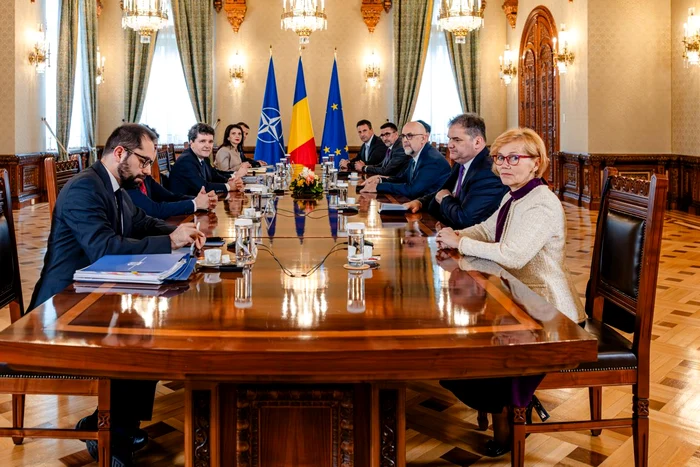
Cristian Andrei believes that President Nicușor Dan is trying to keep control over the future executive, and inviting unaffiliated parliamentarians, minorities and small parties to consultations is an attempt to legitimize a new pole of parliamentary influence.
“To formalize this heterogeneous group. Because there is no way out of the deadlock without gathering votes from everywhere. There is no possibility of a classic coalition. The president wanted to take the pulse and see if these parliamentarians set conditions, if they have rigid positions, or if they are a mass easily convinced by any proposed prime minister, maybe even an independent one.
In his opinion, the consultations are also a step towards legitimizing a minority or technocratic government formula:
“It is a step towards legitimizing a government of independents or a minority government and to give these parliamentarians a touch of reasonableness, to recognize them as <
What non-affiliates can ask for in return for support
Regarding the conditions that the independent parliamentarians or small groups could set, the analyst claims that the negotiations will be carried out mainly by the parties interested in obtaining these votes.
INSCOP survey: 4 out of 10 Romanians support early elections to overcome the political crisis
“This is rather the job of the parties in the Parliament who want to take them with them, not the President. We can think about supporting various laws proposed by these groups or parliamentarians, as we have seen these days with the PSD votes on the elimination of laws that prohibit hate speech or that harass NGOs. There are still small personal favors, but here we can only guess.
They are also quite mixed with pride, but it is obvious that after the censure motion, many there are acting more coordinated with PSD, as a kind of smaller version of PSD. Hence the expectation that PSD will try to make it, however, a majority.”
UDMR awaits “second nomination”
Regarding the position of the UDMR, Cristian Andrei believes that the formation led by Kelemen Hunor is in no hurry to enter a new government formula:
“In the absence of restoring the coalition with the PNL, I think that the UDMR, as it has always suggested, will wait for the second nomination to enter into a negotiation, when things will become clearer and more pressing in Parliament. Only then will they resort to the “responsibility” speech. Like the PSD, those from the UDMR are hoping until the last moment for the PNL or a part of the PNL to change its mind and for the formation of a cabinet unrelated to AUR, SOS or POT.”
AUR, between the opposition and the approach to PSD
Although the pro-European parties claim that they will not collaborate with the AUR, Cristian Andrei says that in the PSD there are voices that consider this option as well:
“The messages from the PSD say something else and show that there are many in the PSD who are really thinking about a coalition with the AUR. The AUR thus remains the scarecrow that the PSD shows to the other parties. The AUR entered this game alone which gave great negotiating power to the PSD. It made them big again. The AUR did a great service to the PSD and now it does not know what to do to appear autonomous. It would be logical for the AUR to see its opposition, in order to win the 2028 elections, but the motion showed us that AUR acts according to other criteria and according to a score written elsewhere”.
The analyst believes that the main political gain of the AUR after the motion was the amplification of the tensions between the pro-European parties:
“The only thing they achieved, politically speaking, was even more chaos between the parties that declared themselves pro-European, and in this way they managed to create even more disappointment in the public, so a maneuvering table for populism. Otherwise, they only jeopardized their anti-system brand. If it opts for a strong opposition, the AUR will be able to further capitalize on the economic and political issues. If, however, the AUR continues to play in the score PSD risks losing anti-system support.”
Grindeanu insists that PSD will not make a majority with AUR. A second round of consultations is expected in Cotroceni
In the absence of a classic coalition between the major parties, unaffiliated parliamentarians and small groups are becoming increasingly important for the formation of the future government.
