
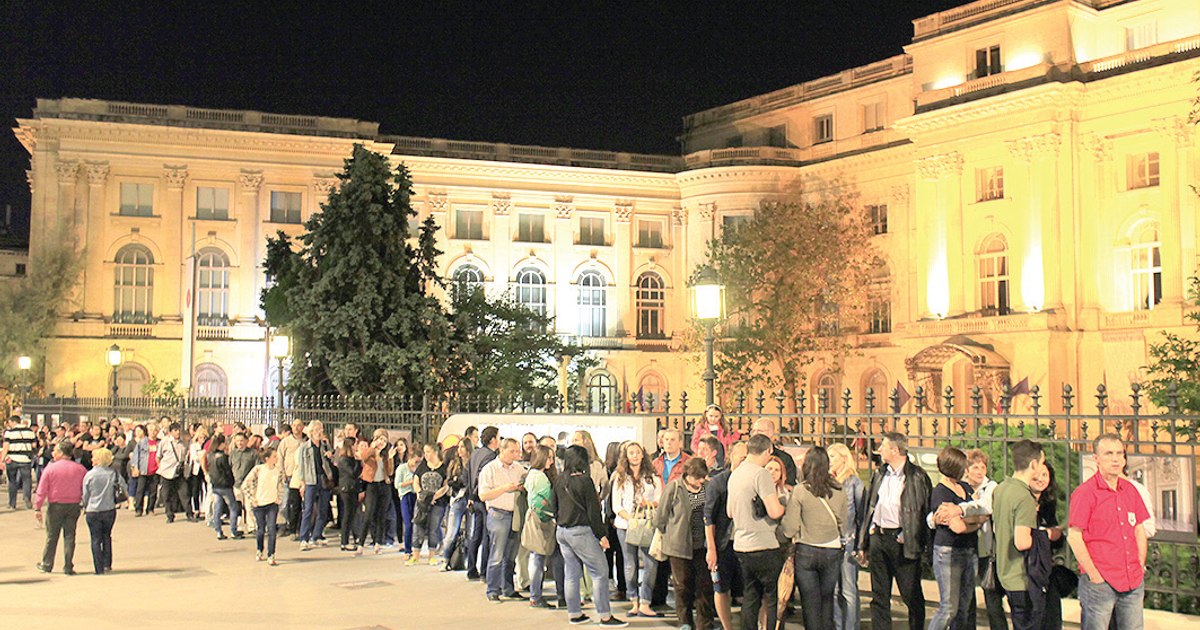
There is a European tradition that, once a year, offers people a unique experience: museums open their doors during the night, free of charge. This year, the Night of Museums in Romania will take place on Saturday, May 23, and 327 museums from 39 counties await their visitors between 6:00 p.m. and 2:00 a.m., even prepared with special events.
The story of the event begins in Paris, not in Bucharest. The Night of Museums is a European cultural program initiated in 2005 under the umbrella of the Council of Europe and coordinated by the European Network of Museum Organizations (NEMO). Two decades later, the 2026 edition is coordinated at the national level by the National Network of Museums in Romania, with the support of the Ministry of Culture and the town halls of the participating municipalities. The basic idea remained the same: heritage should not be intimidating, but everyone’s.
Bucharest: 47 open doors
The capital remains, as usual, the densest point on the map. 47 museums are open in Bucharest, 39 of which have free admission. A few stops are required by their nature. At the Romanian Athenaeum, the “George Enescu” Philharmonic organizes a chamber piano recital from 10:00 p.m., and the public can visit the temporary exhibition “George Enescu and Yehudi Menuhin – Landmarks of an artistic friendship”. Participation is free by reservation; from 23:00, access is without reservation.
The National Archives offer exceptional access to the protocol hall with furniture from the Mihai Vodă Monastery, demolished in 1985 for the House of the People, alongside an exhibition with the first documents of Romania and Moldova from the 14th century and an exhibition dedicated to the Brancusi Year – schedule 20:00-02:00. The National Technical Museum “Dimitrie Leonida” even marks the birthday of its founder – Leonida was born on May 23, 1883 – with projections from the family archive and robotics demonstrations, with free entry through the Carol Park, between 18:00 and 24:00.
Transylvania: Cluj leads, Mureș surprises
Cluj brings 26 museums to the program, 25 of them with free entry. Mureș surpasses with 36 participating institutions, having the largest number from a county outside the Capital.
The Cluj-Napoca Art Museum hosts several exhibitions simultaneously: the permanent National Gallery with five centuries of art, from Transylvanian icons to European modernism, alongside temporary exhibitions dedicated to Sabin Nemeș, contemporary photography and textile heritage, all accessible between 18:00 and 24:00. The Ethnographic Museum of Transylvania proposes, among other things, an exhibition of 230 pieces of African art from the private collection of Alin Samochiș – 130 masks, in a first large-scale presentation in Cluj-Napoca – and an experimental laboratory in the courtyard, with craftsmen working live in wood, metal and textiles. In Turda, the Potaissa Roman Fort organizes an evening of re-enacted Roman games, folk music and historical puzzles between 17:00 and 23:30 in the middle of the ancient ruins.
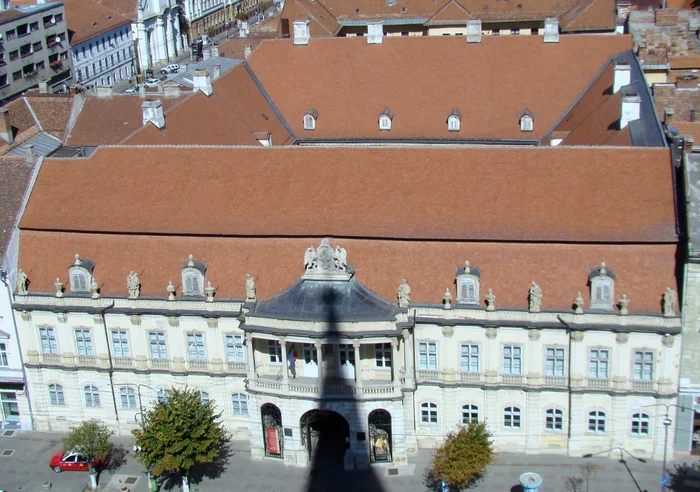
Brașov comes with 15 museums, all with free entry. At Casa Sfatului, the County Museum of History presents the permanent exhibition on the historical identity of Brașov, but also three temporary exhibitions, including “Neacșu’s letter returns to its destination” and “Lights and shadows. Ferdinand and Maria”, made in partnership with the Cotroceni National Museum and the National Archives.
The Brașov Art Museum proposes the exhibition “In search of nature”, which brings together works from the permanent heritage with contemporary works, including Dan Perjovschi’s activist interventions on the facade of the building, dedicated to the Save Roșia Montană movement. In Râșnov, the Forest Museum within Dino Parc opens its doors for the first time at night, just a few days after the official approval of the Ministry of Culture, with 1,300 natural exhibits – minerals, rocks, authentic fossils – in the setting of the forest populated with life-size dinosaurs.
The history of the Roman edifice with mosaics in Tomis. The superb construction where the products brought by the ships were stored was found accidentally
Moldova: Iasi, with the Palace in the center
Iasi comes with 19 museums, 17 of them with free access. The Palace of Culture, with its neo-Gothic Hall of Honor and its stained-glass windows, with its monumental Hall of Governors and the gallery of rulers from Decebal to Charles II, is open between 18:00 and 22:00. The National Museum of Romanian Literature Iasi offers free access to the entire network: Bojdeuca “Ion Creangă”, Junimii House, “Mihai Eminescu” Museum, “Otilia Cazimir” Museum and other memorial houses, all open between 17:00 and 22:00. Braunstein Palace proposes exhibitions about Queen Maria and Artistic Youth, about the epistolary universe of Ion Minulescu and a museum pedagogy workshop in the footsteps of teacher Creangă, program 18:00-01:00.
Dobrogea: where Antiquity is visited at night
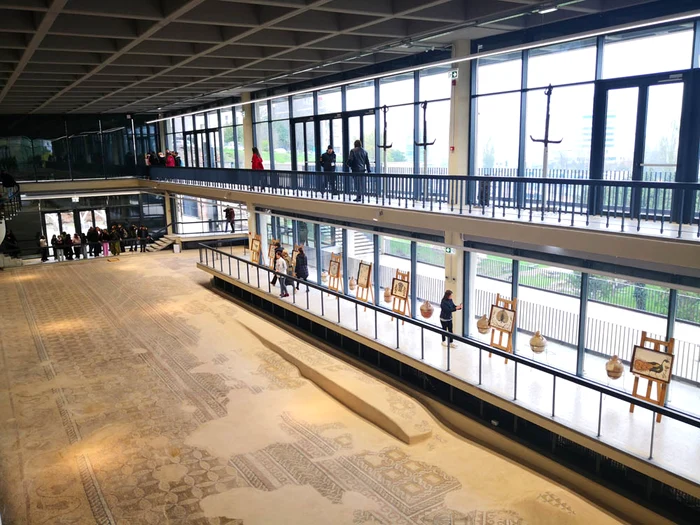
The Night of the Museums is, in Constanța, less of a cultural event and more of an invitation to go back in time. The Museum of National History and Archeology proposes a nocturnal experience held simultaneously in five museum objectives. The most spectacular is the Roman Building with Mosaic, the most extensive polychrome Romano-Byzantine mosaic discovered so far in the Balkan area, erected at the border between the 3rd and 4th centuries AD, with geometric, vegetal motifs and a unique zoomorphic motif: a white dove. Visiting is done in groups of no more than 20 people, between 18:00 and 24:00, free of charge. A few hundred meters away, in the same interval, the Painted Tomb of Tomis can be seen. The “Tropaeum Traiani” complex in Adamclisi and the Axiopolis Museum in Cernavodă are also open for free, with the last entry at 11:00 p.m.
Iconic ancient places on the Black Sea. The mysterious fortress built at the behest of an oracle
The Folk Art Museum proposes three simultaneous temporary exhibitions: traditional occupations in Dobrogea, the Romanian folk port and the Dobrogean school, and the “My Night” opening, with costumes inspired by Brâncusi’s work, along with a traditional sitting between 18:00 and 24:00. The planetarium organizes astronomical observations with constellation identification between 20:00 and 22:30.
Galatiul is, discreetly, one of the best organized counties in this edition: 18 museums, all with free entrance, and specially organized transport – free minibus to the localities in the county and an extensive bus program in the city. The Museum of Visual Art is presenting for the national premiere 12 engravings by Rembrandt from the collection of the County Library, entered into the institution’s heritage through the donation of the founder Vasile Alexandrescu Urechia in 1897. The “Fani Tardini” Dramatic Theater, under renovation, invites the public on tours guided by actors through the site building – with protective helmets on their heads, from backstage to under the stage, 15 people every 30 minutes – an anniversary gesture at the 70th anniversary of Galați theater.
The official time is between 18:00 and 2:00, but each museum sets its own schedule within this period. The complete map, filterable by county and type of access, is available at noaptaamuzeelor.org.
