
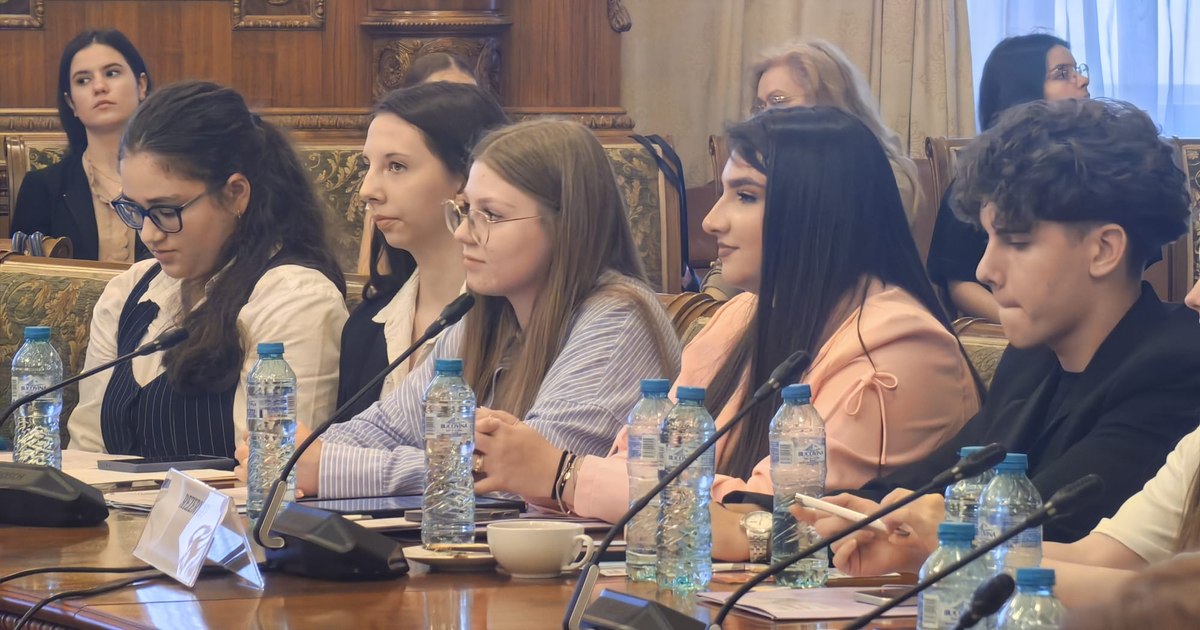
“We arrive exhausted, with dead batteries!” It’s the distressing alarm raised by students at a Senate debate on mental health in schools. While middle and high school kids complain of immense pressure, a suffocating volume of tests and toxic competition, official statistics show an alarming reality: admissions of young people for mental disorders have increased by 41 percent, while a single school counselor has ended up caring for as many as 1,200 students.
What students say – anxiety and pressure, among the most common feelings felt
“Many young people feel anxiety. I am involved in a lot of projects, I do sports, I have an NGO, I do a lot of things and yet I feel this.”
The testimony belongs to Anais, a high school student. Her story is that of many teenagers today, who face multiple pressures every day: to perform, to succeed, to know. And – often – with too little understanding from adults.
“I can tell you about all my dreams, what I want to achieve, all my ambitions – you wouldn’t think I’m anxious. This feeling does not come with a lack of direction. Sometimes it comes because you have a direction, you have to get somewhere, to perform. I look on LinkedIn and see children who at 16 have start-ups, companies. It’s great, but at the same time comes competition. We compare ourselves to each other. No one teaches us how to overcome such feelings. And very few will go and tell their parents how they feel. Because often that pressure also comes from there,” Anais continued.
5th grade student: “We arrive exhausted, with low social batteries”
The multitude of contradictory experiences is not only present in the lives of high school students. Even at young ages, students face a number of conditions that adults sometimes give little thought to. With a lot of courage, Ilinca, a 5th grade student, pointed out the communication barriers between adults and children:
I would like to start by telling you that you ban our phones but don’t teach us how to use them properly or tell us to exercise but don’t give us frames where we can do it. You forbid us all kinds of things and at the same time we do not really know their effect. Why tell me that artificial intelligence is not good if you don’t explain why?
Ilinca also spoke about the unpleasant aspects of school:
“Why do you think most children feel pressured at school and hate the place? It’s very simple: Because they know that in the next week they have to give 10 million tests, given that they still have 10 million tests behind them, uncorrected and unsubmitted. I know they can’t wake up in the morning without thinking that they will end up at school where someone is going to judge them. (…) We arrive exhausted, with badly depleted social batteries. We are at zero. (…) There are more and more homework and I didn’t think it would be like this. I want projects, I want things to learn from. I don’t want to have someone standing behind me all the time, giving me homework, tests and all kinds of voices that can be heard from behind telling me that I’m not someone”.
Worrying statistics that call for more action
The testimonies of the two girls only reflect the results of hard studies, the results of which should be thought provoking. According to the World Health Organization, one in seven teenagers experience a mental health problem.
“Conduct disorders, bullying, harassment and stigma affect more and more children and adolescents. Approximately one third of primary and high school students declare that they have been victims of physical or psychological abuse at school. These numbers are not just statistics, behind them are silent children. Children who don’t ask for help because they don’t know where to ask for it. Teachers who see the signs but don’t always have the tools to support them. Parents who feel outmatched.”USR senator Adelina Dobra drew attention, during the round table “Youth, education and mental health: one priority”, organized at the Senate, through the Education Commission.
Luciana Antoci, the advisor on Education of the prime minister’s chancellery, brought up other worrying statistics:
,,A 2022 study shows that 23% of 15-year-olds report moderate to severe symptoms of anxiety and depression. And for girls, the percentage rises even more, up to 31%. In addition, INS data shows that admissions for mental disorders in the 10-19 age group increased by 41% between 2018 and 2023. And the problem is not just clinical. And the Ministry of Education reports that 12.4% of cases of early school leaving in 2024 had emotional and family problems as the stated reason.”
That is precisely why, Antoci points out:
Health is practically a basic condition for any reform in Education to work. Because we can have a modern curriculum, we can have digital laboratories, we can have new textbooks, but if a child enters the classroom with unaddressed anxiety, with undiagnosed depression, with physical and emotional exhaustion or with a state of pressure that comes from the family environment or from the environment, learning does not occur, and the child cannot reach his maximum learning potential.
Where should we start?
The first step is to pay more attention to children, believes Luciana Antoci. She talked about the role of both teachers and parents.
“I think this is where we should start: to see and listen to our children. And here I am not only referring to the need for teachers to have the courage to step out of the rigors of the lesson and pay close attention to what is happening in the classroom, to the faces of their students, and only then start teaching. But I am also referring to the parents. I often ask parents, when I am face to face with them, how much quality time they spend with their children. And let’s define quality time: quality time doesn’t just mean sharing the same space and being on our own devices, it means being in real emotional connection, in communication, understanding what’s troubling our children, making sure they’re honest and tell us to the end what’s troubling them. Let them know that they have real and unconditional support in us for any problem they have at school or outside it.”
How to look at Assessments in small classes. Specialist: “Like a visit to the doctor, not like one in court”
Antoci also brought up the continuous training of teachers in counseling children, but also a tool that Romania does not use at all at the moment: measuring the well-being of students at school:
Perhaps it wouldn’t hurt to rate schools not just on National Assessment results, but also on school climate, on access to counseling services, on the rate of referrals and problems being resolved. If we don’t measure well-being, it won’t be manageable.
Proposal: counseling without parental consent for students over 16 years of age
USR Senator Ștefan Pălărie, president of the Education Committee in the Senate, brought up a sensitive and often ignored problem: that of students whose parents or adults in their lives cannot provide them with emotional support.
He supports the proposal of a party colleague, Ruxandra Cibu, who wants to facilitate access to psychological counseling and school counseling for teenagers over 16 without parental consent.
“In this way, you will be able to support some young teenagers who may no longer find peace and safety at home and need intervention to protect them. I will strongly support this legislative initiative. It is possible to create controversy in the public space. Usually when you intervene in this area there are heated spirits, but I think that – just as there are complicated problems to which the answer is more difficult – you can sometimes do simple things without money”said Stefan Pălărie.
Students draw attention to the small number of school counselors
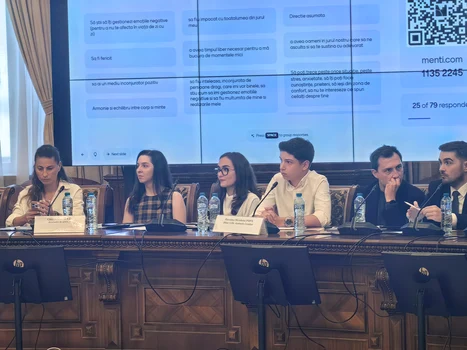
The low number of school counselors remains an unresolved problem in the system that urgently needs attention. Mihnea Haiduc, president of the National Student Council drew attention:
When does summer vacation 2026 start. 8th and 12th grades finish classes early
“For many students, psychological support exists more clearly in legislation than in their everyday lives. And this is one of the most serious ruptures in the Romanian school. (…) The legal norm provides for one school counselor for every 500 students. This should be a minimum standard. However, ongoing public data show a harsher reality: a school counselor is in charge of an average of 730-830 students. In rural areas, the situation is even more disastrous: the school counselor ends up being shared between several educational units. In some cases, the number of students dependent on the same specialist can reach 1,200. It is impossible to build a real supportive relationship under such conditions. counseling requires time, trust and constant presence”.
Mental health, priority in education
The Senate Round Table was organized in partnership with the InIm Institute, a non-governmental organization dedicated to the socio-emotional development of young people and professionals in education and mental health.
“Mental health is not a secondary chapter of education, it is a foundation of it. A child who lives in fear cannot truly learn. A teenager who feels unseen cannot have confidence in the future. And a society that ignores the emotional health of young people slowly, slowly loses its presence and hope”pointed out Simona Bacium, the president of the NGO.
In lieu of conclusion, an imagination exercise proposed by Cosima Mironov, university professor at the Faculty of Psychology and Educational Sciences, can be useful to better understand what students face and in terms of workload:
“If we imagine the end of a week in which we were extremely busy, with many deadlines, with projects, with many overlapping workloads, with emails coming both day and night, with a huge pressure on our shoulders – we imagine ourselves anxious, overwhelmed by everything we feel emotionally. Could we be effective in such a situation? Could we make good decisions and learn or work to our potential? How many of us would raise our hands and say we could do it? (…) And then what makes us believe that our young people could become functional, be efficient if they don’t have the right conditions?”.
