
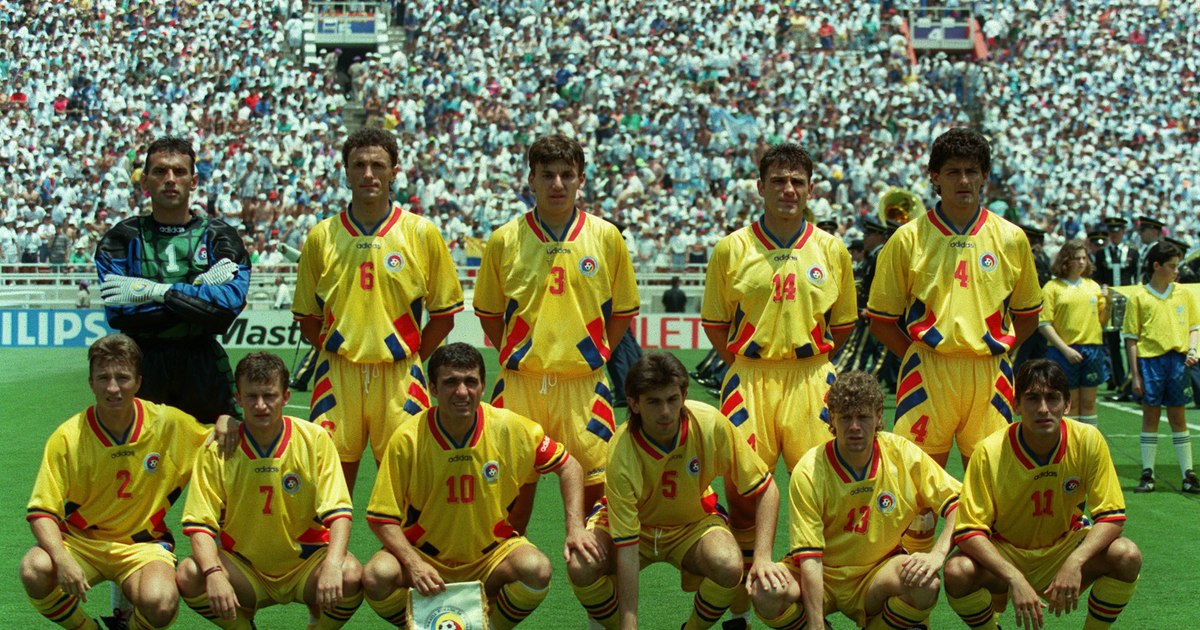
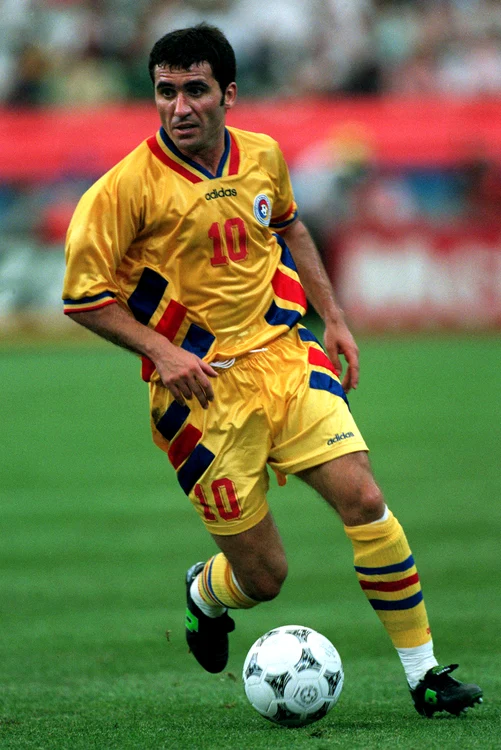
In the summer of 1994, Romania experienced one of the most beautiful moments in its sports history. The “Golden Generation”, led by Gheorghe Hagi, conquered the public and made millions of Romanians believe that nothing is impossible. It was 5 minutes away from a semi-final.
The year 1990 marked the birth of the “Golden Generation” in Romanian football. A group of young players who had stepped from communism directly into jeans and big European football, raised at the great Romanian clubs of the communist period, those that performed in Europe in the 70s and 80s, and honed, after the Revolution of 1989, at the European teams to which they transferred immediately after the Coppa del Mondo, a World Cup where the Romanian players impressed.
The “Golden Generation” of Hagi, Dumitrescu, Răducioiu, Sabău, Belodedici, Popescu, Stelea, Lupescu, Petrescu, Prodan, Munteanu transformed the Romanian national team into a constant, solid and formidable presence at major international competitions, especially at the World Championships. Romania gave the “Golden Generation” the impression that it could beat anyone, especially after the 1994 World Championship, organized in the United States, when the Romanians were only five minutes away from a semi-final with Italy. And, given that Romania had defeated the great Argentina of Batistuta, Caniggia and Redondo, no one would have been surprised if the “tricolors” had fought for the world title with Brazil.
A hot surprise
The 1994 USA World Cup went down in history as the hottest and most demanding finals tournament, with matches where pitch temperatures frequently exceeded 40 degrees Celsius. The games were played at lunchtime so they could be broadcast live in Europe, and the conditions were a living hell for both players and spectators. Extreme temperatures in cities such as Dallas and Orlando caused fainting in the stands and led to the introduction of hydration breaks for the first time in football history.
The World Cup in the United States also represented an important milestone in the evolution of modern football. At this tournament, almost all the rules that we still find today were implemented: the prohibition of deliberate passes to the goalkeeper, the awarding of three points for victory, distinctive equipment for the referees and the inscription of player numbers on the front of the shirts as well.
The organization of the World Cup in the USA was a huge surprise. North American soccer had almost completely collapsed in the 1980s. After the Americans missed both hosting and qualifying for the 1986 World Cup, the professional league had been disbanded. In addition, they seemed much more interested in baseball and American football. However, FIFA decided to award the 1994 World Cup to the United States over Morocco and Brazil. The international forum argued that the tournament would revitalize the sport in the US and that American stadiums were more modern and had a higher capacity than European ones. As a condition for the organization of the competition, the United States was required to establish a professional soccer championship, thus giving birth to Major League Soccer. Although many anticipated a resounding failure, the reality was quite different. The American World Cup set a grandstand attendance record with an average of nearly 69,000 spectators per game and a total of approximately 3.6 million spectators. In addition, the matches were spectacular, the playing surfaces excellent and the organization impeccable.
The format of the competition was the same as in 1990: 24 teams divided into six groups of four. In the elimination phase, the first two places in each group and the best four teams ranked in third place qualified. It was the last edition held in this system, because since 1998 the number of participants has increased to 32.
From the first place
Meanwhile, Romania had formed an exceptional team. Unlike the World Cup in Mexico 1970 or the Coppa del Mondo 1990, the basic players of the national team no longer performed in the domestic championship, at Steaua, Dinamo, Rapid or Universitatea Craiova. Most of them had already reached important clubs in Europe: Florin Răducioiu played at AC Milan, Gheorghe Hagi and Ioan Sabău at Brescia, Dan Petrescu at Foggia, Ionuț Lupescu at Bayer Leverkusen, Gică Popescu at PSV Eindhoven, Ilie Dumitrescu at Tottenham Hotspur, Miodrag Belodedici at Valencia, Dorinel Munteanu and Tibor Selymes at Cercle Brugge, and Bogdan Stelea at Mallorca. From the domestic championship came Daniel Prodan, Basarab Panduru and Constantin Gâlcă, from Steaua, Florin Prunea, Viorel Moldovan and Gheorghe Mihali, from Dinamo, Iulian Chiriță and Jean Vlădoiu, from Rapid, Corneliu Papură and Ovidiu Stângă, from Craiova University, Marian Ivan, from FC Brașov, and the third goalkeeper, Ștefan Preda, from Petrolul Ploiești. With this batch, the selector Anghel Iordănescu attacked the preliminaries for the American World Cup.
The “Tricolori” had a very good campaign. They did not lose a game, but the battle for qualification went down to the last stage with Belgium, Wales and Czechoslovakia. The Belgians and the Welsh had been defeated in the tour, and with the Czechs Romania had obtained two draws. The decisive match was played in Cardiff against Wales. Whoever won went to the World Championship. The game was dramatic. The phases followed one another at a dizzying pace, and the Romanians were already showing the offensive technique and strength that would impress them at the World Cup. Hagi opened the scoring in the 32nd minute, after a dribble and a strong shot, which the Welsh goalkeeper made a mistake in the intervention. The hosts equalized in the second half through Dean Saunders and even conceded a penalty. However, the football gods were on Romania’s side, and Paul Bodin sent the ball across the crossbar.
The Frenchman who will referee Turkey – Romania brought luck to the national team. Francois Letexier officiated at the match that brought qualification to EURO 2024
The final belonged to the Romanians. Ilie Dumitrescu started a personal action and passed decisively to Florin Răducioiu, who scored without emotions. Romania qualified for the World Championship in first place and packed its bags to leave across the ocean.
First place again
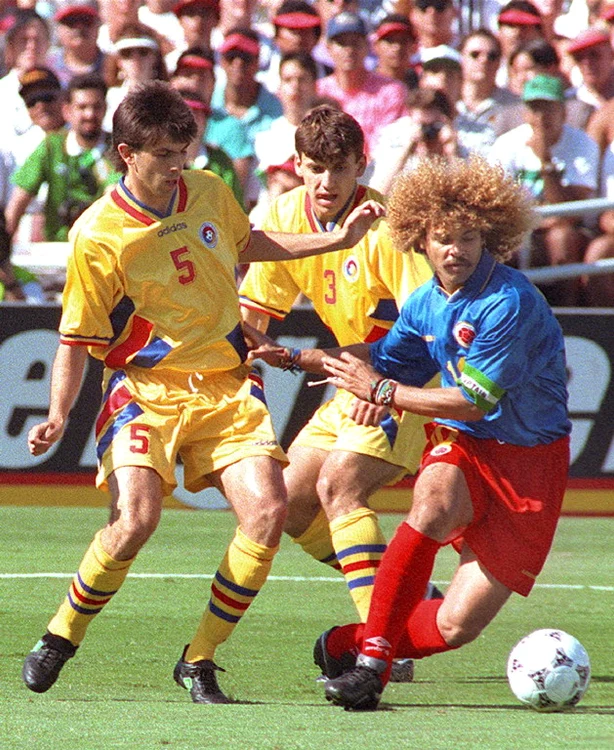
Romania debuted at the World Championship in the United States on June 18, 1994, in a group that also included the host country, Switzerland and Colombia. The first opponent was Colombia, one of the favorites of the tournament. The Colombians had an exceptional generation, with players like Valderrama, Rincón, Asprilla and Valencia.
In the match played in Pasadena, the South Americans started strongly and dominated the first minutes. However, the Romanians resisted the siege and responded with devastating counterattacks, especially in the lanes. In the 15th minute, Răducioiu, masterfully launched by Hagi with a pass between the defenders, turned his opponents and shot to the long corner, opening the scoring. The magic moment followed. After testing Córdoba with a powerful long-range shot, Hagi noticed that the Colombian goalkeeper was out of bounds. In the 34th minute, from the left side of the field, he sent a lob shot from about 35 meters that surprised Córdoba and stopped in the net. It was one of the most beautiful goals in the history of the national team. Adolfo Valencia reduced the difference in the 43rd minute, but Romania was the better team. In the 89th minute, Răducioiu scored his double and set the final score, 3-1, causing one of the biggest surprises of the tournament.
On June 22, the confrontation with Switzerland followed. After the victory over Colombia, Romania was considered one of the revelations of the World Cup and started as the favorite. The Swiss had only drawn the United States in the first game. At the Silverdome stadium in Detroit, an arena designed by a Romanian, the Swiss brought the “tricolors” back down to earth. Romania remained numerically inferior after the elimination of Jean Vlădoiu, as early as the 3rd minute, and Switzerland prevailed categorically, with 4-1. However, the Romanians took their revenge quickly. On June 26, they defeated the United States, in Pasadena, 1-0, after another spectacular goal, scored by Dan Petrescu following an excellent pass by Gheorghe Hagi. Romania won the group with six points and qualified for the round of 16.
Against everyone
In the round of 16, Romania had to face Argentina. Maradona’s side had finished the group in third place, level on points with Nigeria and Bulgaria, but with a lower goal difference. Although Diego Maradona had been suspended following a doping test, Argentina remained one of the big favourites. The squad included Gabriel Batistuta, Claudio Caniggia, Abel Balbo, Ariel Ortega, Diego Simeone, Néstor Sensini and Fernando Redondo. Few gave the Romanians real chances. Once again, however, the “tricolors” contradicted all predictions and demonstrated the extraordinary value of the “Golden Generation”.
Romania relied on the same recipe that had worked against Colombia: a disciplined defense and devastating counterattacks. The game was played on July 3 at the Rose Bowl Stadium in Pasadena in front of over 90,000 spectators. Argentina started in attack and dominated possession, but the Romanians managed the game excellently. In the 11th minute, Ilie Dumitrescu executed a free kick flawlessly and beat Islas for 1-0. The joy was short lived. Batistuta got a penalty and he also converted it.
Before the dam, Mircea Lucescu praised the Turks, but also threatened: “I’m here to win”
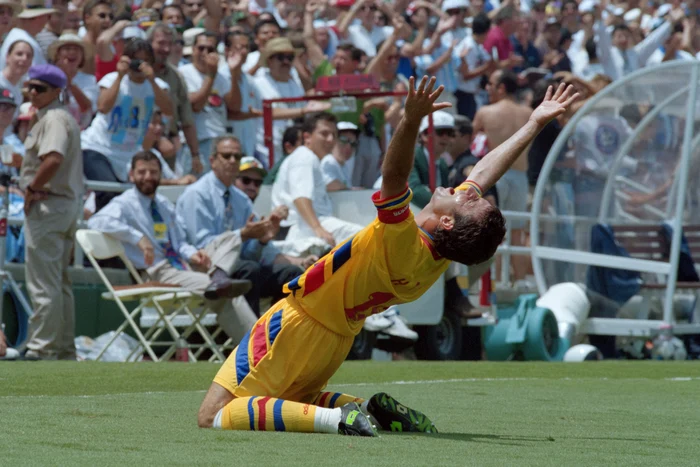
Gheorghe Hagi’s recital followed. Romania’s defender offered a brilliant pass to Ilie Dumitrescu, who put Romania back in the lead. Then, after another textbook counterattack, Dumitrescu returned the serve to Hagi, and he scored for 3-1. Argentina reduced the gap through Abel Balbo, but it was too late. Anghel Iordănescu perfectly reorganized his team, and Romania won 3-2.
It was one of the greatest moments in the history of Romanian sport. Millions of people took to the streets and forgot, for a few hours, about the difficulties of the transition. For the first time in history, Romania qualified for the quarter-finals of a World Championship.
Five minutes away from a semi-final
On July 10, 1994, Romania met Sweden in the quarter-finals, at Stanford Stadium. The Nordics had passed Saudi Arabia in the round of 16, 3-1, and had very valuable players, such as Tomas Brolin, Henrik Larsson, Kennet Andersson and Stefan Schwarz. The Swedes relied on physical strength, while the Romanians compensated with speed and technique. A dramatic match resulted.
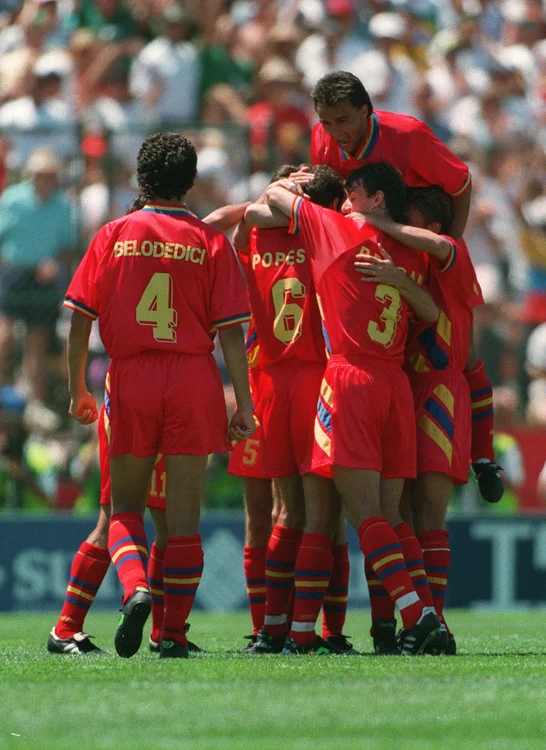
In the 78th minute, Tomas Brolin opened the scoring for Sweden. Romania reacted quickly, and eight minutes later Florin Răducioiu equalized with a shot from inside the box, sending the game into overtime. In the 101st minute, Răducioiu scored a double, bringing the score to 2 to 1. Later, Swedish Stefan Schwarz received a second yellow card and was sent off. There were only five minutes left until a historic qualification to the semi-finals. Then came the phase that would remain one of the most painful in the history of Romanian football. At a corner, Florin Prunea came out the wrong way between the posts, and Kennet Andersson equalized with a header.
At 2-2, qualification was decided on penalty kicks. The Swedes converted all five penalties. Dan Petrescu and Miodrag Belodedici missed for Romania, whose executions were defended by Thomas Ravelli. Sweden went to the semi-finals, and Romania left the competition with their foreheads high, after the most
