
The construction market in Romania in 2026 remains an active one, but the way the offers are presented and the contracts structured can lead to significant differences between the initial estimated price and the final cost of a home. In a context where information is more often done online, from social networks to ad platforms, specialists in the field point out that the lack of technical and commercial details in the offers can turn an apparently advantageous price into a considerably larger investment than anticipated.
Official data shows a mixed evolution of the construction sector. The volume of construction works increased by 11.7% in the first four months of 2026 compared to the same period in 2025, and in April 2026 the annual advance reached 20.7%, according to the INS.
On the other hand, the residential segment remains under pressure. Colliers analyzes indicate a decrease of approximately 20% in housing transactions in the first months of 2026, both nationally and in Bucharest.
This combination of increased construction activity and decreased transactions shows a market in which the supply of services remains active, but the beneficiaries are more careful, more informed and more reluctant to decide, which amplifies the competitive pressure between builders.
The purchase decision has moved online
An essential element of the change in the market is the way Romanians look for and select builders. Social networks and digital platforms have become the main starting point for information and comparison, from Facebook and TikTok to classifieds platforms and message groups.
At the end of 2025, Romania had approximately 12.9 million active identities on social networks, which means over 68% of the population, according to DataReportal and NapoleonCat data.
In this context, specialists in the field say that more and more decisions are influenced by visual content, quick recommendations or briefly displayed prices, without a full analysis of what the offer actually includes.
“The market has changed a lot. Today, many people choose the builder after seeing a video on TikTok, a post on Facebook or an ad on various advertising sites. Digitization is a good thing, but a house is not bought like a phone. If you don’t understand exactly what the offer includes, you may discover the true cost much too late”, explained Cosmin Răileanu, founder of Depozit Virtual.
Four common pitfalls in the construction market
1. The price per square meter does not always mean the final price of the house
According to the expert in the construction market, one of the most common practices in the market is the promotion of a price per square meter, which creates the impression of a final cost that is easy to calculate.
For example, a beneficiary sees an offer of 445 euros/sqm for a 120 sqm house and quickly comes to the conclusion that the total investment is 53,400 euros.
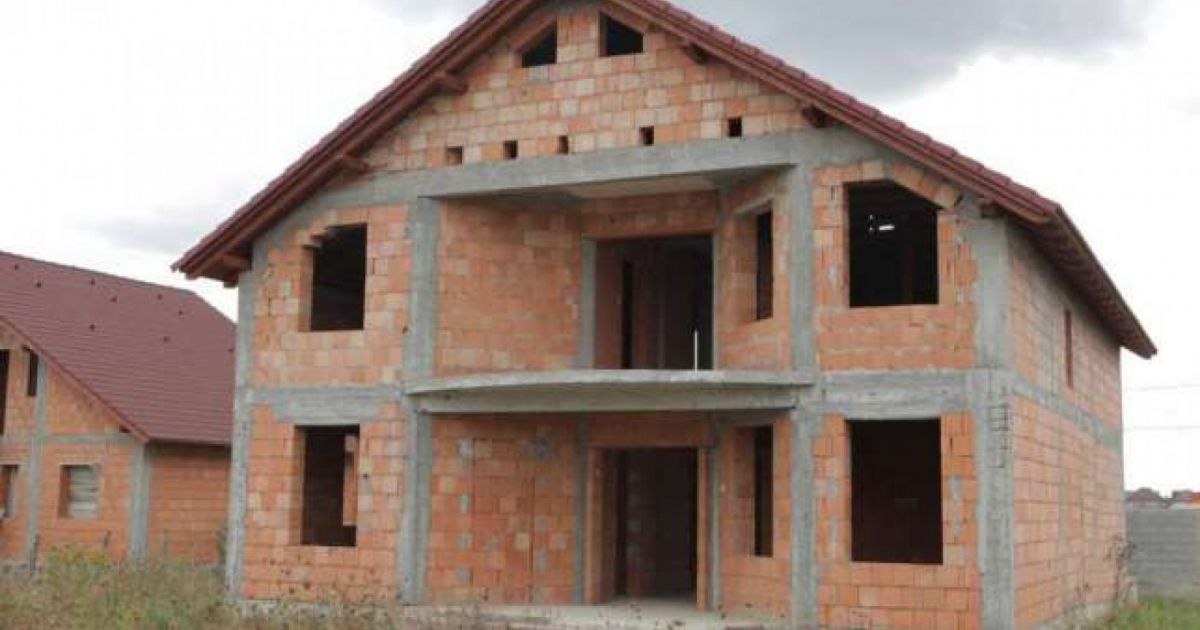
The problem arises when that price does not include the entire construction, but only a stage in the project. In many situations, that amount covers the structure, enclosures or the “red” phase, without a full foundation, roof, plumbing, finishes, insulation, carpentry or other essential work.
In practice, once these components are added, the final cost can rise significantly, reaching in many cases 80,000–100,000 euros or even more, depending on materials, design and level of finish.
“The first question any buyer must ask is very simple: is this price for the complete house or just a stage? The difference can mean tens of thousands of euros. A price per square meter is not enough if you don’t know exactly what it includes“, added the expert.
2. Materials and labor are shown in one sum
Another common situation occurs when the beneficiary receives a global offer without a cost breakdown.
Normally, a construction job should allow clear separation between the cost of materials and the cost of labor, as they are completely different in nature.
In practice, however, many offers combine them into a single amount, which makes it impossible to verify the price of the materials, their origin or the real cost of the execution.
Thus, the beneficiary no longer has visibility on how the project budget is constructed and cannot assess whether the prices are correct or justifiably adjusted.
He bought an apartment on the 34th floor of a 32-story building. The story of the man left homeless and penniless
“Materials and labor are two completely different components and must be treated separately. Materials must be purchased on the basis of a quote and invoice, and labor must be paid in stages, as the work is performed. When all costs are mixed into one sum, the beneficiary loses control of his own investment”explains the specialist.
3. Advances are paid before the actual control of the project
In construction, the payment of an advance is a common practice, necessary to mobilize the team and purchase some materials.
Problems arise, however, when the advance is significant and not linked to clear documents, estimates or verifiable execution milestones.
In the market, these advances can range from 10% to 30% or even more of the total value of the work. In the case of a €100,000 house, a 30% down payment means €30,000 paid before the project is visible on site at a relevant stage.
If this money is transferred without a clear phasing structure, without invoices and without cost segregation, the beneficiary can quickly lose control over the financial flow of the project.
“The advance is not the problem. The problem arises when the money leaves before there are clear documents, invoices and a phasing of payments. Each installment must have a justification and correspond to a concrete stage in the construction site”says the expert.
4. A beautiful photo does not mean a project that can be built
More and more beneficiaries choose a home based on photos, renderings or videos from the online environment.
The problem is that these images do not reflect a complete technical project, nor do they guarantee that the house can be built in the form shown.
Any project must be adapted to the terrain, urban regime, technical conditions and legal requirements. Without these adjustments, project changes, delays or significant additional costs may occur.
“A photograph does not mean a technical project. A rendering does not mean a building permit. Any house must be adapted to the terrain and designed according to legislation. A compromise made at the beginning can generate significant costs during execution”Răileanu explains.
Romanians have less trust in real estate agents than in notaries or lawyers. What are the reasons
Lack of transparency remains the main source of problems
Representatives in the field claim that most disputes in construction sites do not arise from execution, but from the bidding and contracting stage, where the lack of detail can generate major differences between estimates and final costs.
In many situations, the problem is not the construction itself, but the fact that the initial offer was not clear enough, and the financial and technical responsibilities were not fully defined.
“In most situations, site conflicts don’t start over materials. I am starting because of the lack of transparency. If the offer is clear, the project is well defined, materials and labor are separated, and payments are staged, the chances of the project going smoothly increase considerably”says the specialist.
What should be checked before signing a contract
Before starting a construction, specialists recommend carefully checking how the offer is structured, the existence of a complete technical project and the method of payment.
The focus is on final price clarity, cost segregation, technical documentation and linking each payment to an execution stage.
“In 2026 it’s no longer enough to ask how much a house costs. You have to ask what’s included in the offer, how the costs are split, what you’re paying for in each installment and whether the project can be legally built. An investment of hundreds of thousands of lei starts with the right questions“Răileanu explained.
