
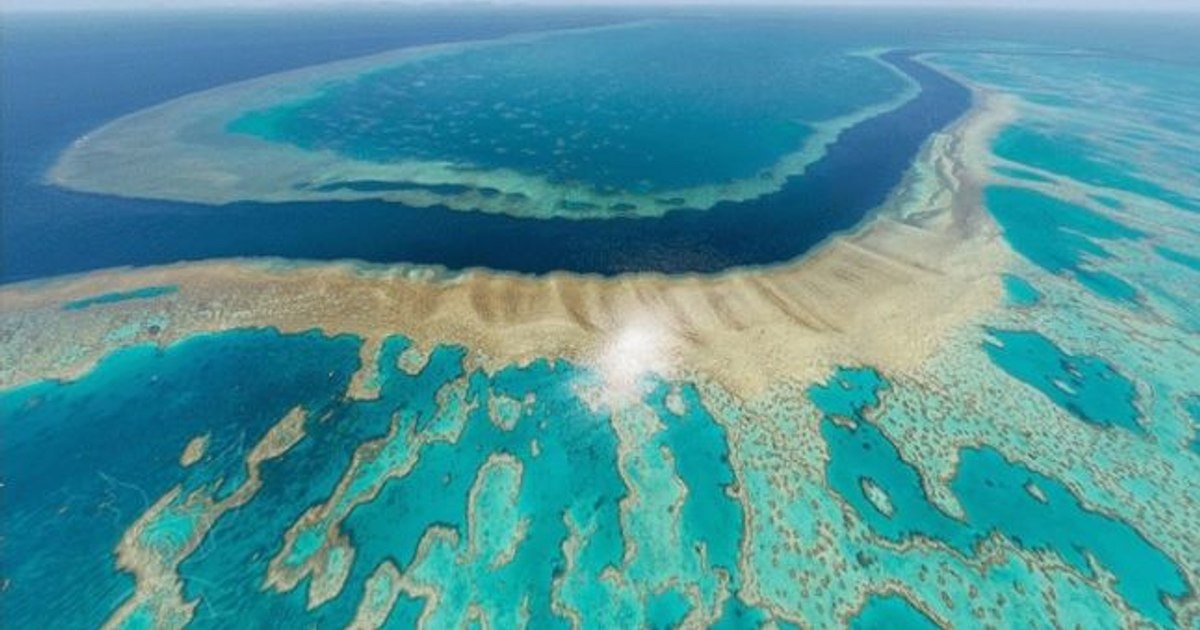
A new episode of “mass bleaching” of the Great Barrier Reef is underway, Australian authorities announced on Friday, speaking of a phenomenon caused by climate change.
The Great Barrier Reef
The largest coral reef in the world, which stretches for more than 2,300 kilometers along the northeastern coast of Australia, houses approximately 1,500 species of fish and 4,000 types of molluscs, writes Agerpres.
“We already know that the biggest threat to the world's coral reefs is climate change. The Great Barrier Reef is no exception from this point of view”Australian Environment Minister Tanya Plibersek said in a statement.
“We must act against climate change. We must protect our exceptional sites and the plants and animals that live in them.” she continued.
This new episode of mass coral bleaching, the seventh recorded since 1998, was confirmed by researchers working for the Australian Government following aerial measurements of 300 reefs located in shallow waters.
Further studies will need to be carried out to assess the severity and extent of the bleaching phenomenon, according to the Australian Coral Reef Protection Agency.
This phenomenon, which leads to discoloration, is caused by an increase in water temperature by one degree, which leads to the expulsion of the symbiotic algae that give corals their bright colors.
“Extreme Temperatures”
It occurs when submarine temperatures exceed by more than 1 degree Celsius the long-term average value.
Ocean temperatures measured along the Great Barrier Reef have reached record highs in recent weeks, according to official data.
According to WWF Australia's director of oceans, Richard Leck, many corals are at risk of dying if ocean temperatures do not drop rapidly in the coming weeks. “This bleaching episode occurs in an area where corals have never been exposed to such extreme temperatures,” he said.
Richard Leck explained that climate change is putting “considerable pressure” on the Great Barrier Reef.
Similar phenomena occurred last year in the northern hemisphere, causing losses “dramatic” at the level of corals in Florida and the Caribbean Sea, he added.
Some of the corals can recover if the weather conditions improve, except for those that have already suffered severe bleaching or that have faced repeated heatwave episodes.
Terry Hughes, one of Australia's leading researchers specializing in the study of coral reefs, believes that bleaching episodes have now become so frequent that it is difficult for reefs to recover.
“Tolerates heat less well”
“The reef is no longer able to return to the combination of coral species and coral sizes that existed 20 years ago.” he stated.
“The irony is that the corals that predominate today in most regions of the Great Barrier Reef grow fast and quickly regain lost ground, but that they are sensitive to heat and are less able to withstand the next inevitable bleaching episodes,” added Terry Hughes.
In his opinion, heat stress has increased in recent days and should worsen in the next two weeks.
The future of the Great Barrier Reef has been a source of tension between the Australian Government and UNESCO, which in 2021 threatened to list the famous coral complex on the list of world heritage “in danger”.
Such an entry would have been a “moral slap” to Australia, giving a serious blow to the tourist attraction of this coral reef, which generates revenues of 4.8 billion dollars.
Behind-the-scenes diplomatic negotiations and fierce Australian lobbying have so far prevented the reef from being included on this list.
Before the new bleaching episode, the Great Barrier Reef has already suffered from mass bleaching of its corals in 1998, 2022, 2016, 2017, 2020 and 2022.
