
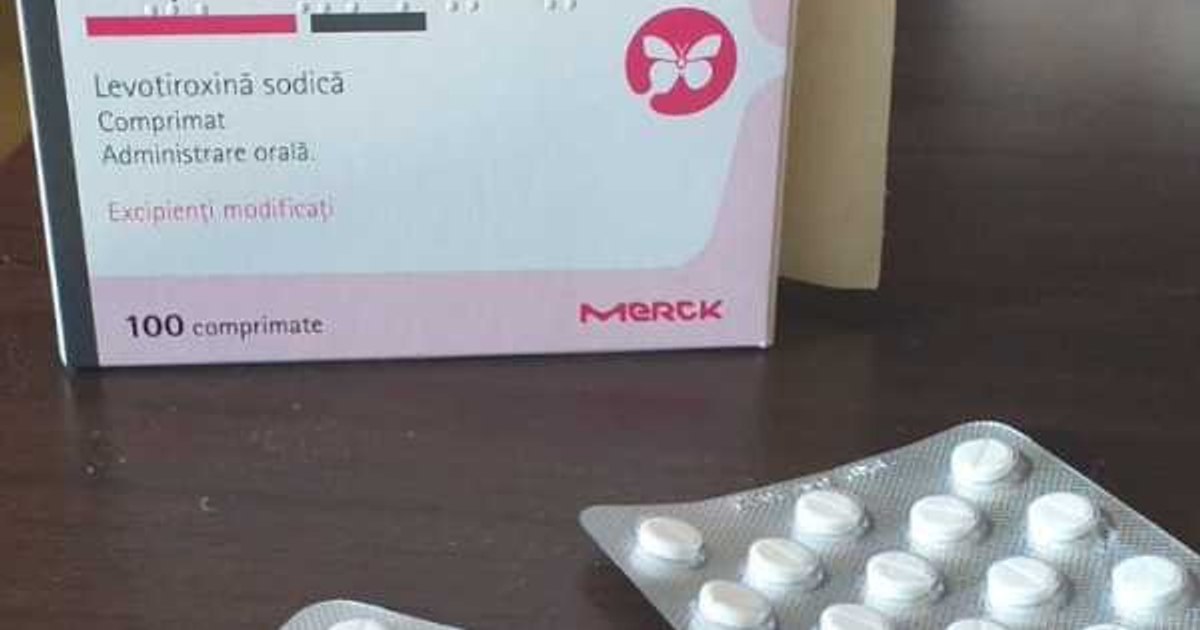
Endocrinologist doctor Ruxandra Dobrescu explained what happens if a patient treated with Euthyrox abandons the treatment. “We need these thyroid hormones,” warns the doctor.
Stopping treatment with Euthyrox can put our lives at risk PHOTO: Adevărul archive
The question regarding the treatment with the most used pill in endocrinology is often addressed to him, and this has not changed over the years, stated Dr. Ruxandra Dobrescu, in a post on his Facebook account.
“What if I quit Euthyrox?”, patients who receive the indication to follow a treatment for life want to know. Starting from the question above, other patients ask how long they should follow the treatment or, if the tests are good, if they can reduce the dose.
The answer, most likely, is not the one expected by patients who find it difficult to accept that substitution treatment is for life. However, the doctor explains in a way that everyone can understand what happens if the body lacks thyroxine.
“Euthyrox (or Accu-Thyrox) contains thyroid hormones and is indicated when the thyroid is no longer working effectively and needs help. That's what it's called substitution treatment – that is, treatment that replaces the thyroid hormones that the thyroid is no longer able to produce on its own,” states Dr. Ruxandra Dobrescu.
What happens when we stop treatment?
“Well, nothing good will happen, unfortunately, because we need these thyroid hormones”says the endocrinologist.
“When there is no thyroid hormone at all we go into a coma”
The deficiency of thyroid hormones is in most cases permanent, either because the thyroid no longer exists (post-operative) or because it has been destroyed by an autoimmune process (autoimmune thyroiditis).
“We don't have another organ that produces thyroid hormones and another thyroid doesn't grow back! Thyroid hormone deficiency is definitive and practical and treatment must be followed throughout life”says the doctor.
On the other hand, patients should know that the treatment does not cure the problem of thyroid hormone deficiency, but simply replaces the hormones that the thyroid no longer produces. Therefore, when the analyzes are good, it happens because the treatment followed is the correct one. If the dose were to decrease, the balance obtained would also be disturbed.
Dr. Dobrescu explained what it feels like for the patient who chose to either deprive the body of the thyroid hormones it was providing from the treatment, or to provide them in a smaller amount.
“The manifestations of hypothyroidism begin to gradually set in. We start to feel tired and lack energy and have some trouble concentrating. We begin to swell, edema appears. The heart begins to beat more slowly, the tendency to constipation appears, we no longer easily withstand low temperatures, we feel more depressed, more apathetic. Well, and all these problems gradually evolve and worsen, the metabolisms slow down to the maximum, until the moment when, in a moment of absolute deficiency, if it has been long enough since we stopped the treatment, the thyroid hormones, the traces that were still left in the body, they are completely consumed and when there is no more thyroid hormones at all we go into a coma. This is the stage before death. Be very, very careful, this is not something to be trifled with!”the doctor warned.
Coma does not set in quickly, the endocrinologist also stated, and this is because thyroid hormones have a rather long half-life in the blood.
“If we stop the treatment today, we don't die tomorrow, it will probably take a good few weeks until these reserves are used up, but it's not something to play with”, he insisted the doctor.
What happens in the case of slight deficit
Not all patients need to receive the full amount of thyroid hormone they need from treatment. In the setting of a mild deficiency, i.e. an autoimmune thyroiditis at the beginning, stopping the treatment will not lead to death.
“It means that the thyroid still spontaneously produces some thyroid hormones, so without treatment we won't die, but we won't be well either! We will operate like this, at reduced speed and reduced capacity! That is, slight fatigue, feeling cold, dry skin, slowed stools, depressive states will probably reappear, but also some enemies that we do not see – such as high cholesterol and atherosclerosis”, explained the specialist.
Autoimmune thyroiditis, however, is a continuous process that evolves slowly over several years, with the final stage of hypothyroidism in which the thyroid no longer functions at all. Analyzes begin to deteriorate gradually. To compensate for the process, hormone treatment will generally be administered in increasing doses, the doctor also said.
In what situations can the treatment be abandoned?
There are also situations where the thyroid is still functioning and treatment may have been instituted too early. In this case, the TSH value tracked by analyzes is towards the upper limit of normal.
“It's worth checking our tests first and seeing if it's hypothyroidism before we start treatment with Euthyrox. It is worth a discussion with the endocrinologist and check if the dose should be reduced or if it should be given up”, the doctor also said.
Whatever the case, considering how important thyroid hormones are for the proper functioning of the body, the decision to reduce the dose or to give up the treatment altogether must be made only after the discussion with the endocrinologist.
Doctor Ruxandra Dobrescu also talked about the situations in which the body only needs help for a certain period, and you can watch the explanations in the video.
