
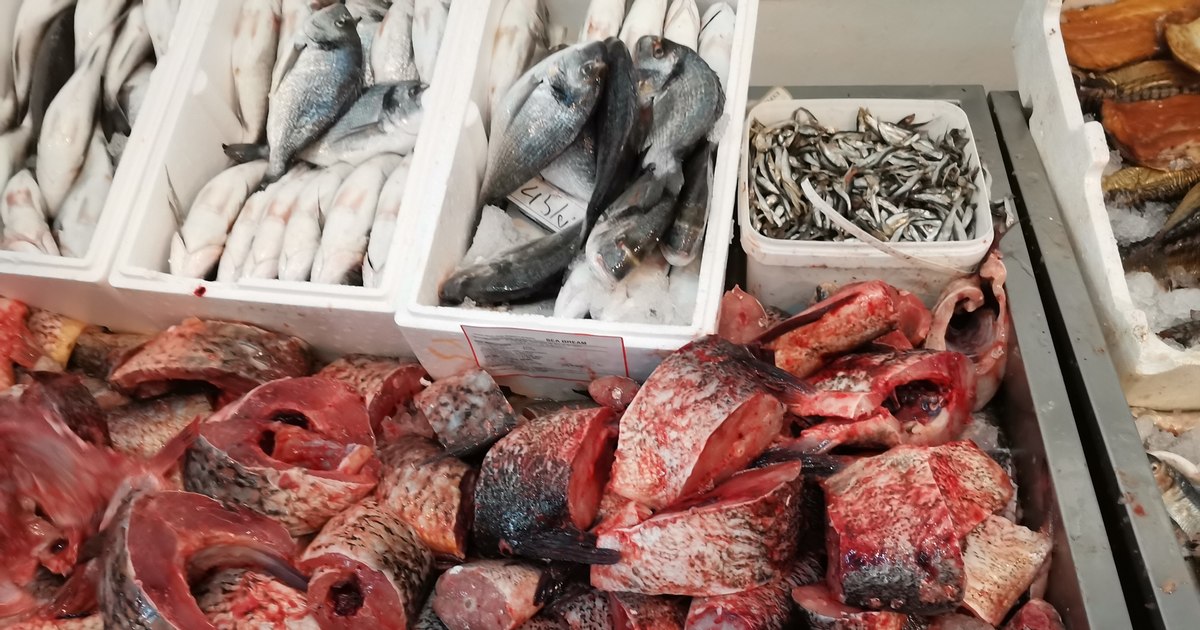
Commissioners of the National Authority for Consumer Protection (ANPC) withdrew from sale over 1.3 tons of fish and fish preparations following a control action carried out last month, over the course of five days, at the national level.
The fish must be kept under strict conditions. PHOTO Alina Mitran
Between April 22-26, ANPC carried out, at the level of the entire country, control actions to check the way in which legal provisions are respected, compliance, labeling, presentation and marketing of fish, prepackaged fish preparations and canned fish .
“As part of the actions, 332 economic operators were controlled, violations were found in 278 of them. About 300 tons of fish, preparations and canned fish were checked, with irregularities being registered in about 71 tons”stated, in a statement sent on Friday, ANPC.
As a result of the observed violations, 235 contravention fines in the amount of 1.1 million lei and 85 warnings were applied.
It was also ordered to temporarily stop the sale of products with information and labeling irregularities, until the detected non-conformities are remedied, as well as the definitive stop and withdrawal from sale of 1.3 tons of non-compliant fish, preparations and canned fish, worth of about 60,000 lei.
“The results of the controls carried out by ANPC confirm that the warnings addressed to consumers were justified. That is precisely why it is necessary that, every time, consumers take into account the recommendations we send regarding the purchase of products, regardless of their nature and the place of sale. I emphasize once again that it is extremely important to buy such products only from authorized places, where the storage and marketing conditions are respected, and it is essential to read the product label very carefully, to avoid unpleasant situations that put us health or even life in danger”explained Sebastian Hotca, president of ANPC.
Visible signs of alteration
The main deficiencies found refer to the marketing of prepackaged frozen products with freeze burns and dehydration or with ice agglomerations, the marketing of fresh fish with organoleptic changes (of appearance and color, soft consistency, retracted eyes, specific odor to spoil), the marketing of fresh fish prepackaged in plastic pots, with condensation inside them (drops of water), the sale of products beyond the minimum durability date or the consumption limit date set by the manufacturers, the sale of products with damaged packaging or even stored in direct contact with the walls of the refrigerated display case, inconsistencies between the declared net amount and the actual amount of the product.
Fish kept in unsanitized or rusted refrigerated display cases
The commissioners also found, among the irregularities, non-compliance with the conditions of storage and display of products for sale: the temperature of the refrigerating units was different from that indicated by the manufacturer, the use of unsanitized refrigerating showcases, with food residues and slight traces of rust, excess ice , leakage of contents, remnants of packaging, with broken edges and rusted grates, failure to respect the proximity of products in the freezer space (fish next to unprocessed vegetables), lack of graphs for temperature monitoring, exposure of fish products to the temperature of the ambient environment, change in the thermal state of the products, the use improper cold rooms with unhygienic floors, exfoliated cold room ceiling, broken tiling, crates and dirty thresholds.
Improper labeling
From the category of detected information-labelling deficiencies, ANPC lists: total or partial lack of identification elements – characterization, lack of translation into Romanian of identification and characterization elements, non-indication of the production method and/or the area of production on the label or packaging catch and/or the category of fishing gear used to catch the fish, lack of entry of the country of origin/place of provenance of the product, lack of entry of the net quantity, lack of or incorrect entry of the date of minimum durability, lack of display of the price, of the price per unit of measure or its illegible display, non-compliance with the promotions regime (marketing at the offer without specifying the start and end date of the offer), lack of operating authorizations.
