
In the absence of a political program, Călin Georgescu came before the voters with speeches with everything: for believers and for atheists, for legionnaires and for communists, for pro-Russians and for democracy. Historian Adrian Cioroianu explains in an interview for “Weekend Adevărul” how it was possible that, in the 21st century, people still believe in mysteries and conspiracy theories and that a discourse in which politics is replaced by God has caught on so well .
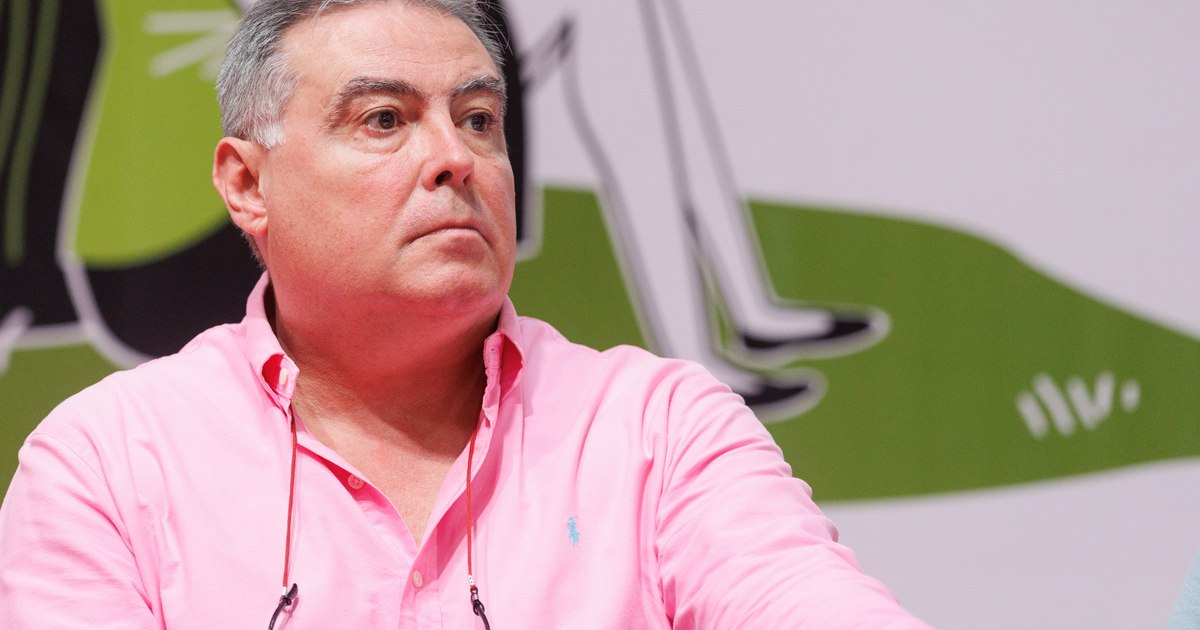
Historian Adrian Cioroianu PHOTO INQUAM_Photos
“Weekend the Truth“: Why it seems cUm do Romanians need a leader who embodies Corneliu Zelea Codreanu or Marshal Ion Antonescu? What do these voters want, to be an anti-Semitic state or to have a leader with an iron fist at the head of the country? Or a state run by the Church? Because this Călin Georgescu has some dubious messages, they are sometimes mixed, which even intellectuals cannot decipher.
Adrian Cioroianu:
Mr. Călin Georgescu has such a diversified and chameleon message that everyone who listens remembers what he wants. Not necessarily all those who voted for him are pro-Russian, not all have legionary sympathies. Some have, some don’t, but he speaks with the utmost ease about various things that he presents as unexplained, unsolved, science is mixed with magic and mysticism, so effectively every man can take what he wants. Some take his nationalism, some take the religious thrill, some take the references to legionnaires. So, in a way, his doctrine is a kind of fruit salad, from which everyone takes the piece that suits him, because that is the advantage of all non-systematized programs.
Or this is the danger…
Yes, sure. The advantage, from his perspective. It is an obvious danger for society, because it is clear that this independent candidate has no program. Second, notice that there are no people to support the dialogue. I mean, I haven’t seen him in a dialogue. As a rule, the people he talks to are people who pick up balls for him. How does he deal with someone asking him uncomfortable questions, he gets angry. Now, this is the mark of all impostors: people who somehow talk to themselves and convince themselves. It’s like they’re talking to a mirror, and as soon as someone brings up a problem, they get angry.
It surprises me that he is a teacher, because usually teachers are people who accept questions and you accept that you don’t know the answer to some questions, because there are no teachers who know all the answers. I’ve seen him get angry whenever someone asks him a question that doesn’t suit him. This is a very dangerous sign for a leader. That is, to what extent you know how to listen, not only speak.
How was it possible to appear at this time?
I think that the great advantage was this context with some counter-candidates who did not convince, who had no appetite, did not create an appetite for expectation, any passion. And it was seen that this is the landscape in which he came out ahead, against the background of the modest programs of the other counter-candidates.
This candidate seems to want us to perceive him as an apostle, as Jesus. He is not everywhere, you can’t even find him at the campaign headquarters. You can’t get to it anyway. Even on the press group of journalists there are clear rules from which you cannot deviate.
Because the man doesn’t really have anything to say. I didn’t have the feeling at all that Mr. Călin Georgescu had any program, good or bad, to present, that would say “look what I want…”. And I think that’s why he doesn’t appear, not that he wouldn’t give a damn about talking to journalists. We don’t know how much he values talking to journalists, but probably not very much, since he said there would be no more political parties. As a rule, those who do not want parties do not want a free press either. So we can’t suspect him of loving the press. He just loves podcasters who sing to him and let him speak for himself, jumping from one to the next without any systematization between ideas.
“History is a kind of phone book”
Most of those who voted for him are young people under 40, who apparently need a leader in the mystical area. But why haven’t they found a modern leader? Why do they seek refuge in this religious area, especially since they did not live in communism, when religion was forbidden, when officers married in churches secretly, when they baptized their children secretly. I mean, you would have expected his voters to be those over 50 who lived under communism and who were waiting for Santa Guerrilla…
That’s right, this is the result of the failure of an education system where, in the vast majority of high schools, there is one history lesson per week and obviously the teacher has no time to go into any kind of detail. And, as a rule, history for these young people is a kind of phone book, full of numbers and dates. How many enigmas and uncertainties our history contains… The people we are talking about, as a rule, understand by history what they can access on the Internet, but on the Internet, many times, texts about enigmas, about mysteries are favored. So when such a man comes along and gives you the clarifying answer and gives you the impression that you suddenly understand what he is saying, it seems that he clears things up. On the one hand, so it is the failure of education.
On the other hand, it is also the failure of our entertainment industry. Most television had shows about the paranormal, about magic and mysteries, how to live well, how to heal yourself. Even serious televisions have such shows where the mystical side merges with religion. For uneducated people, it is no longer clear where religion ends and mysticism begins. In the minds of many, they overlap. As long as someone comes and talks to you about the currents in Bucegi and which only certain people feel, some believe that this is faith.
Regarding the history lesson, all the regimes that have come upon us have come with their own heroes. Under communism we didn’t learn anything about royalty, Brătieni and Iuliu Maniu disappeared and the workers from Grivița came to the fore. The child-hero Vasile Roaita disappeared and was replaced by Nicolae Ceaușescu. Today, young people learn far too little about communism. Is history an instrument of power, of power?
That’s right. Starting this year, Communism will be a (non-optional) subject in high school. It will be a lesson on the history of communism. Finally, a bit late. Really, we didn’t teach them about communism, the family doesn’t have time anymore and it’s not that kind of family with grandparents anymore.
You mean three generations in one house?
This is no longer the case, and many young people effectively had no one to tell them about communism. On the other hand, all the movies, all the comedies they see from that period seem nice and people imagine that any peasant went and stayed at the hotel, by the sea, like in “Nea Mărin milliardar”, the famous film from 1979, with Amza Pellea. Obviously, the very fact that such a peasant who came with leeks ended up staying in an apartment at a hotel in Mamaia was a point. Now, some imagine that things were like that and that we were all so equal that a peasant from Oltenia met in a hotel in Mamaia with a tycoon from America.
Yes, they also exchanged suitcases of money…
Yes, they also confused the suitcases. Obviously it was a joke at the time. For those who lived under communism it remains a joke, but young people note that they imagine that it was probably like that at the time. The country had athletes, comedies were numerous, sports results were admirable, and all in all, that’s about all they know about communism, plus probably their parents telling them they were young back then and the world was more equal. Indeed, the world was equal, but we were all deprived of freedom, but equal, please, minus the party leadership.
Lack of reaction from the authorities
The promotion of fascism is prohibited by law. You remember that there was a scandal a few years ago, when those giant crosses were mounted on the side of the country’s major roads. Recently, Corneliu Zelea Codreanu was commemorated in Tâncăbești, on which occasion we saw the Nazi salute in the public space, visible in the images.
We collect the result of the inactivity of some state institutions. No, it’s not about the courage of these people, it’s about the fact that such violations of the law accumulated and no one took action, because, as far as I understand, the police were also present at that legionary salute ceremony . So these things would have been solved very simply with the application of some fines. The idea was not to get here. The extreme right exists everywhere. And in Austria after the war, and in Germany after the war, and there were fines if people did the forbidden salute.
Do you remember that many years ago Radu Mazăre dressed in a Nazi costume?
These are Mr. Mazare’s extravagances. I don’t know if it helped that he was wearing a Nazi costume. I would say it didn’t help him…
“Both Hitler and Stalin loved their country”
Does Ion Antonescu remain a controversial personality? He was a criminal of war or a nationalist? He sent a large number of Jews to death, he even said at one point that he didn’t care if we would remain in history as “barbarians”, but in his time many ships with Jews left the port of Constanța bound for Palestine. Other historians are of the opinion that the territorial reunification on the eastern border was largely due to Ion Antonescu.
It’s not controversial. Controversial means something when it’s like this… between black and white. He remains an utterly and utterly noxious character in our history. He loved his country, but also Nicolae Ceaușescu loved his country. And Hitler loved Germany. I am convinced that Stalin loved the Soviet Union. What does this mean? It also matters what you do in the name of love. The fact that you love your country does not exempt you from responsibility. In the name of love for the country, you cannot do anything. I do not deny the fact that Zelea Codreanu would not have loved his country, but it matters what you do in the name of this love, which can be a toxic love.
After the war against the Soviet Union began, Ion Antonescu went with Hitler. He was convinced that Hitler would win the war and then tried to apply the same racial policy to the Jews. Only after 1943 did he realize that something else could happen and he modified the policy, but otherwise, in 1941 there are clear data that he intended to solve the problem of the Jews in Romania. If Hitler had won the war, he would have applied the same racial policy to the end.
The interview was conducted before the cancellation of the presidential elections
