
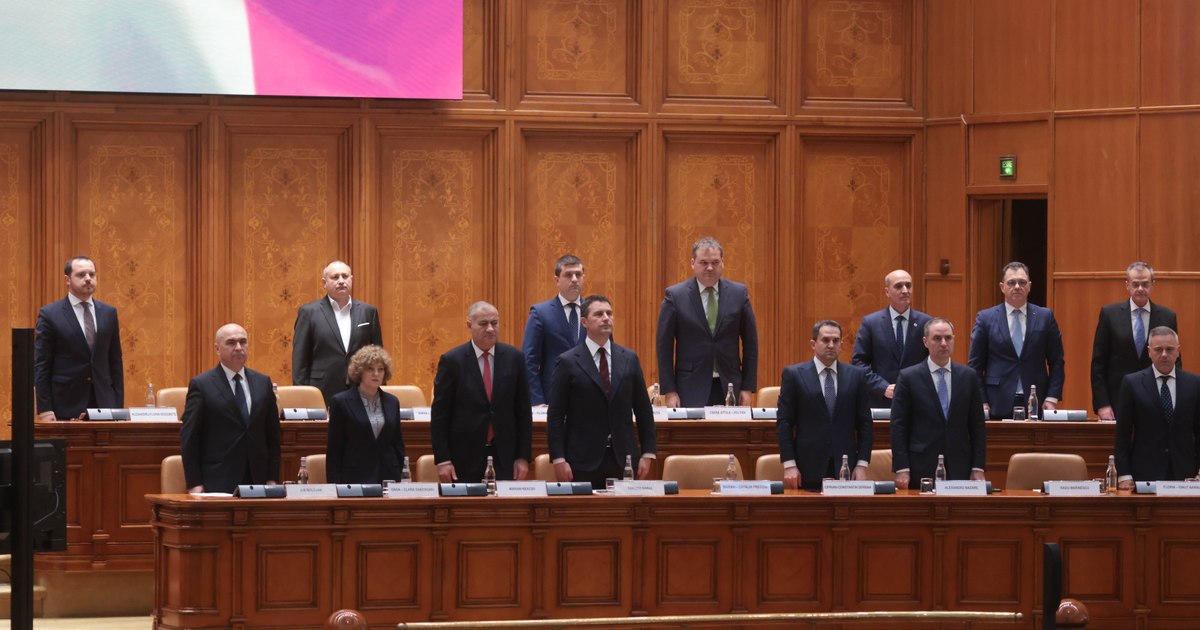
The communication of the cabinet led by Ilie Bolojan, in some cases deficient, is a product of the lack of “communication culture” as well as the lack of “coalition culture”, the current government formula being the main impediment, according to experts.
Three members of the Bolojan cabinet have resigned so far following public scandals or dissatisfaction in society related to their work.
“Each time, when a minister leaves, you should have come out and said why you appointed him, according to what criteria, what were his merits and the hopes you placed in him, and then why you dismissed him, what were the mistakes or failures and where he disappointed you”, esaid the expert in public communication Dumitru Borțun for “Adevărul”, recalling that the resignations from the Executive led by Ilie Bolojan also came after the “one-on-one” talks with the prime minister.
Beyond the topics debated in the public space between the parties of the government, even the positions regarding the scandals surrounding the ministers are sometimes left to wait, the Executive having a “reactive” type of communication, instead of anticipating moments of crisis, the expert explains:
“The problem is to have a permanent constructive communication policy, which brings a set of values and through the set of values you must, in fact, form a public image. (…) They do not have the communication culture of the type of an intelligent organization. This exists in many of the firms, companies, corporations in the private environment, but not in the institutions of the Romanian state. There is no managerial culture, organizational culture that includes communication skills. There is a lack of transparency, which is a component part of the social contract between rulers and ruled and the explanation is missing”.
The coalition formula, an impediment
The analysts consulted by “Adevărul” explain that the Government’s communication style is also explained by the Coalition’s formula, which not only brings together parties at opposite poles in terms of ideology, but is also “a government of reform”.
“It was established on the basis of reform. The reform and its objectives appear in the convention, in the coalition document. And the main opponent of the reform is the PSD”, indicates Dumitru Borțun.
Political scientist Cristian Pîrvulescu explains that, “in general, government communication has been abrupt, harsh, frowning, like the Prime Minister, talking about sacrifices and not presenting any solutions” in the 6 months of mandate so far.
Some scandals surrounding members of the government have also brought risks of breaking the coalition, the “old legacy” of conflictual relations between the PSD and its governing partners, being one of the elements that constantly stand out, according to political scientist Cristian Pîrvulescu, who also talks about a PSD that “they are playing with fire”:
“In the case of Marinescu, the prime minister cannot afford a tense situation with the PSD. He was highly criticized for this. He criticized the plagiarism, but that’s all. For the simple reason that this would lead to the fall of the government and he does not want the responsibility for the fall of the government to be his rule. Those who will bring down the government must take responsibility. (…) The PSD is playing with fire and does not, in fact, find a place in Romanian politics because it relies heavily on on its local administrative structures”.
How the ministries were managed
Every time a member of the Government stood out “he was attacked by the other members of the coalition”Cristian Pîrvulescu also says, referring to USR representatives in the Government:
“Other ministers communicated less, but also risked less. (..) But despite all that, for example, the Minister of Foreign Affairs was the target of PSD attacks. And equally, PSD ministers who tried to stand out, were also the target of attacks. There is no coalition culture and general interest culture. There is no culture of institutional stability”.
Two deputy prime ministers resigned in only 5 months of their mandate
The Bolojan government was installed in June 2025. Only one month later, the first resignation came, of the independent deputy prime minister chosen by the head of the government, Dragoș Anastasiu, after the appearance of information regarding his involvement in a bribery case and some controversial statements on the topic of the crime of bribery.
In only five months, the Executive faced a second image crisis around a resigned deputy prime minister. The former Minister of Defense, Ionuț Moșteanu, resigned on November 28, as a result of revelations that appeared in the public space on November 25 regarding his CV.
The third departure is marked by the former Minister of Education, Daniel David, who announced his resignation at the end of last year, on December 22.
The scandals surrounding the members of the Bolojan Government were not only in the case of the resigned ministers, being also targeted those who are currently in office, such as the new independent deputy prime minister, Oana Gheorghiu, the Minister of the Environment, Diana Buzoianu (USR) or the Minister of Justice, Radu Marinescu (PSD), targeted by accusations of plagiarism.
Last but not least, the tensions surrounding the Government are also marked by topics that have inflamed spirits, both in the parties and between the governing formations, a context in which the Executive’s communication has been contested, including from within. “I want to know why my colleagues who today ensure the leadership of the National Liberal Party do not come out to explain to the people what is happening, because Winston Churchill said that 80% of good governance is communication, Václav Havel said that if you want to be appreciated by people you must communicate. Otherwise, you are doing things for them for nothing. I can give countless examples”stated MEP Rareş Bogdan, who went to the first meeting this year of the PNL leadership on Monday to find out the answers.
