
Research indicates that the interior of Venus is dry, contradicting theories that the planet was habitable in the past.
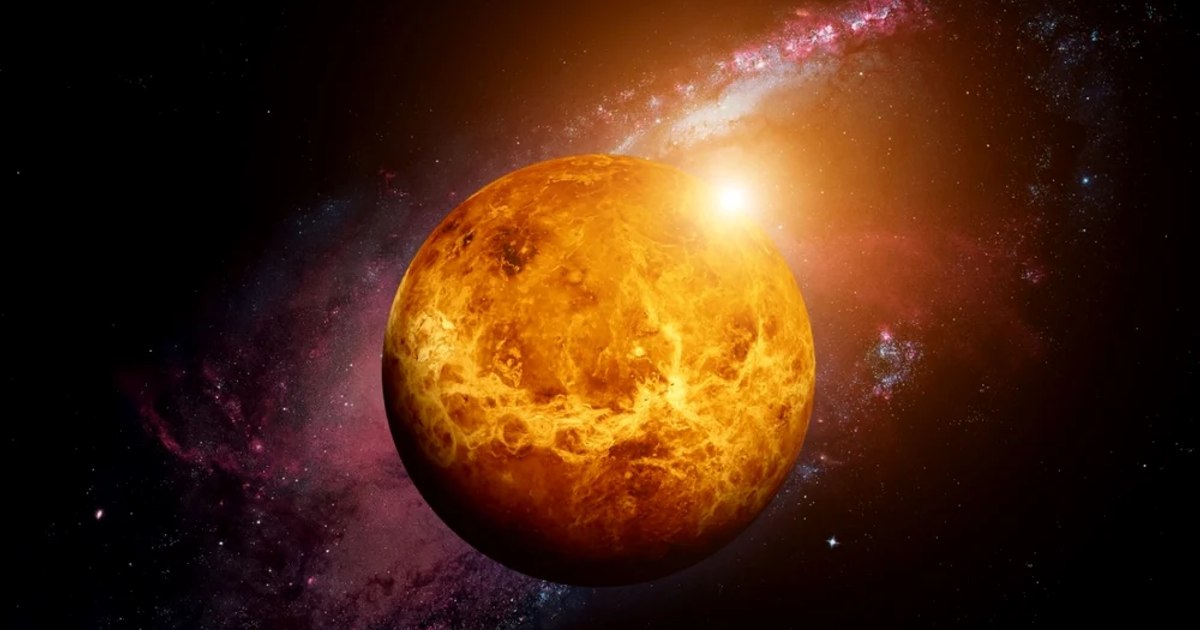
Planet Venus: Photo: Shutterstock
With a surface hot enough to melt lead and clouds of sulfuric acid above it, Venus is a planet often called “the evil twin” of Earth, similar in size but with different worlds.
Some scientists have long believed that the planet was once much more hospitable, with cooler temperatures and liquid water oceans. But now researchers have dealt a blow to the idea that Venus ever hosted life as we know it, writes theguardian.com.
They say an analysis of the planet’s atmosphere has shown that Venus’s interior is dry, suggesting it never had the oceans of liquid water traditionally thought necessary for life to begin.
“This does not completely rule out any form of life. It rules out Earth-like life,” said Tereza Constantinou, first author of the research from Cambridge University.
The question of whether Venus was ever habitable—and whether it could host life in its acid clouds—has long been a hot topic among scientists. Some believe that the planet was once much more Earth-like, but then suffered a rampant greenhouse effect. Others believe that Venus has always been inhospitable.
Rich in water?
Constantinou observed that early in the formation of Venus, the planet was covered by a vast sea of magma. If it had cooled rapidly, the water would have condensed and formed water oceans. However, this process would also have trapped water in the magma as it crystallized, meaning the planet’s interior would have been rich in water. As a result, water would have been ejected when volcanoes erupted.
“If you look at any photo of volcanism on Earth, you see some kind of big clouds coming out. Most of them are water,” she said.
But if the magma had cooled slowly, the water would have reached the atmosphere as steam. Crucially, in this scenario, water would not be trapped inside the planet.
Writing in the journal Nature Astronomy, Constantinou and his colleagues report how they studied the chemistry of the planet’s atmosphere to shed light on the water content of its interior.
The team said that the unchanging nature of Venus’ atmosphere means that the rate of material loss must equal the rate of replacement, the latter being driven by volcanic activity.
However, when the team analyzed the proportions of substances replenishing the Venusian atmosphere, they found that very little water was being added; in other words, the volcanic eruptions were “dry”.
“Lack of water in volcanic emissions reflects an equally dry Venusian interior,” declared Constantinou.
The team stated that the findings are not compatible with Venus having oceans of surface water in the past and thus a climate traditionally considered habitable.
The team’s conclusion may soon be tested: Later this decade, Nasa is set to launch the DaVinci mission to fly by Venus and launch a probe to its surface.
Constantinou said solving the problem could help astronomers narrow their search for habitable planets outside our solar system. “Earth and Venus provide this natural laboratory very close to us to study how habitability, or lack thereof, evolvesshe said.
