
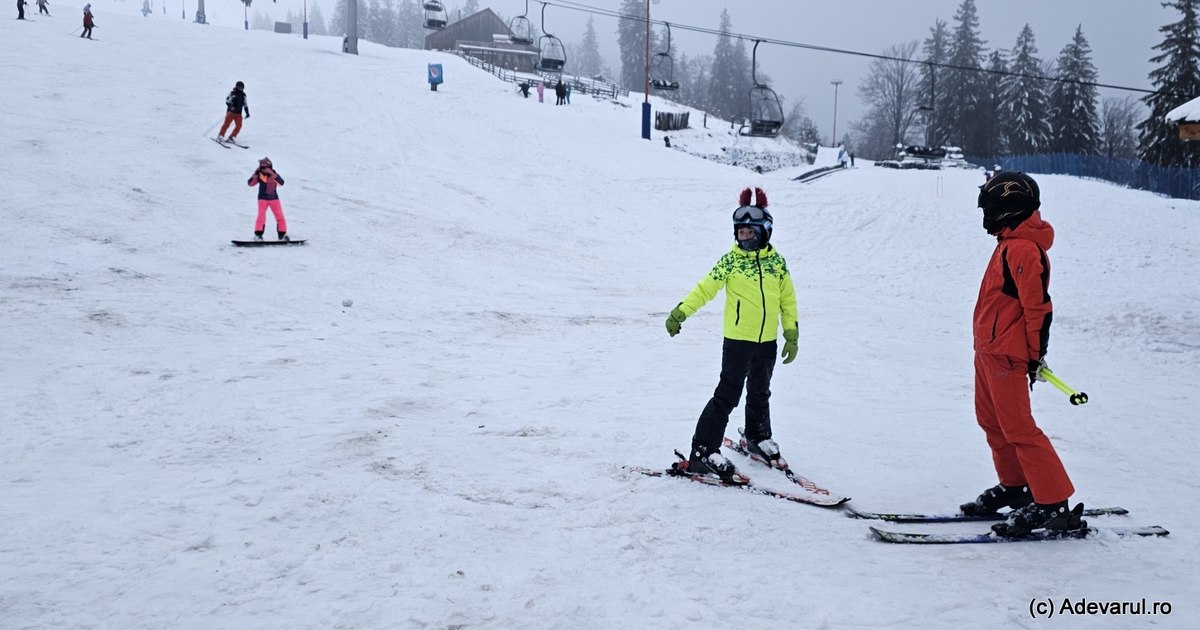
The ski season has opened in the Straja mountain resort in Valea Jiului, one of the most popular winter recreation areas in western Romania. The road to Straja offers travelers passes through coal towns, where the declining mining industry provides a gray panorama.
Mountain resort Straja. Photo: Daniel Guță. TRUTH
Straja mountain resort (video) from the Vâlcan Mountains, which separate Hunedoara and Gorj counties, came alive again with the official opening of the winter tourist season, announced on November 30.
Even if in the first days of winter, there were several hundred tourists, in the coming weekends the cabin owners expect a much higher number of visitors.
“We are at the beginning of the season, and the rainy weather and the slopes that are still waiting for snow have somewhat discouraged tourists from going up to the resort. However, it will be very crowded during the holidays”, says the manager of a ski rental center.
Straja resort, “the pearl of Jiului Valley”
Established in the 90s at the foot of the Straja peak (1870 meters), above the municipality of Lupeni, the Straja mountain resort has gradually developed over the last two decades: the Lupeni – Straja road was modernized, the ski slopes were extended, the old chairlift was replaced by a modern cable car, and over 100 villas, cabins and guesthouses have been built in the alpine area.
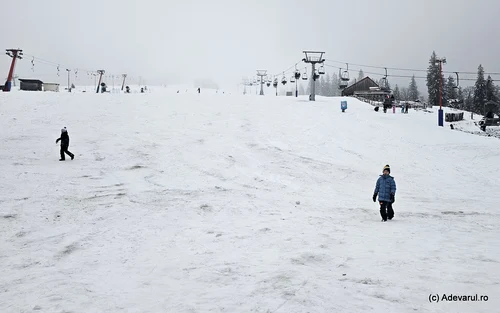
Image 1/28:
Straja Station Photo Daniel Guță THE TRUTH (37) jpg
Meanwhile, for almost a decade, the “snow trains” from Valea Jiului no longer run on the Petroșani – Lupeni route, Petroșani remaining the only town of the six mining towns where passenger rail transport operates.
The decline of the mining industry also left traces of ash in the urban landscape of the western Jiului valley, crossed by tourists before climbing to the resort. The last 20 kilometers of the road to Straja, on the National Road 66 A, offer travelers a completely different setting compared to that of a tourist area.
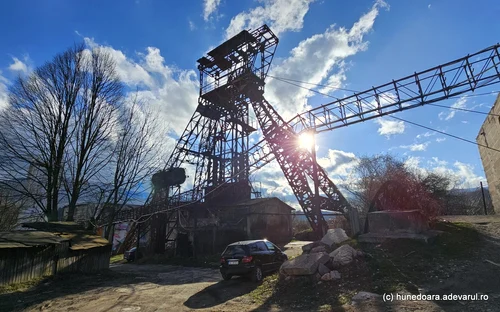
Image 1/11:
Lupeni Photo Daniel Guță THE TRUTH (65) jpg
The route starts at the edge of the city of Petroșani, where DN 66 A separates the blocks from the Livezeni Mining Exploitation, then crosses the town of Aninoasa and enters Vulcan, where travelers find the ruins of the former Coroiești coal preparation, surrounded by the workers’ colonies on the banks of the Jiu.
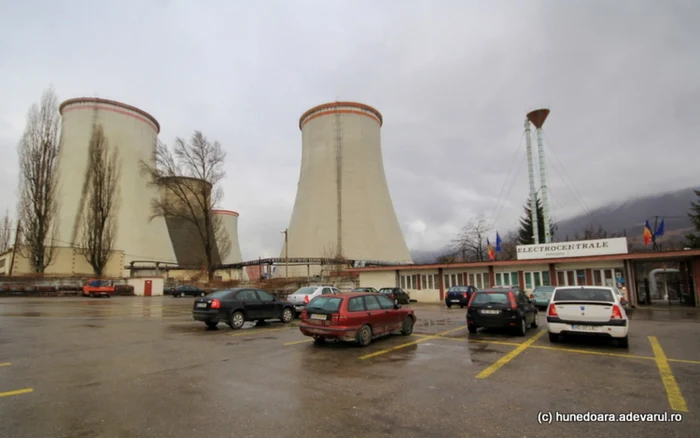
Paroşeni thermal power plant. Photo: Daniel Guță
In the city, the tower block boulevards are a little livelier with the commissioning of holiday decorations. At the exit from Vulcan, tourists can see one of the large thermal power plants from the 1950s, the Paroșeni Thermal Power Plant, which has preserved four huge water towers.
From here, enter the town of Lupeni, dominated by the huge chimney, more than 200 meters high, of the Vâscoza textile factory, demolished after 1990. From the center of the town of Lupeni, an eight-kilometer road climbs steeply through the forest, in serpentines, to the mountain resort, leaving behind the panorama of the mining towns strung along the western Jiu valley.
