
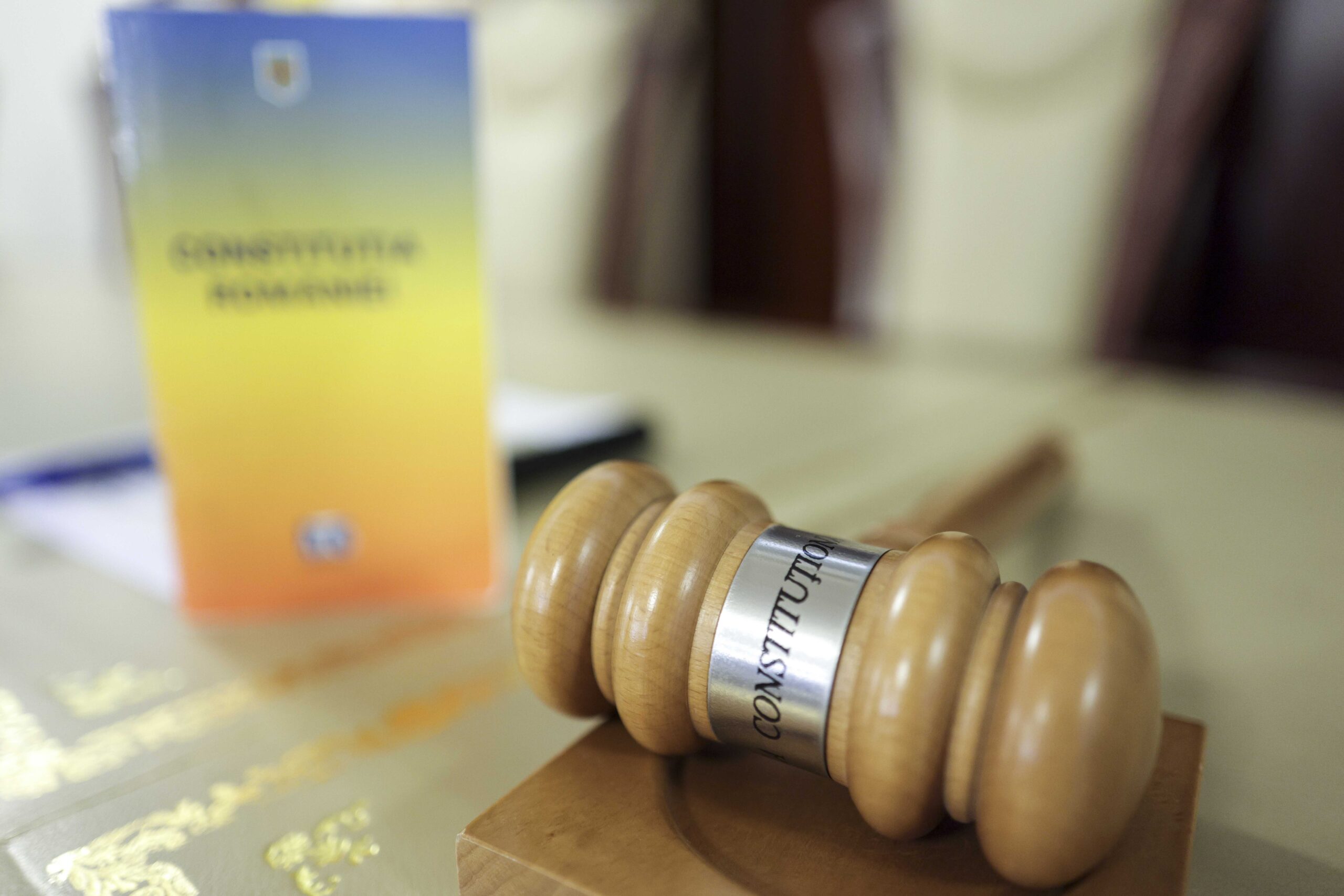
The CCR decided to postpone again the decision regarding the new project to modify the retirement conditions of the magistrates, in a context in which specialists warn of a possible prolonged postponement. Constitutional judges are expected to make a decision in a hearing scheduled for Monday, December 29, from 10:00 a.m.
The decision to postpone Sunday, December 28, comes in the context in which four judges left the courtroom, refusing to return to the debates, according to Adevărul information.
“The Constitutional Court decided, on Sunday, to continue the deliberations on December 29, 2025, at 10:00 a.m., in the case of the objection of unconstitutionality of the Law for the amendment and completion of some normative acts in the field of service pensions, objection formulated by the High Court of Cassation and Justice, noting the lack of quorum in the deliberation meeting held on December 28, 2025”, CCR sent in a press release.
However, this postponement could be extended, at least until January, analysts indicate.
“From what I understand, there is a majority to validate the government’s project (5-4) (…) But there is great despair. So what loophole did the judges appointed by the PSD, that is, the 4, find? They left the room. So that there is no quorum, they cannot vote! It’s hallucinatory!
Now the meeting has been moved to tomorrow. But maybe they think that they can somehow go on strike on this topic so that they can never vote, even though there would be a majority in the CCR! do you realize It would be a major constitutional crisis and a misfortune – if anything – made by the PSD”claims analyst Andrei Caramitru in a post on Facebook.
The postponement, “a proof of political interference in the act of justice”
“There is a real crisis at the level of the highest institution in the state, it is clear that there are two very clearly demarcated camps. There are some transactions, or some negotiations, which from the side you would say are normal conditions, it is natural in a democracy, only that they are not a deliberative body, that is, they should not debate, they should apply a law. The fact that even at this level, of the Constitutional Court, they do not agree, shows the amplitude the crisis we are talking about.
Because these people don’t have to judge according to political orientations, they have to judge according to the Supreme Law, the application of the law. Or, if they do not understand each other and divide in two on political criteria, it is clear that this crisis is very strong and politicization is real here. So what happened today is the clearest evidence of political interference in the justice system. The fact that up to the level of the Constitutional Court it seems that, based on political criteria, they failed to agree. This is proof of political interference in the act of justice”, explains former Foreign Minister Adrian Cioroianu for Adevărul.
The quorum required for a decision
“I expect, first of all, that the four will not participate in the meeting tomorrow. It is much easier not to participate than to go and leave the meeting again. If they want to take the debates further, in January, they will do so.” explains former CCR president Augustin Zegrean, for “Adevărul”.
In order to be able to make a decision, all nine must be present – Augustin Zegrean, former president of CCR
The situation of this decision, however, is a complicated one. CCR judges cannot make a decision with a partial quorum. If 9 judges were present at the first meeting where this topic was discussed, all of them will have to be present at the meeting where a decision will be made. To ensure the necessary attendance, “there is no rule, it is the rule of common sense and responsibility”, explains the former head of the CCR.
“Unfortunately, the Law of the Court does not provide (no – a rule for the obligation to participate), because no one worried that these situations would come to this. You can’t really know everything when you make a law. And neither do their regulations, because it is a rule that says that, in order to be able to make decisions, there must be at least six present and five to vote for or against. There must be a majority of five of the six. But that can only happen when it is the first meeting, when the first time a law is being discussed. This law is in the second session. They must go with all of us to be able to make a decision.”says the former president of the CCR.
How quickly the new law can take effect
Former CCR judge and former Minister of Justice Tudorel Toader pointed out, in an intervention on Antena 3 CNN, that the absence of the four judges made it impossible to hold the meeting. According to him, the current perception is that a majority is taking shape to pass the law, with 5 judges, which is why the other 4 had no choice. The only option for postponing the decision was to leave the meeting: “It seems that 5 judges already have an option (no – for a rejection of the referral to the ÎCCJ)”.
According to the former CCR judge, the law still has time to cause effects from the beginning of next year. “If tomorrow the Court rejects the objection, the president can promulgate it, it can be published in the Official Gazette and it takes 3 days to enter into force”Tudorel Toader also explained, indicating that promulgation can also take place on the same day as the CCR decision.
