
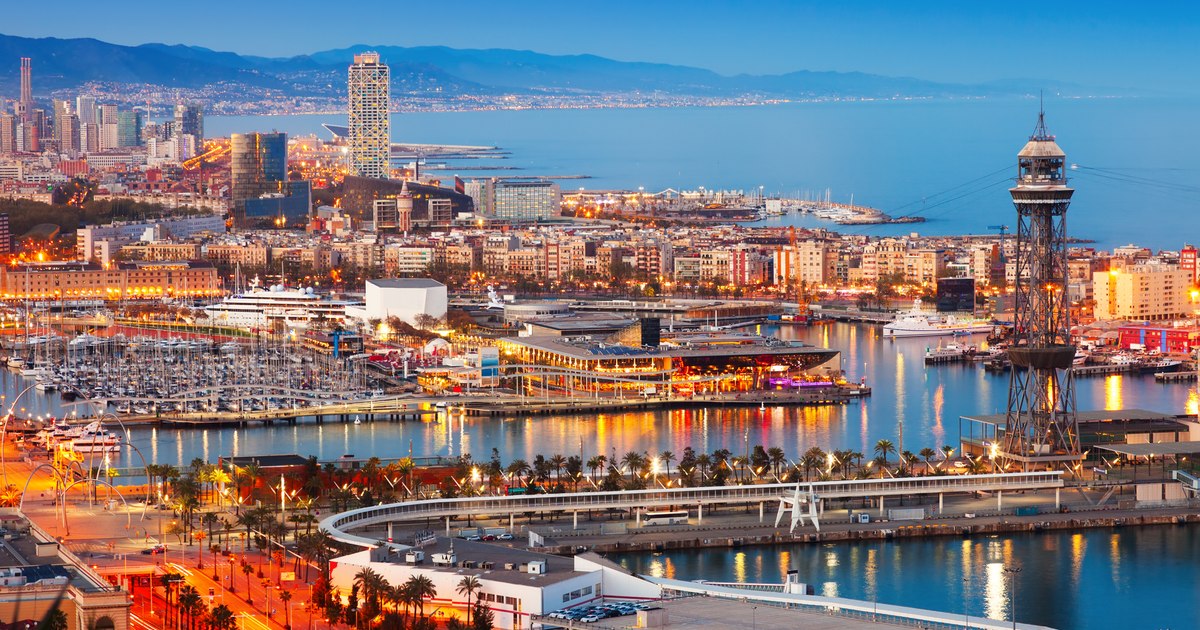
Barcelona is the latest city in the world to ban short-term rentals, including Airbnb. Local authorities believe that restricting rentals to tourists helps keep housing prices affordable for local residents.
Port of Barcelona PHOTO: Shutterstock
In July, thousands of Spaniards took to the streets of Barcelona to protest over-tourism. Protesters sprayed water from toy guns at visitors sitting at sidewalk cafes, according to Bussines Insider.
The demonstration was the culmination of years of booming visitor numbers and rising housing and other living costs in the seaside metropolis. The mayor of Barcelona said that rising rents and house prices represent “the biggest problem” of the city.
Many experts say short-term rentals, including Airbnbs, are part of the problem, squeezing local housing supply and driving up prices.
A study published in 2020 found that Airbnb activity increased rents by 7% in Barcelona’s most popular neighborhoods and increased house prices in those areas by 17%.
Following a partial ban on short-term rentals in Barcelona in 2021, the city announced earlier this summer that it would try to remove all of the approximately 10,000 short-term rental listings registered by 2028. The move is one of tougher crackdown on Airbnb and other tourist rentals around the world.
The Spanish city is not the only one that has taken such measures
Cities around the world have implemented a number of short-term rental regulations to ease pressure on the housing market. Major cities like New York, Tokyo, and Vancouver require short-term rental hosts to live in the homes they rent. London and Paris limit the number of nights a host can rent out their home per year.
Rental platforms have opposed many of the regulations. Last year, Airbnb unsuccessfully sued New York City over its crackdown. But the company has since appeared more open to a new regulatory standard.
The cited publication analyzed three European centers – Lisbon, Florence and Amsterdam – that have imposed relatively strict regulations on short-term rentals. In Lisbon and Amsterdam, early data show that the restrictions have coincided with a drop in house prices. In Florence, the impact is not yet so clear.

Lisbon also introduces restrictions PHOTO: Shutterstock
Cities have been concerned about the impact of short-term rentals on housing costs for years. But the pressure on lawmakers to do what they can to curb the inflated cost of living has pushed many to more aggressive policies in recent years.
According to Bussines Insider, Lisbon’s Airbnb ban may have kept housing costs down. In early 2023, Portugal suspended all new licenses for short-term rentals as part of a wider effort to ease pressure on the property market from tourists and longer-term foreign visitors.
But the country’s capital, Lisbon, took action much earlier. In November 2018, the city ended new listings for short-term rentals in some historic neighborhoods.
In a study published in November 2022, co-author João Pereira dos Santos, a researcher at Queen Mary University of London’s School of Economics and Finance, found that house prices in Lisbon’s neighborhoods subject to the ban fell by 9% compared to neighborhoods without of control.
Housing prices also fell slightly in Amsterdam
Instead of a blanket ban, Amsterdam limits the number of nights hosts can rent out their homes to 30 nights a year.

Amsterdam, in the top of tourists’ preferences PHOTO: Shuterstock
There are currently about 5,000 listings available in Amsterdam, down from the city’s peak of 12,000 listings in 2019, according to data from short-term rental analytics site AirDNA. Recently, housing prices have also fallen slightly in Amsterdam. However, some experts are hesitant to attribute this decline solely to the enforcement of Airbnb’s restrictions.”
What steps did Florence take?
Florence just reversed its ban on Airbnbs in the city center. Uneven enforcement and legal challenges have dulled the impact of Florence’s Airbnb regulations.
In 2023, Florence banned short-term rentals in the city’s historic center, a three-square-kilometer district of iconic Renaissance buildings and museums, in a bid to improve housing affordability.

Florence, beautiful city in Italy PHOTO: Shutterstock
From 2016 to 2023, short-term rentals doubled across the city, and rents rose 42 percent over the same period, Florence’s then-mayor Dario Nardella told the Wall Street Journal. But in July this year, a regional court overturned the ban.
