
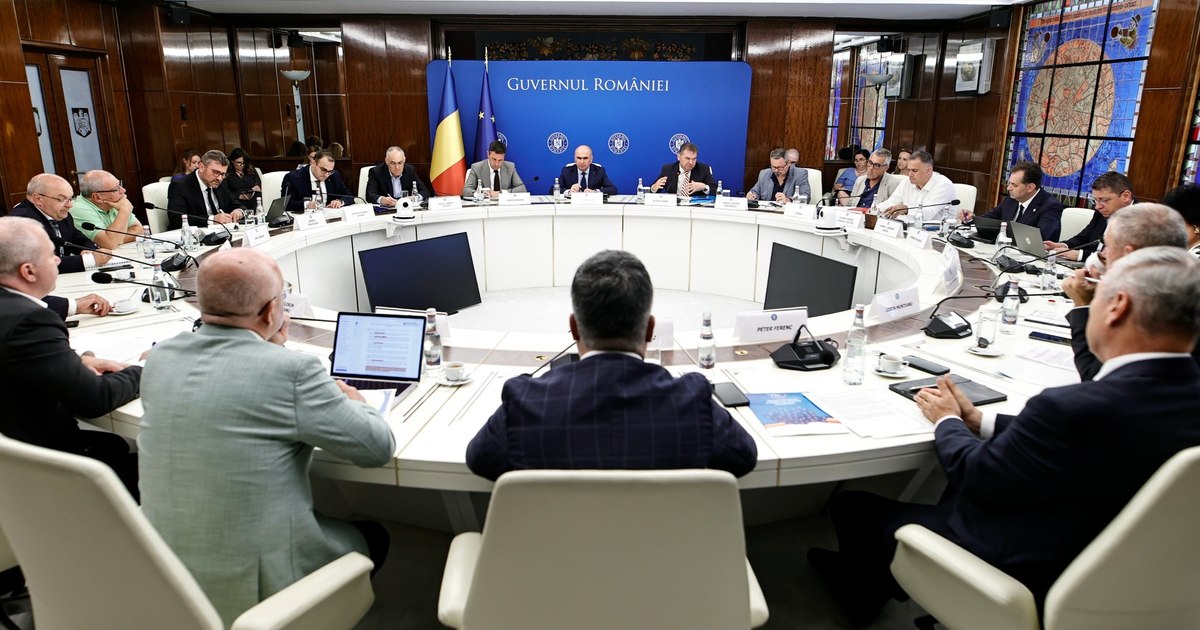
The Ministry of Development published, on Tuesday evening, the draft law on administrative measures to increase the financial capacity and make the activity of the central and local public administration more efficient.
The draft normative act, in its current version, has been placed in decisional transparency on the page of the Ministry of Development.
According to the Ministry of Development, the normative act provides for the efficiency of local and central public administration, social equity in the collection of fees and taxes and a better financial discipline.
The project also provides for a 10% decrease in personnel expenses in the central public administration, without affecting the basic salaries of employees, through institutional reorganization, reduction of increments or job cuts. At the level of local authorities, there is a reduction in positions from point 1 of the annex to GEO no. 63/2010, which will generate a 10% reduction in the positions occupied by all local public administration authorities.
In the year 2026, on a temporary basis, local authorities can approve the reduction of personnel expenses proportional to the expenses related to the number of occupied positions that should be abolished.
The draft normative act can enter into force after approval by the Government and adoption by the Parliament.
What the project provides
Personnel expenses in the central public administration will be reduced this year by 10% compared to those in 2025, without affecting the basic salary, according to a draft law published Tuesday evening on the website of the Ministry of Development, Public Works and Administration (MDLPA).
The reorganization procedure of public authorities and institutions shall be finalized within a maximum of 90 days from the date of entry into force of the law. The main credit orderers of the authorities and institutions will start, within no more than 30 days from the entry into force of the law, the reorganization procedure.
Likewise, the savings in personnel expenses achieved at the level of secondary or tertiary credit orderers, greater than the 10% reduction, are transferred to the budget of the main credit orderer. In execution, the main authorizing officer of credits can redistribute these savings according to the identified needs for financing personnel expenses.
In order to reduce personnel expenses, credit officers can apply, under the law, without affecting the basic salary, the following ways: reducing the number of funded positions; dismissal of personnel, under legal conditions; reducing the level of some growths; other ways of reducing personnel expenses.
“The modalities and procedure for reducing expenses are carried out with the consultation of the trade union organizations in the institutions or the consultation of the employees’ representatives, as the case may be. In the draft law of the state budget for the year 2026, the Ministry of Finance bases the budget allocations on the main credit orderers by sizing the personnel expenses reduced by 10% compared to the execution of the state budget foreseen for the year 2025”it is specified in the project.
The full document can be read here.
