
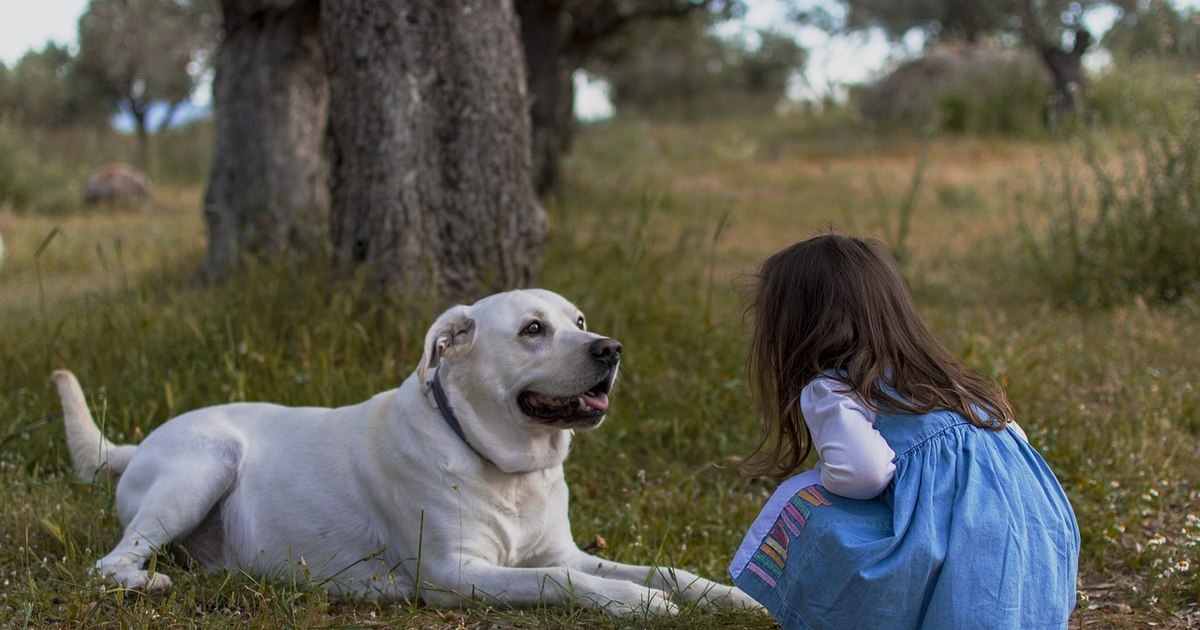
A new study shows that it is beneficial for children to play with the family dog. Scientists have found that after fun interactions with dogs, children get a burst of a beneficial hormone called oxytocin.
Playing with dogs can be beneficial for children PHOTO Pixabay
The hormone was found in higher concentrations in children when they interacted with dogs, compared to playing on their own or with toys and games, according to the Daily Mail.
Of course, as with any interaction between dogs and small people, owners should keep a close eye on what’s going on to prevent unpleasant incidents.
The new study was led by Gitanjali E. Gnanadesikan, a postdoctoral researcher at the University of Arizona’s school of anthropology in Tucson.
“To our knowledge, this study provides the first evidence of an effect of affiliative social interactions with dogs on oxytocin concentrations in children”Gnanadesikan and colleagues state in their research paper, published in the journal Psycho-neuroendocrinology.
For the study, scientists recruited 55 children between the ages of 8 and 10 for experiments at the Arizona Canine Cognition Center in Tucson.
During three separate visits, children played with their pet dog, with an unfamiliar dog, and alone.
Before, during and after the three play sessions, oxytocin levels were recorded in both dogs and children from saliva and urine samples.
After analyzing the results, Gnanadesikan and his colleagues found that interacting with the dogs led to higher levels of oxytocin in the children compared to solitary play.
Both familiar and unfamiliar dog interactions had this oxytocin-stimulating effect on the children, the researchers reported.
This suggests that it doesn’t matter whether children play with their own dog or someone else’s to get the beneficial hormone boost.
As for canines, companion dogs showed increases in oxytocin in their saliva, while the team saw the opposite pattern in unfamiliar dogs.
Thus, the researchers believe that interactions with children can stimulate the release of oxytocin in dogs as well, but only if the child is familiar to them.
The team admits that the child-dog interactions they observed in the lab “likely differ in important ways from those that occur in the home environment. For example, children or dogs are unlikely to have felt as comfortable in the unfamiliar laboratory environment as they would normally feel at home”they say in their paper.
The experts used 35 mixed breeds and 19 purebreds for their study, although they did not specify the exact types of breeds.
But dog owners should always be very careful with any breed around children, especially infants and toddlers.
Furthermore, the researchers used children between the ages of 8 and 10, which is a relatively narrow age range.
Younger children, with less ability to take care of themselves, are especially vulnerable in the presence of dogs, especially without the watchful eye of an adult.
The Blue Cross states: “Children and dogs they should not be left alone together without adult supervision”.
