
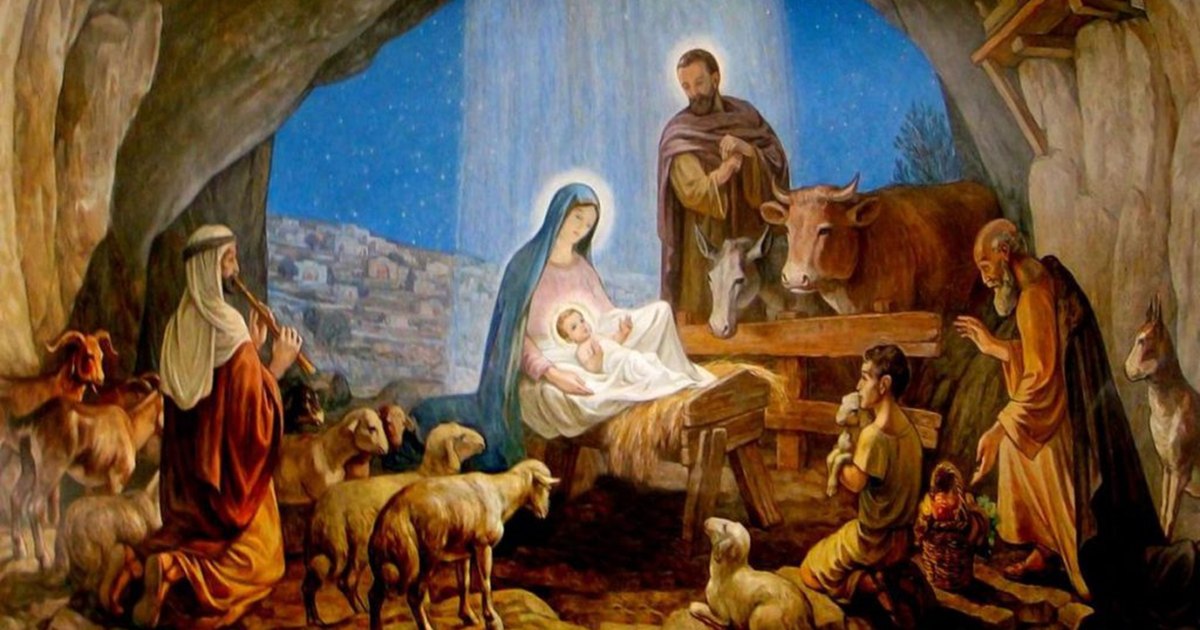
Christmas is the biggest holiday of Christendom and celebrates the birth of Jesus Christ. In recent years, however, it has become, as if more than ever, a constant rush for increasingly expensive gifts, overflowing shopping baskets and “perfect” pictures for social networks. Stores are crowded, advertisements are constantly urging us to buy more, and retailers are recording record sales, turning Christmas into a consumer phenomenon. In this fast pace, many people end up forgetting what we are really celebrating, and time spent with family and peace of mind also fall by the wayside.
When the commercialization of Christmas began
Christians have been celebrating the Nativity since the second century, the oldest church documents show. Liturgical historians say, however, that the date of December 25 was officially established in the year 365, in Rome. So a history of almost 1700 years, in which, for many centuries, the emphasis was on religious services and simple family meals. Gifts began to be given only during the Renaissance, and not for Christmas, but for Saint Nicholas. Only the children were the ones who received. Also during the Renaissance, fir trees began to be associated with the holiday. The first documentary attestation of a decorated Christmas tree dates back to 1510, in Riga, Lithuania.
300 years later, in the 19th century, with industrialization, toys and decorative objects became cheaper, so more social classes began to have access to them. It was also then that retailers realized they could make window displays more attractive, and Christmas began to be officially associated with gift-giving. In the second half of the century, it became a family celebration, and the tree and decorations became part of many homes.
The commercialization of the holiday really begins in the 20th century, with the advent of advertising, which increasingly links Christmas with consumption. In the 1930s, the place of Saint Nicholas is taken by Santa Claus, and a soft drink company contributes to global popularization.
Since the 1950s, in the United States and countries in Europe that were not under communism, Christmas has become the most important sales period of the year. With the advent of shopping malls in the 1980s, sales numbers increased and so did the rush for gifts. The peak was reached after the 2000s, including in Romania. Full tables, many gifts and abundant shopping have become synonymous with the Holiday for many.
The impressive message of a priest: “Stop celebrating Christmas before Christmas”
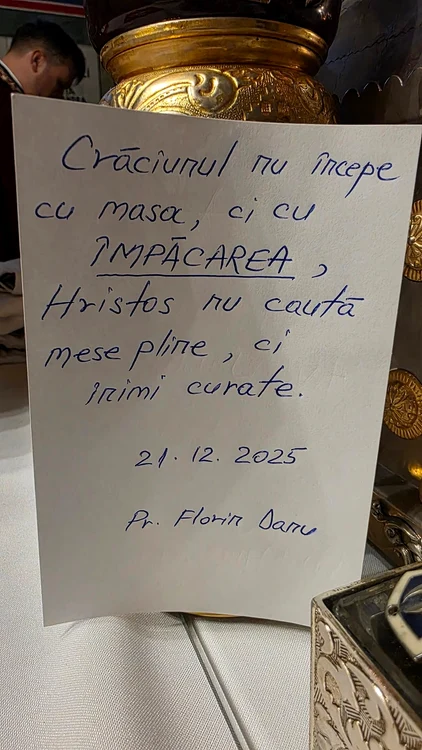
Priest Florin Danu, known for his acts of charity, wrote a message on Facebook that calls for reflection, about the haste with which we consume everything.
“I say it with love, not with judgment, with pain and care for our soul. We live in times when Christmas is consumed before it begins: the pig is cut, the tables are already prepared, the sausages are tasted, the cakes are tried, the glasses are clinked, the parties are done. Houses are full of food, but hearts risk being empty of meaning. And then we have to ask ourselves, honestly: what is the Baby Jesus waiting for on December 25, if we spent the joy before? What else do we celebrate, if everything has already been consumed? Christmas does not start with the rich meal, nor with the party. Christmas begins with waiting, with silence, with restraint and with a fast that is not only of food, but also of hard words, judgment, pride and malice. The Christ Child is not born in abundance, but in a manger; it does not come in noise, but in silence; it doesn’t ask for full plates, but clean and open hearts.
There are still a few days until Christmas and it’s not late at all. It’s the right time to stop a little, to put a brake on our desires, to forgive where we have accumulated anger, to help where we have been careless, to light a candle instead of filling another plate. It’s not a shame to eat at Christmas and it’s not a shame to be merry, but it’s sad to arrive on December 25th with nothing to celebrate because we’ve used up everything before. Christmas is a gift, and any gift has meaning only when it is expected. Let’s stop rushing Him and defy the Baby Jesus with our impatience, but let’s leave room for Him in our hearts. So that when the day of the Nativity of the Lord comes, he will not find us full of food, but hungry for God”. priest Florin Danu sent. The post was shared nearly two thousand times.
How can we reconcile the spiritual side with the modern world
Psychologists also talk about the traps into which it is easy to fall, even with good intentions. Dorina Stamate draws attention to the need for authentic connection with our loved ones and ourselves, without forgetting the religious dimension of Christmas.
“It is easy to get caught up in the rush of preparations and external expectations, forgetting what Christmas really means. Behind this hustle is a deep desire to connect, create moments of joy and share warmth and love with loved ones. Unfortunately, in this search for perfection, we can lose sight of the spiritual side and the deep meaning of this period. It is a moment of reflection, gratitude for what we have and openness to those around us. To reclaim this spiritual side, we can refocus our attention on the traditions that nourish our souls. It is important to ask ourselves what makes us truly happy and focus on those aspects that give us joy and fulfillment. Thus, we can transform this period into a moment of deep connection and genuine celebration“, says the psychotherapist.
“A simple meal shared in peace is worth more than a gift”
We also asked her what we should not lose in the face of the commercial rush:
“The first thing that should remain above is genuine love. Not the love demonstrated by shopping or expensive gifts, but the one lived in attention to the other, in patience, in obedience. A simple meal shared in peace is worth more than a gift given hastily or out of obligation. A second essential value is gratitude. The rush for “more” makes us forget how much we already have. Christmas can teach us to be thankful for the simple things: health, family, the warmth of a home, a shared meal. Gratitude frees us from comparison and the pressure to keep up with others.”
Christmas, says the psychotherapist, gains depth when “It doesn’t stop at us and our narrow circle, but opens up to the forgotten or lonely”.
Inner peace is also very important.
“The commercial rush creates agitation, stress and irritation. Faith invites us to slow down, to reflection and to peace. Without this stillness, Christmas risks becoming just a busy time, not a transformative celebration.” says Dorina Stamate.
“Decorations and gifts are not an end in themselves”
This does not rule out giving gifts and decorating the house, but says that these should not be an end in themselves, but outward signs of inner joy.
“A gift offered with love, attention and prayer becomes a gesture of communion, the value of the gift is not in its price, but in the intention with which we gave it. Sometimes, the time spent together, a visit, forgiveness or concrete help are more valuable gifts than material ones.” emphasizes the psychotherapist.
