
Humanity has already used the natural resources that the planet’s ecosystems can produce in an entire year, according to the latest calculations by the Global Footprint Network, presented on the occasion of Planet Overload Day, marked this year on August 1.
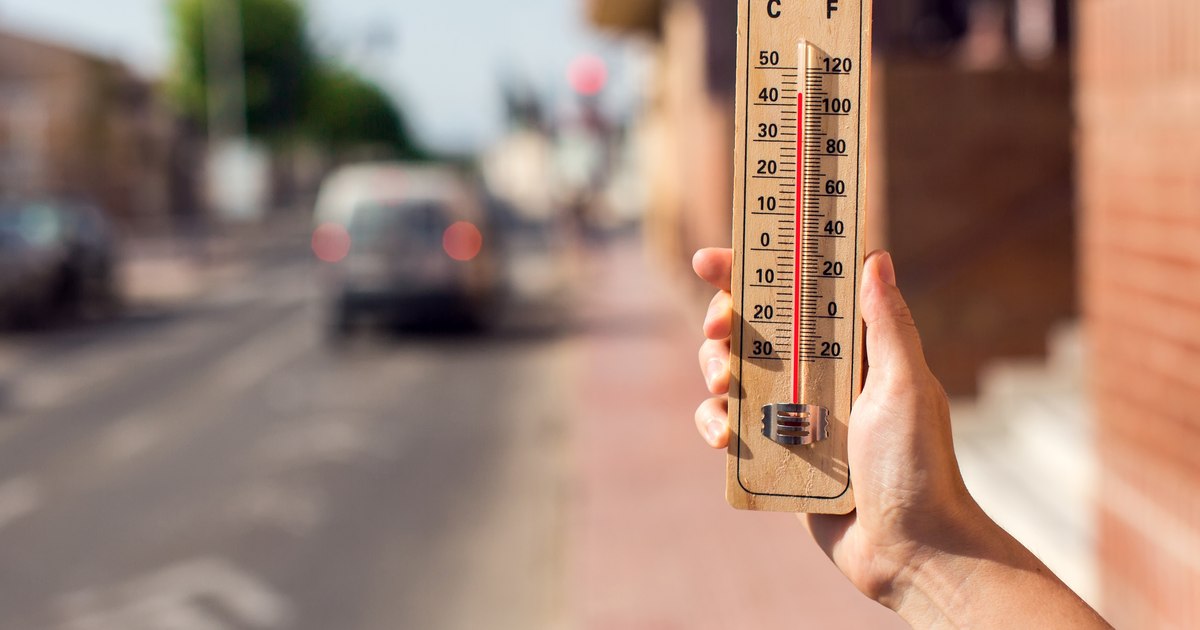
Heat records show we’re losing the fight against climate change PHOTO Shutterstock
“From January 1 to August 1, humanity used the natural resources that the planet’s ecosystems can produce in an entire year, according to the latest calculations by the Global Footprint Network. In other words, in just 7 months, humanity has consumed what the Earth renews in 12 months“, according to a statement sent by WWF-Romania (World Wide Fund for Nature).
Compared to 2023, this year’s Planet Overload Day is one day earlier. And this advance, according to the quoted source, is explained by a “slight” reduction in carbon emissions, which is, however, counterbalanced by the lower level of carbon absorption by the oceans. “Basically, although humanity produced less carbon emissions, the oceans did not have the same absorption capacity, and the result was also negative.” the specialists explain.
The organization mentions that this year’s Planet Overload Day coincides with the period of sports competitions that celebrate human potential, peaceful collaboration and the spirit of fair play, while on the other hand we are shown that we have failed to realize our potential and cooperate for to win the most important of tests: the sustainable use of the planet’s resources without causing disasters.
Temperature records show we are losing the fight against climate change
The Conservation Director of WWF – Romania draws attention that we must change tactics if we want not to lose the fight against climate change.
“Even in Romania, every year we beat heat records. Unfortunately, these records show us only one thing: that we are losing the fight against climate change. We have to change the way we play this game or the losses will be too great. We cannot win this game alone, and our greatest ally remains nature. Healthy ecosystems enable us to reduce carbon emissions and the effects of climate change, including disasters,” points out Barbara Bendadi, Director of Conservation of WWF – Romania.
According to the quoted source, even though the global overwork trend has reached a plateau in the last decade, humanity is losing ground in this race. And our actions fall short of the 2030 goals: to protect 30% of the planet’s oceans, land and fresh water and to reduce carbon emissions by around 45% worldwide compared to 2010.The carbon reduction measure alone would move Earth Overload Day by 22 days annually over the next six years“, according to the Organization.
How to determine Planet Overload Day
Planet Overload Day does not have a fixed day, it is calculated by dividing the planet’s biocapacity (the amount of ecological resources the Earth is capable of generating in that year) by humanity’s ecological footprint (humanity’s demand for that year) and multiplying by 365, the number of days in a year. The ecological footprint of each city or state can be compared to its biocapacity. If a population’s demand for ecological goods (eg overfishing) exceeds supply, that region has an ecological deficit. A region in ecological deficit meets demand by importing, liquidating its own ecological assets, or emitting carbon dioxide into the atmosphere. Globally, ecological deficit and overshoot are the same because there is no net import of resources to the planet.
By calculating and modeling data sets maintained and improved independently by FoDaFo (Footprint Data Foundation) and York University, the National Footprint and Biocapacity Accounts reports provide robust and transparent results. For each edition, results are recalculated from 1961 to the present to ensure consistency and coherence over time.
Simple changes could go a long way in moving Planet Overload Day:
● increasing global sources of low-carbon electricity from 39% to 75%, it would gain 26 days;
● creating smart cities – smart cities take advantage of existing technologies for buildings, industrial processes and electricity distribution and reduce dependence on energy-intensive transport. If implemented globally, smart cities could move Earth Overload Day by 29 days;
● equipping homes in rural areas with green energy solutions would move Earth Overload Day by 8 days;
● protection and reconstruction of wetlands would move Earth Overload Day by 4 days to 2050;
● reforestation of 350 million hectares would move Earth Overload Day by 8 days;
● halving food wastewhich represents 10% of total greenhouse gas emissions, would gain 13 days;
● intercropping of trees among other crops, on the same ground, they would gain 2.1 more days;
●
protecting fresh water sourceson which agriculture depends, but also many other goods that we have become accustomed to, from food products to clothes.
Global goals of WWF (World Wide Fund for Nature) for 2050 are zero loss of natural habitats, halving the ecological footprint of production and consumption, and zero human-caused species extinctions. And Planet Overload Day is a call for proactive responses “to avert disaster through good decisions, as overwork will inevitably end. It is our choice how“, the organization explains.
